Author Archives: geoffsnook77
Parenthood and family idolatry
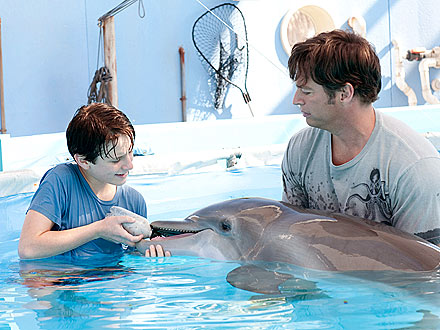
One of my favorite shows these days is Parenthood. I think its fairly popular in this area, largely due to the fact that the family unit is so popular in this area. And that’s a good thing. It’s just not the ultimate thing-which is Jesus. And as Tim Keller reminds us so well that when a good thing becomes the ultimate thing, that is an idol. It blocks the gaze of our Savior (not His gaze of us, but ours of His). And we all say yeah, yeah, I know Jesus is more important than our families-at least that’s what we’re supposed to say if we read and follow the bible (Luke 14:26). But we are all vulnerable to saying one thing, and living something else-which is consequently a more accurate depiction of how well we believe.
I’ve seen episodes that actually challenge the idol of the family and demonstrate some positive ways to lead a family. But last week’s episode-which was not without commendable material-ended up leaving me fairly saddened and frustrated.
Grandfather Craig T. Nelson tries to assemble ALL his family and ALL their children to go visit his mother for her birthday. Because his daughter-in-law is skipping out on the adventure, he goes nuts. After acting like a neurotic jerk who later tells his kids, “You all suck” he seems to come to the point where he is almost repentant. And then his true savior, who has let him down (as all min-saviors do) is expressed verbally: “All there is in life, when it all comes down to it, is family.”
Before his family arrives, the daughter-in-law praises the overbearing father-in-law for “creating” this family. Idol affirmed. Now this man is not without worthy qualities, though over all, he makes me thankful that my father and father-in-law are NOTHING like him.
Then his family shows up, and of course, they seem apologetic and everyone seems OK.
Here are a few thoughts.
1.) An idol will always let you down. And when your idol is being threatened, you will bite, claw, kick, and fight to preserve that idol. That’s what he did the whole show. We all do this. When you idol is removed, you feel there is nothing else to live for. All is lost. If you want to locate your idols, look at your attitudes and actions. Its foolish to think that our families don’t become our idols. When kids or parents don’t behave or fulfill us they way we demand of them, we get nasty. So we need to be careful that the idol of family is not just a non-Christian problem…Its ours as well.
2.) Is life only about family? What about those who have crappy families? Are they then doomed? At the end of the day it is not about how much money you make, how nice of a car or house you have. Most people can eventually get past those things when housing market crashes or when they have cancer. But most folks still miss Jesus because, in the end, its all about family. However, in the end, its all about being included in His family. I remember a lass in my college days telling me this when her father had been in a terrible accident. Such a blessing when you’re family lets you down and vice versa. Or when you move, or have to move, etc….
3) At the end of the show, Craig T Nelson finally got what he had so eagerly sought: his mother’s approval. His whole life, he had loved his kids and told them that he loved them. And though his character is overbearing, and clearly at times “needs” more than love his kids/grand-kids, he does care. And he expresses that care verbally with an “I love you.” But his whole life he worked for her approval and it didn’t come. Until this episode.
It shows the importance of expressing the words, “I love you” to our families. But some people will never hear that from their deadbeat fathers or mothers. They really won’t. While that verbal affirmation is important, it is not essential for the child to break free from the bondage of parental failure. I know folks who have. And its beautiful. It demonstrates that while they may not have heard it from a father or a mother, they face each day with the promise of “I love you and I love who you are becoming” from their Heavenly Father. That promise is something we inherit from our elder brother Jesus. The joy and delight God has over His son (Matt 3:17) is now shared with us as part of our inheritance. And the fact that he didn’t spare His son, but gave him up for us all (Rom 8:32), is not just a spoken “I love you,” but truly sacrificial “I love you” still evidenced by his scars (John 20:27).
Why I need CD groups
Even if we didn’t have an encouraging study-which we did-just the mere gathering for prayer in someone’s home made my problems seem much smaller. We all had problems. Some were worse, some the same. But problems shared in the home and fellowship of others are far less daunting than when they never leave your heart or your house.
Don’t cry for me Argentina or Jerusalem
Anyhow, just some thoughts I had while reading Zechariah.
NFL Live, Authenticiy, and Tebow
So postmodern catch words, or at least postmodern influence on culture, has shaped even NFL analysts. But that is not necessarily a bad thing. In the end, I it really does bring more opportunities than challenges.
Redemption and missing field goals
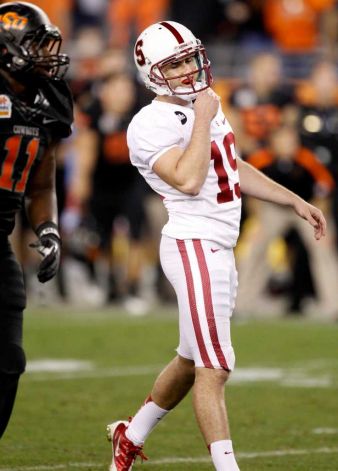
I don’t have to redeem myself. I don’t have that pressure of redeeming myself, and then screwing it up again as I always seem to do. Freedom to follow Jesus, without fear of failure is a beautiful thing. Kickers choke, and sinners sin, but Jesus loves them both. Losers and sinners. There’s more to life than football, and there’s more to life than sin. The Savior gets the final say when we embrace him through our imperfect faith. We don’t need to worry about the impossibility of redeeming ourselves. That’s for Someone else. Our job is to repent of replaying the “missed kick” over and over in our heads, and to instead continue looking at Jesus: the one didn’t back out, sin, or “choke” our redemption away.
Top 10 books I read in 2011
A plethora of “Christian celebrity” pastor types put up their list of top 10 books that they’ve read for the year. I’m not a Christian “celebrity,” but for those open to hear from “D-Lister” (and I know that’s even pushing it!), here are my top 10 books from this past year of which I commend to you.
1.) Unbroken by Laura Hillenbrand. This book was a page turner and I loved every page. Well written and truly redemptive in all senses of the word. The story of a world class runner turned WWII downed aviator. He barely survives 50 days at sea only to be captured and put in a POW camp. How about that for a bad day? Floating at sea for 50 days only to be discovered by Japanese. Wow. You’ll be astounded at the journey, the camaraderie, the perseverance, and then the forgiveness of the story. My review here.
2.) Washed and Waiting: Reflections on Christian faithfulness and homosexuality by Wesley Hill. I did a quick review of it here. This book chronicles the struggle of a Christian dealing with same-sex attraction, but understanding that is not God’s will for him. It really gives us a glimpse into the life of a believer who wants to remain faithful to Christ. In so doing, he takes heat from all sides: the pro-gay side; with those in the church who feel uncomfortable even discussing the issue; as well as those in the church who seem to have all the answers on why gay people are gay and how they can be fixed. Challenging and a good one for all of us to read. A great picture of sanctification: washed and waiting.
3.) When People are Big, God is Small. This one from Ed Welch is a brilliant but simple and practical guide to all of those who struggle with fear of man. It will draw your attention and your sense of need away from yourself and onto Christ. It is challenging, and at times offensive, but in a good way.
4.) The Trellis and the Vine. This book from Colin Marshall and Tony Payne challenges the reader to re-orient his view for how the church should work. Instead of having programs to fit perceived needs, programs should be centered around people. If people you have don’t fit into the program (either those who would benefit or those who would lead them), then nix that program. Start with people, not with a program that may have outlived its usefulness. These lads really focus on the ministry of the Word from believer to believer, and not just ministry of the Word as it is preached on Sunday. Each member is a minister. A pastor’s role is to equip members for ministry, which may or may not include ministry in a particular program. So much ministry is done one-to-one (these dudes are Australian so they say things a bit differently), which is good news. That kind of ministry is feasible given any budget or building limitations.
5.) No Bag for the Journey by Joseph Martin. A lad rides across the country on a bicycle before cell phones and emails and the like. More often than not Joseph Martin doesn’t even know where he will be spending the night or what he’ll be eating. God provided miraculously for him throughout this journey. Truly amazing story of faith and God’s faithfulness. But my favorite part was the epilogue where he comes to know and embrace the reformation re-discovery of the gospel of grace. So neat to see a man who grew up in Tampa, went to the same Catholic school I went to, come to truly rest in the gospel. When I finished the book I immediately found him on facebook and let him know I was the step-grandchild of the mother of his best friend growing up. You’ll want to meet this guy as well and pray for his journey as he continues to battle the liberal Episcopal church trying to cease their property.
6.) Generous Justice. I’m a Keller nut, so pretty much everything this lad writes I like. However, as someone who does not have a heart of mercy, but wants to be more practically and systematically merciful, this is quite helpful to non Keller-nuts too. It’s also a helpful read because it places the mercy displayed by the church and individuals in a practically scriptural framework with a number of examples.
7.) The Lost City of Z by David Grann. Legend has it it there was at some point in time an astounding, fairly complex civilization in the heart of the amazon. And so that, with the allure of glory, fame, gold, and the sense of discovering something that many thought may not have existed has drawn in many glory-hounds. So many have died. This book focuses its attention primarily one man’s fateful journey while the author risks his life to discover what happened and whether or not this city did really exist. Fascinating to say the least how such a city has brought so many men to their graves, and continued for centuries to do so.
8.) The King’s Cross by Tim Keller. A commentary on Mark, but more than that. It’s more like a series of sermons going through the gospel of Mark. I read much of it while down with the stomach flu so that’s possibly why it didn’t get as high a rating! Still, very helpful “walk-through” and application of the gospel of Mark.
9.) Gospel centered family by Tim Chester and Ed Moll. This is a short book designed to be studied and read in small groups or Sunday School. I loved it. Amy did too. So did/does our adult Sunday School class. It is practical enough to apply, but gospel centric enough to call for grace in grey areas. These authors attack idols graciously and truthfully. I appreciated the section on a family being missional and outward focused. That seems the last frontier yet to be tackled by most parenting books. Without this aspect, the family can easily become yet another idol.
10.) The Forgotten 500. The story of 500 or so airmen stranded in Yugoslavia and the miraculous evacuation that saw none of them be lost to Nazi resistance. It was a sad tale in some ways because this story was intended never to be told due to politics and communistic infiltrating moles. The rescue was in fact only a plus. What I was most challenged by was the picture of hospitality shown by such peasants. They gave out of their meagerness to help homeless airmen. A fun, challenging, insightful and informative read. Two of my reflections are here and here
Honorable Mentions: These are books that were still good reads, but didn’t quite make the final cut.
The Idiot by Dosteyevski. I didn’t enjoy this one as much as I did Crime and Punishment or the Brothers Karamazov, and it really didn’t quite have the same redemption as the former, but it gave me a picture of Russia and its struggle at the common level with religious, gospel, and atheistic thinking. Some decent illustrations of the gospel here and there. I would still recommend it to someone interested in exploring the mind and writings of this prophetic man.
Radical by David Platt. A good challenge to us all who tend to see Jesus as our means to accomplish the American Dream. We need to be challenged to give and live more sacrificially. I liked the personal and practical touch. I’ve already reviewed it here. Would have liked some more emphasis on grace as motivator and the “radicalness” of being a good worker, husband, churchmen, neighbor, etc…Still, David Platt plays the role of prophet to a complacent church and we should listen.
The Glass Castle. Powerful memoir. Still wonder if it is all true. Ultimately as redemptive as it could be without the hope of the gospel, so it left me a bit saddened. It did help give me a picture of WV outside to the suburban Teays Valley.
Annual Bono Christmas Eve reflection
One of my, or at least my blog’s Christmas traditions, is to post and reflect on this quote from U2 frontman Bono. It never gets old. Just like the Christmas story. Every part of it seems counter-intuitive to me: God in flesh, the use of shepherds (sketchy fellows), magi (also sketchy), that Jesus was laid in a manger. How crazy is that? Where dirty animals feed. The king of the universe laid where animals feed. I hope we never fail to realize how crazy that is. Blaise Paschal hit it on the nose in his Pensees when he said it is not that God has hidden this message so high so that folks can’t understand it, but so low, as many will look over it.
This reflection on Christmas occurred after Bono had just returned home, to Dublin, from a long tour with U2. On Christmas Eve Bono went to the famous St. Patrick’s Cathedral, where Jonathan Swift was dean. Apparently he was given a really poor seat, one obstructed by a pillar, making it even more difficult for him to keep his eyes open…but it was there that Christmas story struck him like never before. He writes:
Here’s Bono’s quote:
“The idea that God, if there is a force of Logic and Love in the universe, that it would seek to explain itself is amazing enough. That it would seek to explain itself and describe itself by becoming a child born in straw poverty, in s#@% and straw…a child… I just thought: “Wow!” Just the poetry … Unknowable love, unknowable power, describes itself as the most vulnerable. There it was. I was sitting there, and it’s not that it hadn’t struck me before, but tears came streaming down my face, and I saw the genius of this, utter genius of picking a particular point in time and deciding to turn on this.”
Excerpt taken from Bono: in conversation (New York: Riverhead Books, 2005), 124-5.
Make Jesus big and Santa small
I’m not fearful of others trying to re-introduce Santa to my three year old. My incredibly awesome Uncle even apologized for it! I’m not worried when people mention it to him. I already see that he has a framework for thinking of Santa. He’s a fun, fat, old dude who comes out around Xmas time each year. But he’s no Jesus.