Unknown's avatar

Why I include the gospel in every sermon

Fish Fail

Click here to getImages  &
Fish Fail PicturesPictures

There’s a reason why I try to preach the gospel in every sermon. Well there are actually a number of reasons, but here are two of them: 1.) the church needs to regularly hear the gospel 2.) the preacher I needs to hear the gospel. Every time God’s word presents any sort of command, or I give applications consistent with the passage, that elicits some sort of response from the hearers. And that’s good. Sermons need to be applicable and challenge the head, the heart, and the hands.
But without the message and power of the gospel, those applications will lead to despair, particularly for the preacher. Applications not couched in the gospel will leave the preacher a big fat hypocrite. It doesn’t take me very long to forget what I preached and specifically fail to apply the text in the way I’ve instructed God’s people on that previous Sunday.
The other day I preached on griping from Philippians 2:14-18. It seems from this passage that one way we can witness to a dark world is with our silence: by not griping. Well it didn’t take long for me to gripe to an umpire in a softball game from the outfield, with hand gestures indicating that the ball was not fair but foul. I griped. Without saying a word, or at least one that he could hear, I had done the exact opposite thing I challenged the congregation with my lack of silence and use of non-verbals. 
It didn’t take long. And it doesn’t usually take too long for us to misapply or fail to apply the very things we’ve been challenged by in the sermon (whether hearing it or preaching it-preachers are preaching to themselves as well). 
So I was definitely bummed for a bit. How can I preach against griping when I do it? I felt like such a hypocrite-which I am anyway so I don’t know why I felt surprised. But then I remembered the gospel. I will still struggle with griping, but Jesus has taken my gripes with Him to the cross. My gripes are covered, and so I can now rejoice in the gripeless one who not only empowers me but forgives me when I regularly fail.
That’s why the gospel always has to be present in every sermon. Without it people will be left with will power, guilt, despair, or feelings of hypocrisy or learned helplessness (I didn’t apply it today, therefore I can’t apply it later). Without it preachers will soon feel like big fat unforgiven hypocrites and eventually fail to make sermons applicable (if I can’t apply it, why make applications). So I try to make sure the hope of the gospel message is included in every sermon. Not just for my congregation, but for myself. 

I need it because it doesn’t take me long to fail, so I always try to make sure the ultimate application is the short hike back to the gospel.


Unknown's avatar

Susan Enan, and why bad news can be good to listen to

Yesterday my reading of Psalm 49 definitely helped frame my frustrations with an apparent dip in my neighborhood housing prices. Houses just don’t last forever. Nothing man-made necessarily will last forever, just like “cold November rain.” Thank you Axl Rose. 
But Revelation 21 does remind us that there will be business going on and people will be bringing their “glory” into the new heavenly city. So the good stuff of culture will be around: I just don’t get a vote or say or knowledge of what might be staying. With that said, we can’t take anything to the grave. Especially not homes or kayaks.
“10 For he sees that even the wise die; the fool and the stupid alike must perish and leave their wealth to others. 11 Their graves are their homes forever, their dwelling places to all generations, though they called lands by their own names.” Psalm 49:10-11
Far from depressing me, this Psalm actually encouraged me. The thought that the materials in the world I often envy, like bigger houses, or better fishing gear, will ultimately be in-accessible in the grave encourages me to put them in their proper place in the bigger story.
While I’m not sure where artist Susan Enan stands spiritually (she did respond to an email saying “thanks” after I told her how much I liked her music-so obviously that bumps her up in my book), her music is deep. I don’t expect Christian themes from non-Christian artists, but I do expect music to be robust, deep, and true to life. And all her music from is. It actually seems very “psalm-ish” or maybe even “ecclesiastes-ish.” Below are lyrics from “The Grave” off her most recent album Plainsong.
All of your work won’t fit in the earth
When you’re lying underground in the grave
Whatever amount in your balanced account
There’s nothing you can buy in the grave

In the next age, no stock exchange
Is going to pass on the money we make
No lottery wins, political spins
When we’re lying underground in the grave

No surgery defies gravity
But it all falls away in the grave
And who’s gonna care what color you wear?
There’s no fashion show in the grave

So swallow it down, no easy way around
Just a pill for the thrills that we crave
But no medicine to stop kingdom come
It’s your time, get in line, for the grave

And we’ll all be the same
And we’ll go as we come
Side by side, as we lie in the grave
We’ll all be the same
We’ll go as we came
Side by side, as we lie in the grave 

I love raw music. And I love music that is true. So much of this is true. While there are shades of redemption like “kingdom come” and “next age,” nothing hopeful seriously emerges. But whether Enan believes or not, she points me to Someone who conquered the grave and will one day usher in the resurrection. The grave is our next stop, and should always sober our idolatry of material, appearance, fame, prosperity, approval, pleasure. That’s one reason we have the book of Ecclesiastes. But the New Heavens and New Earth, and the bodily resurrection to a new and physical world, marks the final destination for the Christian pilgrim.
All good music points us to Jesus. Either indirectly to our need for Jesus or directly to what Jesus has already accomplished for us. I definitely recommend checking out Susan Enan’s Plainsong, though its no longer free at noisetrade.com.  You’ll be glad you did, as it is worth $8.99 here.
Unknown's avatar

Psalm 49 and Appraisals

Last night I was bummed when I heard of a neighbor’s property appraisal. It turned out significantly lower than I had anticipated, which of course means my property value is now significantly lower than I anticipated. Perhaps a better way of putting it is that my property value is significantly lower than I “trusted” it to be. Deja vu all over again-my house in FL dropped 140,00o in value. All I’ve experienced with homes is that they drop in value not long after you purchase them. 
I was bummed. I was angry at God. Then I came to Psalm 49, well off the church Psalm reading schedule. And I’m glad I came, and I’m glad I was behind. Psalm 49 was just what I needed.
“Why should I fear in times of trouble…..those who trust in their wealth and boast of the abundance of their riches..For he sees that even the wise die; the fool and the stupid alike must perish and leave their wealth to others. Their graves are their homes forever, their dwelling places to all generations, though they called lands by their own names….For when he dies he will carry nothing away; his glory will not go down after him”
Homes are temporary. They don’t follow us to the grave, which is a good thing. They’re not worth losing sleep over (though I actually slept fine minus the interruption from a crying infant). I’m thankful for such Psalms, which remind me to place my story/problems within, not outside, the story of greater story of Redemption. Better to be grace rich, then property rich-which I’m now learning will probably never be a possibility. And maybe I should be more thankful for such appraisals.
God places a higher priority on our sanctification than our property value. Now to believe that tomorrow…Guess I’ll be going back to Psalm 49 again.
Unknown's avatar

Trading a catch for gay marriage?

Gay marriage is and probably will always be a hot topic, only getting hotter as the years go on. I think even the most eco-friendly tree-embracing liberal has more confidence in this issue heating up quicker than the Earth.
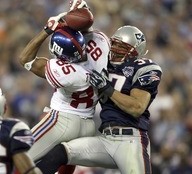
David Tyree, on the receiving end of perhaps the greatest catch, if not the greatest play (Eli Manning eluding a sure sack started the play) the Super Bowl has ever known, claims he would gladly give up that catch to stop gay marriage. He says:
“The catch was a gift, it’s not like I’d try to do it.  I couldn’t do it again so that was a miracle,” Tyree told Kenneth Lovett of the Daily News.  “There’s nothing worth more than [maintaining heterosexual marriage] right here for me.”
So we he trade the catch for, um, a block?  “Honestly, I probably would.”
Tyree then elaborated on his point.  “Nothing means more to me than that my God would be honored,” Tyree said.  “Being the fact that I firmly believe that God created and ordained marriage between a man and a woman, I believe that that’s something that should be fought for at all costs.

I think this a good example of caring about God’s fame more than your own. Obviously you can’t go back in time and trade your success, but his phrase, “Nothing means more to me than that my God would be honored,” ought to challenge us all. More often than not we may pray “Thy Kingdom come,” but what we want is “our Kingdom come.” Instead of thinking about our success and God’s honor reminiscently, we ought to think smaller thoughts toward our future success and desire “our God to be honored” more than personal accolades.
At the end of the article, Mike Florio dismisses Tyree’s concerns and thoughts regarding marriage to the point of even saying,
“And regardless of where one stands on the matter (personally, I tend to be Libertarian on social matters, as if any of you care), it could be the last time any of us will ever be considering anything Tyree ever says or does.”
Its amazing-although I don’t know why I’m still amazed-when “open-minded” folks accept all opinions except those birthed from an ultimate religious allegiance (ignoring their own presuppositions). Sometimes when they disagree, the other is vilified or “stupid-fied” and put on what amounts to “talking probation.” Seems fairly “closed-minded.”
But it’s also interesting that Tyree doesn’t say anything much more than Tony Dungy or Tim Tebow would say. Yet neither of those two are dismissed. In fact, Mike Florio speaks positively about those lads. Perhaps their “body of work” has earned them more of a right to be heard? Or perhaps gay marriage isn’t as primary in their off the field work like prison ministry, pro-family, or pro-life venues. Perhaps these are more socially tolerable?
Maybe there’s another rational reason for Florio’s take? Or maybe there’s something else going on. Sometimes folks will like us when we are obedient (I Peter 2:12) and sometimes folks will hate us for our obedience to Christ (John 15:18). We can expect both. Perhaps the same folks will both like some Christians, and hate or dismiss other Christians.
Unknown's avatar

Adoption Thoughts

Amy and I have begun to think through the possibilities of adoption recently. It’s always been something we’d leaned toward, ever since mentors, pastors, and close friends, (and even my own brother) have adopted. The beauty, both the practical and the theological (picturing God’s adoption of His children) has left an imprint upon us.
In addition, the scriptures inform us to look after widows and orphans in their distress (James 1:27). I’m not saying it is God’s moral will for everyone to adopt-nor should you feel guilty if you don’t-but with the plethora of references, coupled with the practice of the early church, it is probably something to at least consider.
Much of the evangelical church is pro-life, but I wonder how many have thought through the logistical issues of folks NOT having abortions on babies they do not want. If I’m against women aborting their babies, then the babies have to go somewhere, right? I mean someone has to take care of them, because not all women will have the same reaction as Keri Russell in The Waitress and immediately fall in love with their previously unwanted child.
I recently read this post on the CNN belief blog titled “My take on adoption: Christians should put up or shut up.” In it he challenges the church away from simply engulfed themselves in the culture wars and toward doing something more tangible and biblical than arguing, picketing, or shouting. He writes:
In the United States, there are approximately 116,000 foster children waiting to be adopted. That means a judge has either severed the rights of the original parents or the parents have voluntarily signed their children over to the government.

To put this into perspective, we might compare the number of American orphans to the purported 16 million Southern Baptists who attend more than 42,000 churches nationwide. Quick math reveals that there are roughly 138 Southern Baptists for every child in the American foster care system waiting to be adopted. To say it another way, this single denomination has an enormous opportunity to eradicate the orphan crisis in America.

If you’ve spent any time in church, you’ve probably heard a sermon on Noah or Moses or David. But how many sermons have you heard on the biblical mandate to care for orphans?
Southern Baptists, Presbyterians, Methodists, Catholics — the Christian Church — can provide safe, loving, permanent homes for these kids. Our faith dictates that we fight for a better way in both words and deeds.
Some challenging, yet at the same time, fairly realistic goals. I’m not sure where our family’s path will lead us: to closed doors, to surprised pregnancy, to a changed vision, to adopting, locally or internationally, or just diligent research?

I’m not sure how much Israel practically displayed that this is who God really is: “Father of the fatherless and protector of widows is God in his holy habitation (Psalm 68:5).” But in whatever capacity, I think local churches can and may once again tell something about God simply through their actions.


Unknown's avatar

How to learn from Israel without pride: A Lesson from Pimps and Preachers’ Paul Thorn

This past Sunday I preached “Gripes Go up” on Philippians 2:14-18 which speaks of doing all things without “grumbling or questioning” so that we would shine like lights in our “crooked and twisted” generation. So in other words, one way (not the only way) we witness is actually without using words at all: without griping, tantamount to a verbal expression of an inward disbelief in the gospel. 
And we know what griping looks like, not so much because we see so many examples of this Philippian congregation griping, but because we see what griping looked like with Israel in their wilderness wanderings. Israel in other places in the N. T., become examples of how not to live, or rather more appropriately, how not to believe.
1 Corinthians 10:6 Now these things took place as examples for us, that we might not desire evil as they did.
So we are to take advantage and learn from others’ mistakes in OT church history, in this case (Phil 2:14) faithless griping, and instead find ourselves “holding fast to the word of life.”
But how do we look upon the failures of others without becoming prideful? Looking at mistakes in others and then becoming prideful go together like summertime and humidity.
Noisetrade has been one of my dear friends for getting music (I appreciate the convenience and legality of it, which in regard to the latter, Christians in my generation don’t care too much about anymore for some reason) by more obscure or up-and-coming indie/rock/folk singers. Joe Thorn sings about griping in “You’re not the only one.” Look how he responds to hearing his neighbors fighting.
I can’t believe how much they fuss, sometimes they sound just like us.

Thorn gives us a helpful hermeneutic of humility useful when reflecting back upon the faithless griping of ancient Israel. Sometimes they, and others who don’t believe the gospel, “sound just like us.” We can see our lack of faith in others’ lack of faith. We have to. That’s why the gospel is not a ladder that you need for a little while, but a beach for all ages you never outgrow. The gospel both humbles and grows us in grace at the same time. Thanks Joe for helping me see that. What would you expect from a guy whose most recent album is entitled Pimps and Preachers?

Unknown's avatar

Post-Father’s Day Post

In light of yesterday being Father’s Day, I thought I’d share one NBA player’s fatherly thoughts. Dwayne Wade was recently awarded full custody of his kids, and reflects upon the glory and opportunity of being a father. He described fatherhood not simply as an opportunity but also as a necessity, reflecting upon his own father’s example to him.
All children need their fathers, but boys especially need fathers to teach them how to be men. I remember wanting that so badly before I went to live with my dad. I wanted someone to teach me how to tie a tie and walk the walk, things only a man can teach a boy.
Dwayne Wade is definitely on to something here. Moms can teach lads to tie ties, but exactly how to “walk the walk,”is something best taught by dads. I found Dwayne Wade’s take on parenting particularly appropriate given the backdrop of athletes, like one N.Y. Jets defensive back, who has so many kids (with different women) that he actually couldn’t remember all their names. That’s pretty sad. At one point, the NBA comprised a number of people like him, when it was regular for NBA dads to have kids with different last names. I hope that we can see more Wade’s and fewer Shawn Kemp’s.
I even felt challenged by Wade’s fatherhood.
My dad and I bumped heads a lot—we were so alike, both of us born competitors. My older son, Zaire, is exactly the same way. We’ll battle on the court when I’m 39 and he’s 19. He’s 9 now, and he’s grown up with basketball. Zion could take it or leave it, which is cool by me.
Connar loves baseball, which is “cool by me.” But what if he didn’t? What if he changes to hockey (hypothetically speaking of course) or something not using a ball or a rod? What if Cade doesn’t? I hope its “cool by me.”
Dwayne seems to have had a decent dad. But what about kids without Dads due to divorce, death, or because they are deadbeats? Is there hope? Are they doomed to repeat the cycle? While many folks do fall into that pattern, the gospel does offer us hope. Seriously, and practically. I’ve seen folks who have had bad dads or no dads at all become good dads. So I know its possible. And here’s why I think its possible.
1.) There are plenty of unbelieving good dads, but one way Christians have a “leg up” on the “competition” is that we take our cues from a Heavenly Father. We can know what a good father looks like because we have a good Father in heaven (Matthew 7:11). God provides for his children, therefore we provide for our children. God invites us into a special relationship with Him allowing us to call him “Abba” (Rom 8:15 ), therefore our kids ought to have a special relationship with us. A special relationship that our neighbors’ kids will not get. While we don’t necessarily share the same sense of “abba” as Jesus did since he is the eternal Son of God, we do have a special familial closeness now.  There is a special backstage pass our children are granted. They have special access. Our sonship is distinct from Jesus, yet it is nevertheless real. So real that we have an idea of what a Father looks like.
John 20:17 Jesus said to her, “Do not cling to me, for I have not yet ascended to the Father; but go to my brothers and say to them, ‘I am ascending to my Father and your Father, to my God and your God.'”
Some folks don’t like using language of God as a “Father,” because they read back into our Heavenly Father the baggage from our earthly fathers. But it is more than just feminists who’ve had bad experiences with their fathers. Even bible translators as part of “Insider Movements” have begun to translate the word “Father” as “Guardian,” because it is more palatable for Muslims. But I think we miss something of our Heavenly Father when you take away that word/concept, and my denomination seems to agree.

2.)  I think there’s another resource a Christian can draw from when discerning how to be a good father when he himself didn’t have one: the church. We know what good dads look like because we can see them. We can ask them questions. We can learn from their mistakes, as well as their wisdom, which naturally come best through their mistakes. But even those of us who don’t have fathers, can find a number of fathers in the church. Good fathers have the opportunity to be a father figure to kids who may have never had one. There is hope to break the cycle of bad dads in this world: good news in a world without a shortage of them.

Unknown's avatar

Rings and things with Tom Brady

I had breakfast on Monday with a church member and we briefly discussed LeBron’s failed quest for a championship. He pointed me toward this interview on 60 minutes, which I somehow managed to miss.
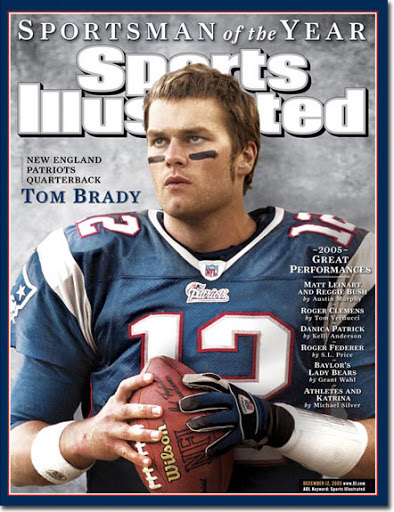
In it Tom Brady discusses that even with all of his accomplishments (at this time there were 3 Super Bowls) “There has to be more than this.”
The gospel goes far deeper than granting a Christian existential peace: a deep satisfaction at the end of the day that we truly “have found what we’re looking for.” After all, it is the good news that the curse of sin and all its impact has been reversed. But to deny an experiential component to the gospel is to deny what Jesus claims to offer. It is more than simply experiential peace, but not less than it.
The reason the woman at the well had so many men in her life, and her current one wasn’t even her husband, is because she was looking for life in someone other than Jesus (John 4). Jesus claims to be the solution. And the experience of a true satisfying relationship with him is what helps us crush our idols.
At the end of the video, Tom Brady is dumbfounded by the question: so what’s the answer? He considers that maybe some sort of self-discovery could be the answer. The problem with self-discovery is that in the end, the best person you can discover is yourself. Scary thought. Jesus is way better.
Unknown's avatar

Salvation in different tenses and senses

In my most recent sermon I discussed what I believe “working out our salvation” really means as found in Philippians 2:11-12. In it I surmised that some of the difficulty we evangelicals have with this expression comes from limiting the term salvation to its past tense usage. Yet scripture will often use the term salvation, or salvific terms like redemption in both a present sense (I Peter 1:9-“obtaining the outcome of your faith, the salvation of your souls) as well as a future sense (I Peter 1:5-“salvation ready to be revealed in the last time”) to show that salvation is more robust than just getting “saved.” However, I feel I used the phrase “how many salvations were there at church” in a fairly pejorative manner-though I didn’t intend to use it in that way. I seldom have time to caveat anything, particularly when I’m trying not to say too much so I can focus on what I feel led to say. 
So I do want to go back to salvation in the past tense: what many folks call “getting saved.” I do hope that many in the congregation who don’t know Christ will repent and believe in Him alone for their salvation. I hope and pray for that in every sermon, folks who don’t know Jesus at all will be saved from the punishment of sin. At the same point I hope and pray that everyone who doesn’t know Jesus as well as he/she thinks he/she does (all Christians) will repent and believe the gospel more that day than the day before. 
This is the present tense, or sense of salvation, which we seldom ask ourselves and others: “how is God saving you today from the dominating power of sin in your life?” I think this is a question seldom asked, but is part of our “salvation,” just as important as the start and finish of it. And its usually much harder than pointing to a date!
Still, in a zeal to emphasize how the gospel saves us now, and will save us then I often don’t take enough time to explicitly explain how salvation starts.  I, as well as many Presbyterians seldom give folks enough of a chance to respond. While I don’t see anywhere in the bible which instructs pastors to call people forward like an altar call (that really didn’t happen until the mid 1800’s thanks to Charles Finney) or raise their hands if they believe, I still know that the church is the place where new Christians are to be born. The church is to be a hospital for sickly believers in need of grace, but also a place where all believers are technically on staff and can serve as spiritual midwives delivering baby Christians. 
I’m definitely envious of churches which regularly see “salvations” start each week. And Presbyterian churches can learn much from and be challenged by them. But I’m also aware that new births and new breakthroughs in growth may happen gradually as folks eventually get the gospel (for the first time or thousandth), and need not happen solely through a response prayer. Such “salvations” may be happening as well but not be as visible.
Regardless, churches need to consider salvation in all tenses and senses so that the full gospel is preached, cherished, and responded to each week regardless of differing denominational mechanics.
Unknown's avatar

Rings and things with James and Nowitzki

I sat mesmerized last night while I watched the Dallas Mavericks take down the Miami Heat in Game 6. Aside from the fact that Lebron James confidently claimed not not one, not two, but 8 future championships, I actually thought fielding (or maybe “courting” is a better word) a team comprising arguably the best (if not better when it comes to Chris Bosh) players in the NBA would serve as a recipe for success. And they achieved some success in some sense: getting to the Finals. However they, but primarily James, fell short of getting that elusive championship ring upon which athletes center their effort, as well as their hopes and dreams.
And on the other side of the court sat someone else-though Mav’s owner Mark Cuban hardly sits still during games-vying for that elusive ring as well. In addition, Dirk Nowitzki, spent his whole career trying to win a championship. And each will finally will get his ring. 
I wonder what it’s like for both parties today, the morning after.
For the losers: Sometimes in God’s grace he will not allow you to get something which has become an idol. Sometimes the Lord actually withholds things which seem so good to us (whether it be an NBA championship ring or wedding ring) because to give us something which seems good-but it has become an idol, the reason we live or die-may not be loving. Sometimes he wants to spare us from the inevitable result of making something or someone else an idol: divorce, depression, anger, disappointment, emptiness, etc….He doesn’t withhold anything good from those who walk with Him (Psalm 84:11). While I often fail to  believe this, God nevertheless proves this to me over and over.
For the winners: On the other hand, sometimes God may actually grant us the idol out of love. This sounds strange, but it can also be an act of love for the Lord to give us the desire of our hearts even when that desire is not healthy. For instance, if my main reason for living has become an NBA ring, wedding ring, or ring like Gollum’s, then God may in His goodness grant that. Yet I will then soon be sorely disappointed that the ring didn’t fill the God-shaped hole in my heart. I will eventually turn back to him for the first or the hundredth time.
How many of us have thought if I could just be married (I did), if I could just have a kid (I did), if I could just get a job (I did) that it would be well with our souls? Then we got those things, and those things left us empty, only to pursue something, although ideally Someone else. In love, I think God may sometimes grant us those things, in order for us to see the true emptiness in those things, and run to Him instead. 
Unfortunately many of the things/people we’ve sought and found have become to us empty wells. But instead of turning to Jesus, we turn to someone/something else. That’s often why folks want to divorce: the other person, as advertised in scripture, has become an empty well no longer producing the respect, love, importance, power which we demanded. But in God’s grace we’ve received that idol, so that we can see the emptiness, and return to the spring of living water. 

I do hope that Lebron either never gets that ring, or that he does (although not 8 times over!), and he realizes how the hole in his heart is not ring-shaped but God-shaped.