Unknown's avatar

Eternity in Steven Tyler’s heart?

For the most part, it is not too difficult to find evidence of Ecclesiastes 3:11:
“He has made everything beautiful in its time. Also, he has put eternity into man’s heart, yet so that he cannot find out what God has done from the beginning to the end.”
As far as I understand this passage, folks have some innate sense of not just their own mortality, but that there just might be something/someone greater or worse than this physical world: a sense of deity and of heaven/hell. Yet we also see from this passage, that such knowledge is somewhat limited. Assumptions about heaven or hell are often just that: assumptions based upon a self concocted view of reality rather than biblically informed world-view of Creation, Fall, Redemption, and Consummation.
In reading a Rolling Stone magazine article on current American Idol judge Steven Tyler, I came across yet another indication of “eternity” in “man’s heart.” I guess it really shouldn’t have surprised me:
  
“….I’m going to get up to heaven, and the gate’s going to open, and God’s going to go, ‘You know what, I threw Beelzebub out while were listening to one of your songs……I think I’ve been so lucky in my life that I’ll probably die in my sleep, thank you, Lord Jesus.”

Now he probably knows that Satan got tossed from heaven a long time ago, and I’m not sure what his standard is for who gets in and who doesn’t. But drugs, sex, rock-n-roll don’t seem to have suppressed the reality of a heaven. I wonder if the question of heaven or hell might be something non-Christians think about more than we think they do. We probably shouldn’t be too surprised. Even with the suppression of truth in unrighteousness in pop culture, and all sub-cultures for that matter, the “eternity” set in their “hearts” still seems to at least have a small beat.

Unknown's avatar

Paradox of parenting

Parenting is very easy until you have to actually do it. You can have all the theories down, methodology straight, say to yourself or spouse “I would never do it that way,” become angry at your own parents for their shortcomings until you actually become a parent and then realize that your kids aren’t robots or broken machines in need of fixing. Actually since I’m not good with my hands, I’m thankful that they’re not. Kevin DeYoung writes:
I remember years ago hearing a line from Alistair Begg, quoting another man, that went like this: “When I was young I had six theories and no kids. Now I have six kids and no theories.” I must be smart. It only took me four kids to run out of theories……
Kids are made in the image of God-which for some reason when you join a P.C.A. church is glaringly omitted (we just start with the Fall and ignore Creation)-and so much more complex than we probably realize as we search for the perfect formula of what to do. And of course they are sinful, just like their parents, which complicates things on both ends (if it were only THEM, parenting would be so much easier….)
Add that to the myriad parenting books out there, which always seem to disappoint because they can leave you feeling guilty, misapply the gospel, or promise to be “gospel-powered” but seem more pharisaical.
I think it is a good thing to read books on all subjects, (and read them in community) including parenting. My new favorite is a short book that is actually made for small group discussion: Gospel Centered Family. It is funny though how publishers put “gospel-centered” anything and we immediately are drawn to it.
While I don’t think that we should necessarily abandon trying to mine gems from pages of rocks, there is somewhat of a danger of either paralysis by analysis, despair, guilt which can come from too much theory.  
Kevin DeYoung provides a surprisingly refreshing perspective on the difficulty of parenting. It’s actually easier, at least in principle and methodology, than we think.
 I worry that many young parents are a) too adamant about the particulars of their parenting or b) too sure that every decision will set their kids on an unalterable trajectory to heaven or hell. It’s like my secretary at the church once told me: “Most moms and dads think they are either the best or the worst parents in the world, and both are wrong.” Could it be we’ve made parenting too complicated? Isn’t the most important thing not what we do but who we are as parents? They will see our character before they remember our exact rules regarding television and twinkies.
 
Some parents may under-think and ignore good material out there. Continuing education for work is standard, but for parenting is ignored. Just for the record, the best “continuing education” probably comes more from your small group than it does from publishers.
But many parents probably over-think, and become too “spiritually” cerebral. The parenting paradox is that it is both harder than we think it is (we need Jesus more than we think), and yet not nearly as complicated as we’ve made it (Jesus is more faithful than we think). I love paradoxes, and am thankful for this paradoxical encouragement from DeYoung. Check out the rest of his post here. You’ll be glad you did.
Unknown's avatar

Journalist turned pastor: Part II

This is a continuation of my last post, regarding the sports reporter turned pastor. Excited about his new transition, he describes it as such:
I will no longer be spreading the bad news on Sundays (the Raiders and 49ers went 21-59 under my beat-writing watch at The Chronicle. You find a nice way to put it).

Instead, I’ll be spreading the good news of the Gospels on my Sunday mornings. I get to tell how Jesus loves you more than Al Davis loves low 40-yard dash times, how God gives more second chances than the Giants give Aaron Rowand and Barry Zito, and how the Lord answers prayer even from faulty headsets in Seattle. 
Seventeen years in sports journalism has given me plenty of sermon material to work with. Jesus used parables about the partying son who went astray, and the obedient son who never left. I present to you former No. 1 draft picks JaMarcus Russell and Alex Smith.
If this guy puts up his sermons on-line, I think it would be worth a listen to see how he integrates sports illustrations into his preaching the Word. Provided he has a congregation filled with folks who “speak that language,” such illustrations can serve as what I like to call “coat-hangers” upon which to hang  truth and applications. 
I can imagine reporting on the 49ers and Al Davis’ Oakland Raiders would become quite cumbersome with all of their recent losing seasons. I can imagine it would be nice to tell people the good news of the gospel instead of reporting about the crazy coaching carousel in California. Still, since I like to write, and I love sports, it does seem like quite a good gig to leave behind. Yet, if that is the direction God is leading him, then I obviously understand. I even applaud him for entering into a rewarding but very challenging, potentially blood-pressure-raising vocation.
But I also applaud the many people who don’t leave their “jobs” to pursue vocational ministry. Such jobs are equally as important as mine as a pastor. I believe that and I think you must too.  This is actually not a point of disagreement with the journalist turned pastor, but just an error I think many folks embrace.
Has this lad not been doing the “Lord’s work” for 17 years, and only now has just begun to do the “Lord’s work?” Would it have necessarily been a bad, or a less God honoring thing for him to stay? Or in other words, are there vocations which honor Jesus less or more than others?
Neither the bible, nor my Reformed tradition has ever made a distinction between “spiritual” work and “secular” work. The world has, perhaps going back as far as Descartes, or even Greek Platonic philosophy, and unfortunately the church has often followed suit. But the Reformers emphasized the biblical truth that there is no distinction. In fact, Colossians 3:23-24 gives instruction to even slaves by explaining: “Whatever you do, work heartily, as for the Lord and not for men, knowing that from the Lord you will receive the inheritance as your reward. You are serving the Lord Christ.”
So whether you are serving in slave labor (or what feels like slave labor), or as a sports writer, businessman, in the assembly line, or manager, your works is still the Lord’s work. There are not levels of “holiness” in work. Provided your job isn’t distinctly sinful, let us all realize we are doing the “Lord’s work.” If you feel led to full time ministry, and have been affirmed in this area, then go. But if not, remember who the real Undercover Boss is: Jesus.
Unknown's avatar

Journalist turned pastor’s take on Christianity and Sports today

I came across this article a little while ago about sports journalist David White leaving his profession of 17 years to serve as pastor of Porterville Church of God. He blasts Mike Singletary, former San Francisco coach who regularly, and publicly berated his quarterbacks. On this, he writes:


Thou shalt not wear a cross around your neck if you’re going to verbally wring the neck of third-string quarterbacks and local sports anchors in full public view. The Scripture says to take up your cross, not nail everyone else to one. Represent or tuck it in.


I’ve never been a coach before (last night’s softball game probably doesn’t count), nor a quarterback, so I don’t know exactly how my Christian faith would move me to motivate my QB’s. But a professing Christian, Singletary, known for being “old-school,” perhaps crossed the line from time to time, departing from the grey area entering into the sinful black-and-white? Certainly White believes so. That’s a hard call, but I think I do side with White.


He continues to attack the theology behind some of the things Christian athletes say in sports, issuing some new commandments. Check these out:


When thou tear an ACL, don’t say it’s because God lets everything happen for a reason. There is a reason. A 320-pound defensive tackle landed on the back of your knee.

Thou shalt not thank God when only you win, and never when you lose. What, is it his fault that 4th-and-inches call was a few yards off? Did he fumble away the game-winning interception? The Lord giveth, and the Lord taketh away.


Thou shalt absolutely not say your team won because it was God’s plan. What does the Lord have against the other team?
And why should God even care in a world of suffering how our games play out?


Since Mr. White, presumably now Pastor White, comes from a different theological camp, I feel more comfortable agreeing with him if I can nuance some of these.


1.) ACL tears? Nothing happens outside God’s Sovereign plan, and he does use, even our sufferings for His glory and our good. We may never know the reason, and it may not be a reason we like. But Reformed Christians do believe that God ordains much of life to fall out according to cause and effect. So its not to wrong to say, “I got hurt because a big dude landed on my knee,” provided that you realize even the hairs on your head are numbered and God loves you.


2.) Winning and losing. I totally agree on this. Your team lost in large part because your team made fewer mistakes than the other team. Now most losers don’t get interviewed, so they rarely have a chance to praise God before a camera even during their loss. However, the prayer huddle after games, seems an indication that folks are trying to honor Jesus despite the outcome of the game.


3.) God’s plan. Was it God’s plan that you won or lost? Sure in that is He all Sovereign in everything. Proverbs 16:9 reminds us, “In his heart a man plans his course, but the LORD determines his steps.” So everything is ultimately dependent upon God’s Sovereign plan. Yet even those who truly believe this, don’t talk like this when it comes to more mundane things in life; so why do it for football?


For instance, if you get a totally bad grade on a test (provided there’s no learning disabilities), you don’t come home and tell Mom and Dad, “It was God’s plan that I got an F” or “Well everything happens for a reason” or “God wanted me to get an F, but Johnny to get an A.” All have some merit, but the most obvious and undeniable explanation is that you probably didn’t study all that much, and Johnny studied more. But when it comes to sports for some reason, some well meaning Christian athletes throw out this kind of thinking feel it honors God more to chalk everything up to “God’s plan.”

God uses “means” like cause and effects to bring about His will on Earth, but is free to intervene any time He wants. And He does. But I don’t think He necessarily does anything special like that Buffalo Wild Wings commercial, where mysterious things happen on the field (like sprinklers to trip the ball carrier) while the winning score is about to happen. God doesn’t like one team over the next. I just don’t think He cares as much as we think He does. I think that widows and fatherless are closer to His heart (Psalm 68:5) than those who win or lose football games.


Sometimes it can actually make folks get mad at God when they forget this truth. Sometimes it can make unbelieving folks think that God cares as much about sports as He does His plan of redemption, much less human suffering. Neither scenarios seem good.


Anyhow, I’m thankful to trust in God’s Sovereignty in everything, even human decisions: yes, even human decisions to follow Jesus. Yet Calvinism does not negate human responsibility, so we need not be ashamed or feel it dishonors God when we speak in terms expressing that truth.

Unknown's avatar

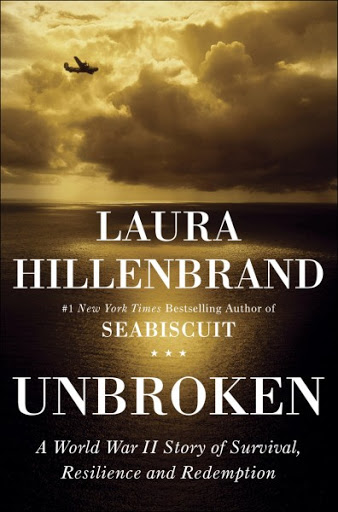
Unbroken thoughts

For a while I felt almost addicted to “Office” re-runs. I personally love the show, and have found it helpful in connecting me to both those a bit older and younger than myself. But I knew the only way to get out of the TV rut was a good book. Reading stuff for ministry isn’t too hard since I dedicate some of my schedule to read and study. Reading stuff at night time becomes harder because its not necessarily part of my job. The only prescription is not more cow-bell-though who couldn’t use more cow-bell, but simply a good book. Some of my previous books which have helped me out of the night time rut include Bonhoeffer: Pastor, Prophet, Martyr, Spy, No Bag for the Journey (a fellow Jesuit High alum turned Episcopal Priest chronicles his journey riding a bike across the country), and The Glass Castle
This time, Unbroken came to my rescue. The most exciting book I’ve read in a long time. 
Laura Hillenbrand can certainly spin a yarn with the best of them. Her biographical writing rivaled Metaxas’ Bonhoeffer, but she did a great job of simply getting out of the way to let the story of Louie Zamperini almost tell itself. Sometimes I feel guilty recommending something already on the best seller’s list, because its obviously not a gem that I’ve discovered. But this book kept me up late into the night for a week or so, as I clamored to get to the next page and chapter of Louie’s life.
After crashing at sea, floating without food, surrounded by sharks, Louie and the pilot were intercepted by the Japanese. It only got worse, as they POW camp-hopped all over Japan. The brutal treatment they received at the hands of the Japanese really tied me into an emotional knot with anger and sadness wrapped around each other. 
I can’t imagine what I would have done after being liberated from such an evil (37 % of Pacific POW’s died as compared to 1% in Europe). When men in one camp became free, some no doubt thought about repaying their captors’ evil with evil. But after a Thanksgiving service, “They were told that they must not seek revenge; they were officers and gentlemen, and they were to behave that way.”
This was one of the most memorable lines in the book. I wonder what I would have done if someone tried to stop me from retaliation and only gave me the “you’re a gentlemen, so act like one” command.  Not sure that would have worked for me. I might have said, “Etiquette class and cotillion does not a gentlemen make,” and would have at the very least given each guard an atomic (though I would have probably used a different word) wedgie.
But it did “work” for these guys, at least on the surface, and for a time. Most didn’t retaliate in the slightest. I guess that says a lot about the “greatest generation.” Unfortunately though, the scars of the P.O.W. experience were decidedly deeper than the skin, and many like Louie remained haunted by their tormentors back in the States.
In fact, it was only through a one-time enemy’s act of atoning sacrifice that would free Louie from the nightmares and anger. After he had seen (through the eyes of faith) an enemy die FOR him, he put aside his quest for revenge and returned to Japan to share the gospel instead of mete out judgment (which he actually had plans to do!).
That sacrifice of Jesus is sufficient today to curb our retaliatory dispositions to those who truly deserve retaliation. Showing “class,” or trying to play the “bigger man” might stop the action, but it will not stop bitterness, anger, or nightmares.

Unbroken describes itself as a story of redemption, and it delivers. Ultimately it is only through Jesus, that any of us can experience such holistic redemption.

Unknown's avatar

Interrupted by fundamentalism: Part III

This is the final post on being “interrupted by fundamentalism.” Should you say anything? I boil it all down to three question.
1.) Is the gospel being threatened? Paul got up in Peter’s grill and said,  “I opposed him to his face, because he stood condemned (Gal 2:11).” If the gospel is being added to or subtracted (as was the case with Peter refusing Gentile fellowship), then it does warrant a response.  The plate on the bible was no doubt a symptom of a greater disease, but the request-or rather command-itself didn’t necessarily show me that she was trusting in her works instead of the grace of Jesus. That’s what some people call Pharisaism (adding little rules), as opposed to Legalism-working for your salvation. Of course Pharisees did both, and both are commonly found dwelling in the same persons today.
2.) Can you do it truthfully and graciously? Perhaps there are times for righteous indignation, as with Jesus and the money changers in the Temple (Matt 21:12), but we should always remember that most of our anger is not of this variety. And we don’t know exactly what Paul’s and Peter’s exchange looked like. Clearly there was confrontation, but how “heated” Paul got is something we can’t know for sure. 
3.) Will it do any good? What affect will it have? This last question is perhaps the last question we should consider in deciding whether or not we should go on the offensive. First of all, I don’t think the question is necessarily a bad question to ask. It is wise to be silent at times, and sometimes anticipating what response you might receive, will allow you to “lose the battle” but “win the war.” So the “will it do any good” question can sometimes be valid, provided you’re not just backing out of necessary gospel-driven confrontation.
But I’d now like to turn to the question “will it do any good?” itself, and explain how it can be an illegitimate question.
A. Who knows? None of us know for a fact what a gospel-centered response could elicit. We can make educated guesses, but how much do we really know? Even when God has declared through a prophet there will be death and destruction, some folks offered up prayers, saying, “Who knows (Jonah 4)?” For Nineveh it “worked,” for David, it didn’t. Who knows? Perhaps a seed was planted, and it might give folks something to think about. Just as coming to faith for many takes a plethora of gospel conversations, so might this exodus from the slavery of man-made rules take some time.
B. How can we expect folks to change? If folks are never challenged to think gospel centered thoughts, they will no doubt continue “policing” tables looking for plates on tops of bibles. People do leave fundamentalism behind. Sometimes it occurs when they simply grow up, and see that NetFlix can be a good thing. But if no one ever graciously challenges them, then we should probably not expect the gospel to make a big dent in their thinking.
C.) A little too much pragmatism. The main problem with the “will it do any good” question is that our presumed definition of success becomes the arbiter of whether or not we do something. And often our definition of success is not necessarily God’s definition of success. Think of the OT prophets. Most people did not listen to those guys. Not only that, Israel often killed those dudes. It definitely didn’t look like their message “did any good.” Maybe no one changes from your gospel-centered response, but that might just be what God dialed up. Some things just have to be said because they honor God, regardless of whether or not, those words are actually heard, received, and pondered. The “will it do any good” question, sometimes finds more common ground with pragmatism than faithfulness.
D.) Worried about our own comfort. I think the question has yet another underlying question: is it worth it to enter into the unknown and perhaps the uncomfortable? It’s much easier (provided they go to another church) to let someone go on making up rules not found in the bible and trying to enforce them on others than to disagree and enter into conflict. Conflict, particularly when it doesn’t seem to do any good, is uncomfortable. We tend to not like that feeling, so sometimes I think we can hide behind the “what good will it do” question.

None of these questions are directed to anybody. The older I get, the more I’m beginning to see these questions behind the “will it do any good” question in my own heart.

Unknown's avatar

Interrupted by fundamentalism: Part II

As the title suggests, this the 2nd post in this series, so please go back and read the first post to get the contcxt. 
First of all, my re-telling of the story landed on the sardonic side. I’m really not angry, but just felt very creative for a bit, so I tried to put it all down before the “creative muse” left me high and dry. Although I am saddened that much of “Christian” thought in this area is dominated by fundamentalistic thinking (making up outward rules not in the bible, preachers yelling at people, and trying to make God like us, etc…) There is not much gospel-centered thinking or preaching: God already loves me, so I therefore want to follow Him, failing regularly as I go, and showing grace to others. That much I’ve witnessed and heard from countless folks.
In fact one picture of sanctification someone espoused from the pulpit in a local church looked like this: a long haired, ear-ringed, tatooed, man came to church, and over time, he cut his hair, got rid of his ear-rings, covered his tatoos. That’s sanctification: outwardly conforming to some sort of cultural norm not based upon scripture.
So that is prevalent. But is there any response demanded from someone who walks up to you and demands that you conform to this model?
I don’t think there is necessarily any response demanded. For instance, I had nothing to say. Nothing came to me. And as my dear friend Jeremy pointed out in his comment, it would probably not have been gracious. Truthful perhaps, but not gracious. I shouldn’t have said anything because nothing came to me.
While visiting Israel on a foreign study trip in college, an orthodox Jew in Jerusalem made me take either the meat or the milk product OFF of the table. I knew I couldn’t have meat-lovers pizza in Jerusalem (I had cheese while my buddy opted for the Tuna-bad choice), but I didn’t realize they couldn’t even be on the same table. I obliged, more out of safety than anything. He wasn’t too happy. I’d probably oblige again.
But when a Christian comes and demands you follow something extra-biblical, provided words come to you, it is right to say something.  Particularly because the plate on the bible thing is really just the tip of the iceberg of a disbelief in the gospel.
Jesus comes into contact with some pharisees, first century fundamentalists, and he challenges their assumptions. They can’t figure out why his disciples don’t wash their hands, according to the traditions of the elders. He goes for the spiritual jugular, the heart, and quotes Isaiah, showing that this has been a problem for a long time in Israel: “This people honors me with their lips, but their hearts are far from me; in vain do they worship me, teaching as doctrines the commandments of men (Mark 7:1-8)”
It is not good to make up commands. Jesus is not a fan, even when you think you are doing God a favor. Clearly this woman felt like it was dishonoring to God’s Word to put a plate on my bible. But the Pharisees seemed to have used the same argument. They honored God with lips, but their hearts were far from him. All of their actions fell under the rubric of “You need to honor God,” but because their motivation was so far off (making God their debtor by making up rules and trying to get others to follow them), they actually ignored the ACTUAL commands of loving their parents.
When people do make up commands, we have an opportunity to address that behavior, provided our tones aren’t dominated by sarcasm or anger (I Peter 3:15-17; this verse refers specifically to dialog with unbelievers, but I’m pretty sure the whole gentleness and respect thing applies across the board). 
If the Lord has given you nothing to say, then follow Allison Krauss’ lead (or Keith Wheatly) and “say nothing at all.” But it is a good thing to seek answers which would challenge our fundamentalist brother and sisters in the faith with the truth and the gospel. 
Here are some questions I might ask when I have my next “interruption,” which may open the door for the gospel. Instead of following your heart (or mine) and saying “get a life,” these might start the conversation off on the right foot.
1.) Where in the bible does it say that? Could you show it to me? If its not there, should we hold this belief with such certainty, and THEN expect others to follow this command?
2.) I appreciate your concern to honor God’s Word, and there are many ways of honoring God. What are some other ways which YOU display a high view of the Word? Here are some ways I value God’s Word: hearing it preached regularly, studying it regularly, discussing it in community, applying it, cherishing it, etc….
  
Jesus didn’t ask his disciples to wash their hands, even though that would have been a more “peaceful” response. I might refuse to take the plate off the bible next time, but I will definitely not do so devoid of gospel-centered dialog. But if I, or you, feel that the gospel is not threatened, then I or you can follow Paul’s example and have one dude circumcised and the other not. The answer depends upon gospel-centered thinking more so than our (and mine in particular) goal or desire to prove someone else wrong.
Feel free to share any other pertinent questions you feel might be helpful.
One question (well at least one) remains: will it do any good? And if it won’t (or at least if we presume it won’t do any good), should that be a reason for why say nothing at all? I’ll get to that one tomorrow and then get off the fundamentalist response kick.
Unknown's avatar

Interrupted by fundamentalism

The other day I had a meeting with some folks on the nursery team at Tim Horton’s (the closest thing we have to Starbucks in “the Valley”) when a woman interrupted us with something “important” to say. She asked me if the object on the table was indeed a bible. At this point, I expected her to say something like, “Wow, it’s good to see other Christians out and about,” as I was accustomed to hearing from women her age (60’s) in Bradenton, FL.  What I did not expect was that which came out of her mouth.
She began, “My third grade Sunday School Teacher taught me something and it has stuck with me ever since.” Still, I’m expecting something encouraging. After all, we were brainstorming on ways how to better teach the Toddlers the gospel during their nursery time, and how to get parents involved in the process. Good things I thought. 
But then the bomb shell: “You never put anything on top of the bible.” There was a plate from my donut resting on top of the bible. So she took the plate off, freeing me from the pending judgment of God on my hapless soul no doubt. Probably not a second too soon.
And then, like a small black-tip shark with an investigatory bite on a surfer, she was gone. Disappearing into the vast sea of everyday life, this Christian soldier marked onward with pride toward the next opportunity to make a spiritual citizen’s arrest. Or maybe she just went home? Who knows or cares? 
We three paused in disbelief. I was speechless, fortunately, because words might not have been “gracious, seasoned with salt,” as instructed in Colossians 4:6. Blindsided by fundamentalistic  superstition, I had absolutely nothing to say, but “wow.” I knew from personal experience that fundamentalism and legalism ran rampant here in West Va like the ancient buffalo of old, but I guess I’d not been run over by such a buffalo before. I felt it this time.
Of course after she left, I thought I should have clarified that my bible was actually the ESV, and not the Holy and uniquely inspired King James version. So it was technically not a recognized bible for “fundies.” Maybe I could have kept my plate on it after all?
What does one say in such a scenario? Is there anything which one should say, or are there things better to say, or should we just follow Allison Krauss’ instructions, saying it best “when you say nothing at all?

I have some takes on how I could have responded, and plan to respond the next time someone uses such a silly superstition in God’s name. But this post is already getting too long.

Unknown's avatar

Chris Paul, forgiveness, and me

If you’re of those who follow the NBA playoff’s, you’ll know that the L.A. Lakers received a very poor Mother’s Day present from the Dallas Mavericks: a near 40 point “beatdown.” Sometimes we need a “villain” to keep things interesting: the Lakers were that “villain” to me: someone to root against. Now, I just don’t care.
While I don’t offer you any suggestions on a team to pull for in the play-off’s, I do offer you a player to pull for in the next NBA season, should they have one. It is very clear that very soon the NBA will head the way of the NFL and players will be locked out. So, provided there is an NBA season, or a shortened season next year, here is a lad whom you will want to root for: Chris Paul.
I knew New Orleans Hornets point guard Chris Paul was a believer; after all, he was on the cover of the Sports Spectrum (a Christian sports magazine). In fact, he was on the cover of the most famous Sports Spectrum volume, the edition containing sports-related devotions by a host of athletes, coaches, and an associate pastor (ME). My name looks a little out of place alongside Indianapolis Colt’s Center Jeff Saturday. So that edition, in the minds of many, will forever link Chris Paul and myself. Chris knows what I’m talking about. Obviously.

Check out this story about Chris Paul, how he honored his grandfather, and offered forgiveness to the teens who brutally murdered him. It will no doubt move you, surprise you, and perhaps challenge you. It did me. You may not be pulling for the Hornets next year, but you will be pulling for him. I promise.

Unknown's avatar

Every Mother’s or (Rather Pastor’s) Nightmare?

Mother’s Day is coming early this year. I guess you could say it is as early as it could possibly be: the 8th.

I’m thankful for my mother. Very thankful for her prayers, her teaching, her love, her wisdom, her patience. I’m thankful for my mother-in-law as well. I’m thankful for my grandmother, who has been a grandmother to both me and my wife. And I’m thankful for those who served as surrogate mothers to me while I served as a single youth director.

While Fathers are supposed to lead at home, mothers have admirably led when the father has abdicated spiritual leadership. Timothy is the product of godly women, of a godly mom and grandmom: 
“I am reminded of your sincere faith, a faith that dwelt first in your grandmother Lois and your mother Eunice and now, I am sure, dwells in you as well.” – II Timothy 1:5
So how do we honor them on Mother’s Day? How do we honor them in worship? Can we honor them in worship and keep the focus on Jesus? That’s the hard part. It can be a nightmare trying to discern the best way to honor them without cultural capitulation.
In regards to honoring them on Mother’s Day, I’ve canceled Sr. High youth group because some would rather have their children home. But I’m also having Jr. High youth group at our house, because some mothers would rather get a break: that’s how Amy and I think.
But in worship, should we do anything special? Mark Driscoll, pastor of Mars Hill in Seattle, gives 10 tips for things to do IN and after the worship service. Here are a few of those and my takes.
“1. Have a woman lead worship or help lead worship”-I don’t have a problem with women helping lead worship, but how much of what we do in worship should be done so that a certain group feels special?
“6. Dedicate lots of babies. Everyone likes to see babies on Mother’s Day.” Besides the theological differences in baptists and presbyterians, again, I just think this borders on worship as entertainment.  That’s not the point of worship-though I obviously believe it to be a joyous time and my favorite time of the week.
“8. For some women, infertility makes Mother’s Day a tough time. Invite them up after the service to be prayed for, that God would open their wombs.” On the front end this sounds good. I mean who doesn’t want prayer? But I don’t think any women who have tried tirelessly to get pregnant would appreciate being singled out on THIS hard day for them. Perhaps God’s design is for them to adopt? If a mother who was trying to get pregnant thought this were a good idea, I’d be OK. But I doubt-and of course this is speculation- it arose from such a person. Driscoll, who has been influential to me as far as big picture stuff goes, may not be doing the best job of putting himself in the shoes of those desiring to be mothers. I could be wrong-but that’s my take.
You can read the rest of the list here even though I probably wouldn’t recommend any of them.
I’m generally disappointed in evangelicalism’s Mother’s Day service in two major areas.
1.) Sensitivity to those desiring to be mothers, those mothers who’ve lost children, who have no mother, etc…I’m not the most sensitive person in the world. I’m growing in sensitivity, as I think we all must grow in this area. I was not aware how hard Mother’s Day was for some of the aforementioned until a class in seminary. The professor’s wife left town every mother’s day, largely in fact that there was such an in-your-face-emphasis at church that Sunday. I don’t mind offending people with the gospel, but not this.
2.) Worship is God-centered. When we give rewards for the youngest mother, oldest mother, newest mother, we take the focus off of Jesus. We lift up the created rather than the Creator. I’m not out on a crusade to call other churches out. I just want to explain why some churches refuse to do a blatanly specific “Mother’s day” service. It’s is NOT because we don’t treasure and value mothers. It is because we want all focus to be on Jesus. That’s why I won’t ever create a Veteran’s Day, Father’s Day, or Graduation day service.
What should we do? I don’t know what we should do, but here are some ideas that we’ll do at Redeemer.
1.) Children’s Church Mother’s day lesson
2.) Toddler Nursery craft for mothers.
3.) Pastoral prayer thanking mothers and spiritual mothers. Several women at Redeemer have no children, but have been a spiritual mother to Connar and Cade, and I’m SO thankful for them. They are a gift from our Heavenly Father.
Just my thoughts on how to apply Mother’s Day at church. 
The real question is can we honor, thank, recognize a group of people before God IN worship without drawing attention away from Him. That’s a hard one to answer, and I realize I may not be as consistent as I’d like to be with my vision. Honoring them after the service is much easier.