Unknown's avatar

The role of good works and obedience

In an area rife with legalism and fundamentalism, the idea of “good works” often is quite bad. It reminds me a bit of the Catholicism in the 16th century juxtaposed with the early Protestant Reformation. You can read about one of my experiences with it in this part of West Virginia here. To talk of “good works,” or the need for them is often met with hostility. Should this be the case? What role do good works play in the lives of believers? Are they necessary? An after-thought?

To many in this area-because of fundamentalism-“good works” or obedience are simply an after-thought. I do fear that we Christians sometimes respond re-actively more than biblically, and so the idea of “good works” can be minimized. After all, God really just cares about one’s ability accurately profess justification by grace alone through faith alone. Just articulate it clearly and you’re good to go. A Christian is someone who asserts to and articulates this fact, right? I’m all for articulation. But I can coach a monkey, well maybe not a monkey, (a parrot?), but most any person to articulate justification by faith. Sure they’d falter if I you were to really probe. But for the most part, they’d pass. And it’s not because I’m that good.

Is that all that God wants for Christians? Most everyone would say no. But most of us are scared to say much more than that.

Are “good works necessary?” Well no and yes. No they are not necessary to save you. But that’s kind of a weird question, because they can’t save no matter how good you think those works are. So dumb question, but I raised it. A person is only saved by Christ alone through faith alone. Faith alone saves. But like the old adage, faith that saves is never alone.

Ephesians 2:8-10 tells us we are saved by faith in Christ, and because of that we are God’s workmanship created to do “good works” that he as prepared in advance for us. Good works are necessary in the sense that they are a necessary consequence of God regenerating someone. They are produced by God when he saves us in Christ through faith. Here’s a snippet from the Westminster Seminary blog:

After arguing that sinners are justified by faith alone, and not by works (Romans 3:21-28), the apostle can make the point that those who are justified through faith have also died to sin. Christians no longer desire to live under sin’s dominion because they have been buried with Christ and subsequently raised to newness of life. Instead of destroying the desire to do good works, the doctrine of justification by faith alone establishes the basis for good works. Those who are justified (having died to sin), will walk in newness of life and begin the process of sanctification. The newness of life and our sanctification is characterized by the doing of good works (cf. Ephesians 2:10), and the presence of the fruit of the Spirit (Galatians 5:16-26). As Paul puts it elsewhere, “He who began a good work in you will bring it to completion at the day of Jesus Christ” (Philippians 1:6).

I also found this article quite helpful in how to think through good works. We do need to encourage each other to do good works, not contenting ourselves with good doctrinal articulation. I like fine tuning doctrinal articulation. I just ordered a book Concise Theology to go through with folks in order to help them know and articulate sound doctrine. But articulation is not the goal of doctrine or theology. The goal, or even the definition of theology according to a former professor of mine named John Frame is “the application of scripture to life.” From Head to Heart to Hands. Here’s a great way of thinking about good works and obedience that will honor Jesus and not fall into the grasp of legalism.

Since our sanctification is every bit as much an act of God’s grace as is our justification, all those who have been justified by grace alone, through faith alone, on account of Christ alone, will (as the Catechism says) live according to all of God’s commandments. Since our obedience (like our sin) is covered by the blood and righteousness of Christ (making even the worst our works truly good), our heavenly father delights in our feeble efforts to do good. And knowing this to be the case creates within us the desire to obey all the more. 

My sins are covered by the blood of Christ. Therefore I need not fear sinning anymore. But have you thought about these last two lines before? Have you ever thought that not only are your sins covered (so no need to fear when you fail to follow), but that your good deeds are now pleasing to God (since we’re united to Christ)? The obedience of a Christian pleases God because Christ makes “even the worst of our works truly good.” We’ve got all the motivation, and of course power, to live differently in this world than unbelievers. And freedom to not feel ashamed when we daily fall short. You can’t beat the gospel message.

Unknown's avatar

American Idol, Outsanding warrants, and advice from Ice Cube

Last week I watched American Idol contestant Jermaine Jones get kicked off the show for having 4 (undisclosed) outstanding arrest warrants. The two Brit producers indicated that they want contestants to be honest in disclosing all the dirty details of the past. 
A few thoughts crawled around my mind and dropped here and there like the termites currently infesting my study at church. 
1.) If you have outstanding warrants, is the best place to hide, or rather run from them, a very popular nationally televised singing competition? This article explains the warrants and the reason they were issued were not of such a grave nature that authorities would actually chase Mr. Jones down. So I guess the moral of the story is that its OK-depending upon the severity of the crime-to not show up for court. Sometimes. I guess he didn’t shoot the sheriff, or the deputy (allegedly) like Bob Marley did. Good to know that if you have any outstanding warrants, that shouldn’t necessarily make you shy away from American Idol (so long as you tell them) or any other reality show. Land of the free.
2.) If you do watch the video, you feel beyond uncomfortable for this joker. The two Brits try to take the high road by telling him that they are all about giving second chances. They confess that they actually care about Jermaine, and the contestants. I’m guessing a better way of “caring” would have been to address this privately? It’s pretty fascinating, for lack of a better word, that even Christians can say (and think) we are doing something for the good of another, yet at the same time NOT be doing it for the good of another. Since this was not a public offense before an American audience, the American audience didn’t need to be privy to this. Matthew 18 is a good example of how Jesus instructs us to say the hard things necessary to offending parties, but to do so privately. The scriptures always give parameters, like “speaking truth in love” as well as structures and frameworks (Matthew 18; I Cor 5) which allow the sentiment and activity to be consistent with the gospel.
3.) I’ll never cease to be amazed by the “I’m not judging you” comments that non-Christians and unfortunately many Christians cherish hearing. Yet I shouldn’t be amazed, because it makes complete sense. The two Brits adamantly say something to the effect of “We’re kicking you off the show, because of your undisclosed arrests, but we’re not judging you.” Uhh….I think Jermaine would have rather been judged BUT kept on the show….But there is a reason why folks so often have to preface everything with “I’m not judging you,” and expect one in return: God’s righteousness or lack thereof. 
Paul writes of the Jews in Romans 10:3, he says, “They did not know the righteousness that comes from God and sought to establish their own.” Inevitably if you are not declared righteous by God, or actually believe you are declared righteous by God, you will seek your own and be slave to the judgments of others. You will seek a righteousness that comes by some sort of works (rather “good” or “bad”). You will. And this is case in point why unbelievers always feel such a need to say, “I’m not judging you….” They expect it in return. They need it.
But if God does declare Jesus’ record to count as your record (for the Christian), you don’t need to bothered by other’s judgments. In fact, when we are bothered by their judgments, it is because we DON”T believe like we say we believe. The problem is not with the other person judging us. The problem is our lack of belief that God doesn’t judge us. Who cares if someone judges you? I confess I do, sometimes. Ok, maybe more than I like to admit. But it is stupid and irrational, isn’t it?

Ice Cube once sang “Check yourself before you wreck yourself.” Provided the “yourself” includes a positional righteousness in Christ, I’d have to agree. If you don’t check yourself to see whether you are really resting in Christ’s righteousness, you will wreck yourself. And it will be your fault, not the fault of the “judges.” Whether on American Idol or the judge next door.

Unknown's avatar

Saved? Totally, or mostly saved?

I just finished reading I Corinthians for my devotional time the other day, but took some time to make it through the rather famous I Corinthians 15 passage which spends a lot of time and focus on the resurrection.
But there is another gem present that most of us often overlook
1 Cor. 15:1-2   “Now I would remind you, brothers, of the gospel I preached to you, which you received, in which you stand,  and by which you are being saved, if you hold fast to the word I preached to you—unless you believed in vain.” 
The gospel is clearly a message of something God has done in history: coming, living, dying, rising, ruling, and one day raising us up bodily. That much is clear from the following verses and the ones following them.
1 Cor 15:3-4 “For I delivered to you as of first importance what I also received: that Christ died for our sins in accordance with the Scriptures, that he was buried, that he was raised on the third day in accordance with the Scriptures…”
Nevertheless also part of the gospel is its power to save us. Romans 1:16-17 makes that clear, but so do verses 1-2. The gospel is something “in which you stand,” but it is also that, “by which you are being saved.” One of the reasons I never use the expression so-and-so “got saved,” is not because it is un-biblical, but rather because it is incomplete. The bible doesn’t speak of Christians simply as those who have “been saved” but those who are NOW “being saved.” 
The passage indicates our present need to still “hold fast.” We are being saved even now from sin’s nagging Power (we’re no longer totally enslaved as before), as we already have been saved from sin’s Punishment (“in which you stand”). The proper response for the Christian is to keep holding fast to the truth of the gospel (and within the message there are many golden nuggets like new family, new record, new world, new heart, new future, new desires, new hope, new convictions, etc….) and don’t stop. While you are free to use the word “saved” to refer to a Christian, or someone becoming a Christian, we are never to think of salvation as something only happening in the past. Your testimony of how you became a Christian is never more relevant than how you are “being saved” now. 

While someone may not be “partly dead” or “mostly dead” as in The Princess Bride, it is biblical to think we are “partly saved” or “mostly saved” (saved from sins punishment, and enslaving power, but not yet its annoying presence in our lives and world) now and will be “fully saved” when we go be with Jesus. Jesus has already done ALL the work for us, so now we hold fast for the duration of the ride.

Unknown's avatar

Don’t cry for me Argentina or Jerusalem

In reading through Zechariah 7 for my devotions (you’ll never hear me use the word “quiet time,” b/c that’s what my 3 year has to do when he doesn’t take a nap), I came across a challenging passage. 
It sounds innocent enough. 
2 Now the people of Bethel had sent Sharezer and Regem-melech and their men to entreat the favor of the LORD,  3 saying to the priests of the house of the LORD of hosts and the prophets, “Should I weep and abstain in the fifth month, as I have done for so many years?” 
But there really is something missing. It is like someone saying, “Lord, should I try to be sad and go through the outward emotions of looking like I’m sad because of my sins and the sins of my nation? Because I really am just bummed about missing my favorite restaurant and hangout places back home. Should I keep going through the motions of repentance without real repentance?”
Because that’s what was happening. Keep in mind, many of the same things that caused Israel to ‘get the boot,’ continued to happen. That’s why these lofty promises of a restoration of the temple (the rebuilt Temple was NOT nearly as cool as before) and the kingship never go anywhere. We don’t hear much about this new potential king Zerubbabel until Jesus’ genealogy. 
5 When you fasted and mourned in the fifth month and in the seventh, for these seventy years, was it for me that you fasted?
The Lord says that they were not fasting and weeping because of their sins. Some were probably bummed about the consequences of their sin: living in foreign land. Some of them had actually become quite comfortable there and enjoyed the foreign food and ladies.
It’s a good reminder to all of us that we can be sad over the consequences of our sin, without ever demonstrating true repentance: sadness over the fact that we’ve chosen death over life, empty wells (Jer 2:32) over the spring of living water (John 4:10-11).  For instance we can be sad over the relational consequences of yelling at our kids, kicking our dogs, belittling our spouses, not loving neighbors: loneliness, lack of intimacy, divorce, people not being there when we need them. But being sad about the consequences is not the same as truly grieving the sin.
What’s the difference? God says, “was it for me that you fasted these 70 years?” In other words, their idolatry and injustice was an affront to God Himself in addition to an oppressing His people. As David reminds us in Psalm 51, any sin done against another person made in the image of God is first and foremost a sin against God. It was He whom they had sinned, and it was to Him whom they were to first repent. But they hadn’t as evidenced by continuing in the pattern of injustice (Zech 7:9-10).
In regards to parenting, some things hit me then and now: do I grieve my sins against my kids and wife as though I’ve sinned against God? And when my kids disrespect me, do I grieve the fact that they’ve disrespected me only? Or do I grieve, concern myself, pray for the fact that they’re really disrespecting God as a Father? If I can grieve the sin as against God first and foremost, I don’t have to take it as personally. Instead of responding quickly or harshly, I then have the opportunity to bring the gospel to bear on the heart. After all, our sins are an affront against a Holy, but also LOVING Heavenly Father. It is out of respect and love for Him that I hope my kids will respect me, and not the other way around. Particularly when I’m hard to respect.

Anyhow, just some thoughts I had while reading Zechariah.

Unknown's avatar

Young Adults, Sex with "strings," and later marriage: Part II

This is another response to the article from my last post on Christian young adults not connecting sex with marriage, and living no differently than their non-Christian peers. 
The article, as previously mentioned, close with some questions: 
So what should a Christian parent or youth pastor do? How do they convince more young Christians to wait until marriage, or should they stop even trying?
First of all I do like these questions. I especially like the order of parents, and then youth pastors. I look back on my youth ministry days (and I’m still obviously involved in it now), and it does seem that one of the common denominators with those youth who walk with Jesus when they are young adults (and I’ve seen PLENTY who aren’t walking with Jesus now), is that they had Christians parents investing in them. They didn’t “farm” out the discipleship to the youth pastor. Instead they partnered together as a team.
And in this case, I think parents have a great opportunity to help shape a biblical sexuality. More than they think. So talking with kids about sex and sexuality is a good thing. A thing that shouldn’t be abdicated. Even the parents on the show Parenthood try do it, even though the daughter is reticent.
Pastors and other leaders in the church have a part to play as well. Last year we went through a book in a series of Little Black Books called Sex. It was well written, “down with the times,” Reformed, and helpful to produce some discussion in our 9th-12th graders. I think parents could go through such a book as well. It’s important that neither the church nor the parents run away from this issue. Silence and assumption don’t produce mature disciples. Neither does giving youth and young adults “Nike” messages: JUST DO IT! Jesus, and our laboring relentlessly with His energy produces mature disciples (Col 1:28-29). Particularly in this area.
Should we try to convince young adults to wait or stop trying? I think its a fair question to ask. Some things youth do are not necessarily sinful. Instead those things aren’t helpful. Texting 24-7 might be one of those things. But instead of saying NO, we might try to redirect, or instruct, or limit, or whatever you as a parent feel convicted. It does have an affect on their relationships, but its not something that we necessarily need to draw a line in the sand over.
But sex outside marriage is clearly outside God’s design. So we should make a go at “convincing,” them to wait. Here are some thoughts.
1.) If the marrying age is increasing now, then should it be that much of a stretch to think that the “acceptable” dating age should probably also increase? Again, dating ages are ultimately parents decisions. But instead of taking cues from culture, why not consider delaying dating since marriage is being delayed? Many folks, even those in their church, date vicariously though their kids. Obviously parents have to nip this in the bud. If that’s the case, then I think the goal of delaying dating a bit, is certainly feasible.
2.) Earlier marriage? Some have made a move towards getting married younger so that they don’t “burn with passion” (I Cor 7). I guess the jury is still out on whether or not these marriages will really make it. Paul said it was better to marry than burn with passion, but I’m not sure that he was trying to nudge us to necessarily marry early. I wouldn’t want to have put Amy through my prolonged serious depression years (she still got to experience some-she’s a real trooper), so age 26 seemed to be good for us. However, if couples are ready to actually leave and cleave, then go for it. But on the flip side, while it is better to marry then burn with passion, it is worse to marry and then divorce.
3.) Is later marriage a good thing? While it benefited us to marry at 26 (almost 27), I think our general delaying of marriage as a culture does fuel the pre-marital sex epidemic. Getting married in college, or before, may not be ideal. But waiting until everyone is financially independent, and then waiting to have kids once you are financially ready, is a recipe for disaster. Watch the movie Idiocracy for a possible result to that!
 
4.) Pre-marital sex does leave scars that you will deal with in your marriage. People will compare experiences. People will bring past physical and emotional experiences into their marriage beds. Youth need to learn this stuff NOW if they will escape this alarming trend when they are young adults. There are consequences to pre-marital sex which go far beyond STD’s that will bring harm into your marriage. Christ’s righteousness means that we have a Christ covered slate, not just a blank slate. But Christ’s righteousness does not level all consequences. God’s grace can curb the consequences of sexual infidelity, and redeem sexually broken folks (which is really all of us if you want to be honest), but there is reason why He says “Therefore choose life, that you and your offspring may live…(Deut 30:19).” Sin is death.
5.) Church is a place of sexual brokenness. If you mess up sexually, even though you may experience consequences, you can experience grace. If the church expresses grace to sexually active Christians, then there is hope for change. If sexually active young adults don’t feel the church is a place for those struggling sexually, then they won’t be showing up on Sunday. And then there will be no hope for them. They need to hear Jesus preached and applied each week and surround themselves with fellowship. Even if young folks are not broken by their sin, if they are connected to the means of grace (word, prayer, fellowship, sacraments), brokenness is possible. But if they sense a “if you screw up, you’re out,” then those will be the last words we hear.
6.) Sexual infidelity is not THE sin. It’s bad. It’s highlighted here as being a sin against our body (I Cor 6:18). Yet just before it is also counted among swindling, idolatry, greed, drunkenness, and stealing as precluding Kingdom inheritance (I Cor 6:10). Of course Paul is writing to people who are struggling with these sins. He is telling them that their lives WERE dominated by such slavery. Now they are washed free and waiting. And struggling. So we should be frustrated at the sins of others. But we must not elevate or ignore other sins in ourselves and other folks.
7.) Only grace will produce sexual healing and fidelity. Steve Brown includes a great illustration in his book Scandalous Freedom of Abraham Lincoln redeeming a slave. The slave girls says, “I’m free to leave?” Lincoln tells her, “Yes you are.” In the end, the slave wants to go with Lincoln. Experiencing grace makes you want to follow Jesus. Grace motivates and empowers you to follow God’s commands in all areas of life.

These are just some thoughts which I hope will help us think through, instead of run from, or give up, on this important issue.

Unknown's avatar

Young adults, sex with "strings," and later marriage

Here is a fairly disturbing article explaining that fewer Christians are actually saving sex for marriage. In some cases, it looks like evangelical Christians and those who don’t profess Jesus at all, often have a similar sexual ethic. And it is reminiscent of the Nike command: “Just do it.”

Several reasons are given for the numbers of young adults engaging in pre-marital sex nowadays. From the “everyone else is doing it,” to the oversexualized culture we live in. However the article concludes with one major reason.

Scot McKnight, author of “The Jesus Creed,” and “One.Faith: Jesus Calls, We Follow,” acknowledges that young, single Christians face temptations that their counterparts in the biblical age didn’t face. He  tells Relevant: Sociologically speaking, the one big difference – and it’s monstrous – between the biblical teaching and our culture is the arranged marriages of very young people. If you get married when you’re 13, you don’t have 15 years of temptation.

Is that point relevant? Does it matter that the scriptures were given to a culture when in actuality, it wasn’t AS hard to follow? I mean, I can remember being a 13 year old, and I can’t say that my temptation for pre-marital sex was even on my top 5 sins radar list. I’d have rather gone fishing than have a girlfriend. At 16, I actually had a girlfriend, but still, I can’t say that it was as hard as when I was 25 years old.

So how should we think of the now increasing marrying age discrepancy?

We need definitely don’t need a simple answer if we’re going to apply the gospel to a very serious, and hard problem. So here are some of my thoughts.

First of all, Jesus actually raises the bar when it comes to sexual fidelity. He says that if we look lustfully upon a lad or lass, that we are actually committing adultery in the heart. His standards are incredibly high. Even lusting is off limits. Wow.

As a result we need Jesus more than we think we do. Fortunately Jesus didn’t remove himself from female company, yet he walked without lusting among them-even though, he was fully human. He would have done the same for our culture today where women shower, shave, and smell better, and tend to dress a little more, shall we say, “progressively.” He did this for us, and now he empowers us to live as citizens of heaven while here on Earth. While the culture says, “Just do it” in relation to sex; the church can’t say, (and its primarily those who are married saying it-which sometimes makes it harder to hear) “Just do it,” in relation to remaining faithful until marriage.
In order to be faithful to the scriptures AND gracious with those dealing with this struggle, we do need to lay all cards on the table and be honest with some new difficulties present in our world.

The article ends with a few questions and no answers.

So what should a Christian parent or youth pastor do? How do they convince more young Christians to wait until marriage, or should they stop even trying?

Let me simply continue the discussion-not attempting to “solve” the problem (that won’t happen till Jesus returns) but try to honestly reflect on this difficult trend.

Honesty with the difficulty, without being quixotic

People do get married later these days. It is true. Therefore that can present some problems. Obviously. I think we need to recognize and be honest that the struggle is going to be hard. Will it be harder than in previous times? I think in some ways, yes. Simple math tells us that. 13-15 is different than 26.

Nevertheless, if you say, “well people got married earlier then,” it doesn’t change the situation. Sex did not ever come with “no strings attached” but within the confines of the committed covenantal relationship. No matter what age it is regularly experienced, sex always comes with “strings.” For Christians, those “strings” are called a covenant.

But do 13-15 year olds really want to get married? Are they ready for jobs, to be responsible for family? They can’t even drive yet. We can lament the age difference, but even with hormones raging, do guys and gals really want to get married in their teens? 

Still, you can argue the command to wait until marriage may in some ways be more difficult today, but that doesn’t nullify the command-or the reason for the command. And, some commands were probably harder then than they are now. Whether you like Obama or not, he’s a lot easier to honor than Nero, or Trajan, or any other awful emperor that Romans 13 refers to.

There wasn’t some golden age to live in, where sexuality was something easy to live out. It certainly wasn’t that way with the bible. We need to recognize that it may be harder in some ways to live chastely before marriage now, but in some ways it could have been just as hard then.

Is our Culture worse?

The culture of Jesus’ times was no less sexualized than today. I’ve seen the artwork on pottery when on foreign study in Italy; it’s literally pornographic. I saw a mural in Pompeii where a lad was weighing his oversized penis. Seriously. Sex was all around them, just as it is all around us.

Biblical commands have always been counter-cultural. They continue to be today. We still have to affirm God’s good design for sexuality. And we still have to affirm God’s sufficient grace for our forgiveness (when we fail or have failed) and for our sanctification. I’ll try to get to some more thoughts on the latter later.
Unknown's avatar

What your car says about you?

Yesterday I peached a sermon called “Walk Like an Egyptian” on Phil 3:13-21, focusing on what it looks like to walk as an enemy of the cross of Christ, and how we are to walk as Christians: like imperfect citizens of heaven. Since Paul explains in this passage that people’s “walks” display something about what they truly believe (even if they wouldn’t profess something unorthodox about the cross), I chose to intro with a few examples of “what your car says about you.” I only had time for a few, so if you would like to see the ones that “didn’t make the cut,” here they are.
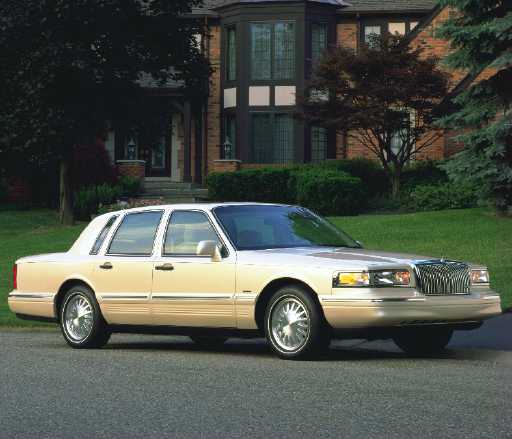
My personal favorite is probably the Lincoln Town Car: “I live for bingo and the potluck suppers.” This list is probably 15 years old, so keep that in mind.


If you want to listen to the sermon, here it is.

Unknown's avatar

A Rays Celebration of Redemption

Last night I witnessed perhaps the most improbable comeback in baseball history (well, if I’m recording it). The Tampa Bay Rays, down 7-0 in the bottom of the 8th inning, came back with 6 runs, then a 1 run homer in the 9th with two outs and two strikes to a hitter only batting .120. Dan Johnson had one homer in April, then stunk so bad they sent him down to the minors. Then, after a shaky 12th inning, where the Rays allowed runners to reach 1st and 3rd with no outs, the Yankees followed with three consecutive outs. Finally, Tampa Bay slugger Evan Longoria closed out the game with one of the shortest home runs Tropicana Field has ever seen. Sportswriters sum up the game here and you can watch highlights if my vivid writing falls flat to you. A home run that was only a home run because they shortened the height of the wall a few years ago.

To top that all off, only 3 minutes earlier, the Red Sox had blown a 3-2 lead with 2 outs and 2 strikes on the batter. Crazy. The script could not have been written any better. What I thought was so fascinating is that the Rays won in such a way as they could celebrate freely, yet humbly. They were remarkably humble, but that only added to the celebration. Here’s why.

1.) They played like garbage against a rookie pitcher making his first start and continued to play like garbage for 7 straight innings. They couldn’t boast in their play.

2.) While Longoria did come through with some clutch homers, it would have all been for naught if Dan Johnson, the unlikely hero-who had no plans of even getting into the game-didn’t hit his home run in the bottom of the ninth. With 2 outs and 2 strikes. Their star pitcher David Price gave up a grand slam. In the end, it took an unlikely hero. For the most part, the stars could not boast.

3.) The Yankees, either sensing that the Rays couldn’t come back from 7-0, or that they just didn’t care, didn’t use their stars. They couldn’t simply boast that they beat the best team in baseball. They beat the bench of the best team in baseball.

4.) It took several more innings, and a rookie base running mistake by the Yankees, for the Rays to finally capitalize. They couldn’t boast in someone else’s mistakes.

Now none of these things took anything away from the celebration. In fact, I happen to think they added to it. The celebration comprised a bunch of unlikely victors who depended upon a ton of factors which were out of their control. They were 9 games out of first place when September started. Even if they played well, the Red Sox had to play poorly. Impecuniously-if I may say-poorly. And they had to lose that night as well.

So in the end, it wasn’t simply a celebration of how good they were, but a celebration of a number of fortunate events like guys who aren’t very good making great plays, and timely decisions/guesses. That kind of celebration is much more special than simply winning the division because of your skill, then and resting players. I think that celebration would probably have been less special because it was a celebration of self achievement.

I don’t know how Yankee fan felt after they clinched the division. But I doubt the celebration was as great. And I don’t think its simply b/c they just want to win it all. Celebration in your own goodness pales in comparison to the celebration that comes with needing someone else to be good for you.

In God’s story of Redemption, he uses the Dan Johnson’s, the dependence upon factors we can’t control, and the goodness of the Redeemer. We can’t boast in anything except in Him. And as a result, the rejoicing in heaven is that much greater. And it should be just as crazy down here on Earth. Don’t ever forget to pop open a bottle of the bubbly when you think of the gospel. The celebration starts now, but remember this is just the beginning.

Unknown's avatar

Only YOU: Lesson from 9/11 Part II

This is the 2nd of my 9/11 related thoughts, centered around the interview with the fireman pictured on the right, who survived the terrorist attack. The fireman resisted the question of, “Were you saved for something special,” and instead retorted, “Don’t put that pressure on me. I get up and do my job each day the best I can….” You can read my take on that here.
But does the question of being spared for something play any part in the Christian psyche? We need not elevate, center, dwell upon, demand, or expect the sensational out of ourselves or our children’s salvation. However, because as Christians we have been delivered, the concept of “being saved for something” should shape our thinking. 
After all, Paul instructs the Ephesians in chapter 2 that they have been saved. They were “children of wrath,” but have now been “seated in the heavenly places.” They have been saved for something. There is a reason why God saved them. 
Ephesians 2:10 “For we are his workmanship, created in Christ Jesus for good works, which God prepared beforehand, that we should walk in them.”
 
God does have something special enough for everyone: good works. Good works that can only be done by you. Think about that. Only you can honor Jesus by serving at YOUR family with YOUR kids in YOUR neighborhood and/or at YOUR workplace in YOUR city in YOUR lifetime with YOUR personality. That is pretty special if you think about it. Only you can do it. You were saved so that YOU could honor Jesus by following Him. Not the only reason, but certainly a reason.
And when you fail at following Him you only have to go back two verses, “by grace you were saved through faith.” It’s OK, your works never saved you in the first place and they won’t help you in the last place.
Instead of survivor’s guilt we should all have a great sense of “survivor’s grace.” We do have something special in store for us. We should feel like there is a reason we were spared. Whether or not it’s something sensational that brings us celebrity, fame, readership, accolades, or puts us in history books is ultimately none of our business.
Unknown's avatar

Don’t put that pressure on me: A lesson from 9/11

Yesterday was 9/11 and is probably the next closest thing to Pearl Harbor. Ten years afterwards, and it still remains fresh in our minds and hearts. I imagine my kids will eventually understand 9/11 and perhaps even pass it on to their kids. I can’t see our country forgetting that event for a while. 
In light of this I saw a fascinating, though very brief interview with two 9/11 survivors still carrying with them the scars of their experience: one working in the towers and the other a fireman, if I remember correctly. The interviewer asked the fireman this seemingly appropriate question: “How do you live life differently because you were saved and others were not?”
His answer kind of astounded me in both its brutal honesty as well as its depth: “No, don’t put that kind pressure on me. I can’t deal with that. I just do my job the best I can each day.”
I don’t know if this man experienced “survivor’s guilt,” where one wonders, “Why wasn’t it me that was taken?” But clearly, he felt some pressure to “do something great” by this reporter. This is often the question we raise when someone is saved from calamity and the person siting next to them isn’t. Why did God save you and not them? He must have something pretty amazing for you to do? I guess I never thought about that kind of pressure before? That really puts pressure on folks to first of all, find that “mysterious” plan of God, and then the pressure to accomplish it.
Now perhaps God does have something “special” and extraordinary for such a person like curing cancer or something crazy like that. But to assume that is nonsense, because we have no idea why God allows one person to live and the other to die. I like this lad’s response, “Don’t put that pressure on me.”
But I also like the 2nd part of his response: “I just try to do my job the best I can each day.” Nothing sensational. Just trying to be a good husband, good worker, etc….We know God’s plan for us, and much of it isn’t sensational. When we’re told to find “the will of God” it is primarily in terms of our walking with Jesus and growing in Him (Eph 5:17, Col 1:9, I Thess 4:3). It is about sanctification, not our professional calling. Kevin DeYoung’s book Just Do Something really fleshes this out a bit more and better than I could if I had more space. You can download it for free here
Instead of thinking sensationally like there is something crazy out there, or something so specific that we have the burden of trying to figure it out, why not think more simply like this lad? Be a good husband, good parent, good Dad, love Jesus, follow Jesus daily, serve the church with your gifts. That seems a lot more biblical than the pressure of trying to figure out why you were delivered and the other bloke wasn’t.

God has made known to Christians the “mystery” of His will in Christ (Eph 1:9), so no other mystery should cause us to lose much sleep or put pressure on us.