Unknown's avatar

A "vested" ignorance?

Like most college football fans-and that may be the only football we’ll be able to follow on TV this year-I received the shocking news that Ohio State Head Coach Jim Tressel resigned. You can read some more of why he “resigned” here if interested.
Tressel was/is believed by many to epitomize class, ethics, and faith. In fact he has written such books called The Winner’s Manual: For the game of life, and Life Promises for Success: promises from God on achieving your best.
I can’t comment about such books, whether or not they are rooted in the gospel, heath-and-wealth, or Oprah theology. They might be great reads. No clue or no care.
But for the man known affectionately, or not so affectionately by others, as “the Vest” (he always donned the sweater vest), being forced to resign amidst players selling memorabilia for tatoo’s and other things is not the way he would have drawn it up.
Here are a few of my takes. 
1.) Many of these violations seem minor in comparison to players or player’s families receiving hundreds of thousands of dollars like the Reggie Bush scandal at USC. And the NCAA rules about players getting jobs sounds archaic and unfair. But regardless, such rules are very clear and if you’re a college coach, you’ve got to play by the rules.
2.) The article seemed to highlight Tressel’s ignorance. Sometimes I like being ignorant. Ignorance is always easier at the beginning, but almost always more costly in the end. The more we know about ourselves and others is often more than we want to know about ourselves and others. Ignorance can keep us from entering into the mess of people’s lives (and our own issues/motivations as well). While we won’t need to often report it to the NCAA or even the church, we might be forced to call others to repentance and assist them in carrying their burdens. Neither are fun.
Exploring your own and others lives seems costly on the front end, but its far less costly to do it now than to do it later. How many relationships, marriages, friendships would have benefited from knowing more of the person (even their sins) and then repenting alongside of them, allowing both parties to experience and show grace to one another as a pattern of life from the beginning? In the end, it is far more costly to be ignorant. Tressel is but one of a plethora (that’s the 2nd Three Amigos reference by the way) of examples.
Love, both for God and others, includes both knowing and moving more toward Him and others, because He has first known and moved toward us in Christ.

3.) Tressel is not the first faith professing coach to have violations and won’t be the last. I don’t assume any coach in college, regardless of their “class,” ethics, or faith profession, knowingly runs a completely clean program. Where are the Tony Dungy type coaches in college today?
Unknown's avatar

Lockout, probation, and ministry opportunities

I’m ready for the NFL lockout to end. Some players are also ready and yet other players will happily sit out the whole year. How long they can go beyond that is anyone’s guess.


Here’s an example of a player taking advantage of the time off, since there really isn’t much of an offseason anymore. Miami Dolphin wide receiver Devon Bess has redeemed his time by heading down to dig ditches in Costa Rica. Not that it would have been terrible for him to go to Los Suenos in search of Pacific Sailfish as I had the opportunity to do so in 2004, but this is certainly a commendable way to spend the lockout. Not motivated by guilt, but instead desire and opportunity, he says:


“I had an epiphany one night. With all I’ve been through on and off the field God has put me in a position to be a difference maker and to change lives,” Bess told Omar Kelly of the Sun-Sentinel


I don’t think I’ll be “drafting” Bess in the early rounds for my fantasy football team this year, but this is one more guy to pull for when/if the 2011 season starts. While not every football player and his mother (literally) are off shooting people (allegedly, though now indicted), some players are doing more than staying out of trouble; they are glorifying God by their good works and others are noticing.


Matt Barkeley, starting QB at USC, was able to go again with his family on a mission trip to Africa last year because his team was ineligible to play in bowl games. He might get to go on another one this year as well.


I think this is a good reminder to us all that “closed doors” like lockouts and probation can lead to great ministry opportunities. Instead of expecting the “closed door” to lead to something easy or more comfortable, perhaps we should consider how the “closed door” might just open the door for us to serve others we’ve previously overlooked.


Unknown's avatar

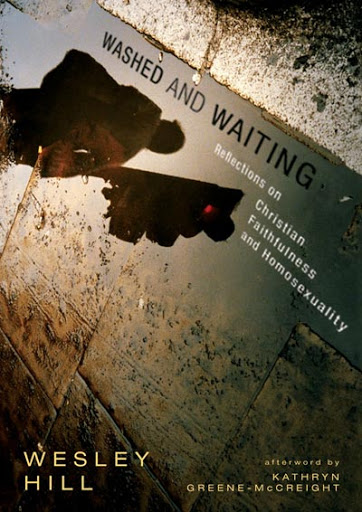
Washed and Waiting thoughts

I’ve almost completed Wesley Hills new book entitled Washed and Waiting: Reflections on Christian faithfulness and Homosexuality. I first saw this book reviewed on Darryl Dash’s blog, and found the review, as well as the content, not only fascinating, but highly pertinent. And ever so pertinent with things like “It gets better project.”


Instead of writing a “official” review on it, I’ll just share some fresh (at least fresh to me) insights I received from this book.


1.) While the book doesn’t give any kind of numbers, Wesley Hill does give an indication of a group of folks within the church who struggle with same sex attraction. In other words, they are only attracted to certain members of the same sex, yet recognize that following their desires to the bedroom truly dishonors God. I realized that such folks existed, but hadn’t thought much about it. Hill’s real life battle with unfulfilled desires really puts flesh on something many of us may not deal with or even care about. But we do need to care about and care for such folks in our church. I’m thankful for the courage of such folks to a.) remain in the church b.) not run to the gay community or simply go to a gay church to support their lifestyle.


2.) It’s not that easy to know why some folks have same-sex attraction. One of my electives in seminary at RTS-Orlando was on human sexuality. We studied some of the factors which lead to homosexuality, such as the distant father, overbearing mother, lack of same sex-friends growing up. Some homosexuals have this kind of background, but not all of them. In fact, Hill actually describes his loving Christian parents, as well as his leadership in the church youth group. Why does he struggle with same-sex attraction? He and we just don’t know.


3.) You can change? Some folks struggling with same sex attraction, can over time, slowly see their desires begin to change with the intake of the Word, good counseling, and good community. However, sometimes such desires never change. Some folks marry but don’t have sex. We cannot hold out a false hope, or expect a false hope, that same-sex attraction will necessarily change by becoming a Christian, growing as a Christian, or getting good counseling. Some times those desires will never change, as he gives the example of well known priest Henry Nouwen who remained celibate despite these intense struggles. That was sobering and saddening to hear. 


4.) The struggle for Christians with same-sex attraction is similar to that of the bachelor-to-the rapture (I’m assuming Jesus will not return in 5 months) Christian. Both sets of folks will live with unfulfilled sexual desires. Both folks will emotionally ache for that companionship of a special “help-mate” but not have one. In a way, I felt Hill expressing this to his readers: “We’re both on similar, very different, counter-cultural paths so I’m not asking for your pity. We both have crosses to carry.”


I’ve nearly completed this book and commend it to you. It will help you learn how to best minister to, and pray for such Christians struggling side-by-side with you throughout the week. In addition, you’ll be challenged by the similarity and difficulty of our struggles, as well as the need for intimate community in our ultimate journey to the promised land: The New Heavens and New Earth. 

Unknown's avatar

No one "noodles" alone

Some folks down in Texas got some good news this week. They could possibly join 17 other States, including neighboring Oklahoma, and be allowed to “noodle.” Noodling is the art-if you want to call wiggling your fingers into a rock pile or submerged structure and waiting for a catfish to bite them art-of catching catfish with your hands. Once the fish bites down on your fingers (again, if I didn’t lose you at catfish, I’m assuming I lost you “bite down on your fingers”), you use your other hand to help wrestle the fish to the surface. And in the end, you have, a catfish.

Some states have “noodling” tournaments and even “noodling” guides and businesses with “resorts” (RV type campers) to house first time catfish angler-wranglers. I’ve seen TV specials where stereotypical working moms from D.C. have actually left family and work for “noodling” vacations.

Of course the reason noodling is illegal in most states is because people die from noodling. Forget the fact that it might not be a good idea go into snake infested waters and stick your hand in a fish’s mouth. Remember the fact that catfish can get big and they don’t like getting wrestled to the surface. People drown. Not the way I would want to go: “I fought the fish and the fish won.”

What possesses a man or woman to noodle? Demons? Probably not, though I don’t rule it out completely. Is it the thrill of catching something with your bare hands? It’s probably more than that-though not necessarily less than that-because serious noodlers describe it as a way of life.

I’m not a noodle insider, historian, groupie, or buff, but have seen a number of noodling specials on TV. One thing I’ve noticed is that people don’t noodle alone. You need someone to come in and pull you to the surface if Mr. Catfish becomes unusually reluctant to give up his spot. I guess you could say noodling begets a community centered around helping and being helped. Or perhaps the need for such a community begets noodling? 

With normal fishing, you don’t need anyone. And some people like that. But latent within the “art” of noodling comes a recognition that you need the help of others. You need them and they need you. While I’ll not wiggle my fingers underwater for a catfish to bite them, I can at least see and appreciate that the need for noodling goes beyond primordial hunting. It might be just as much about community than catfish. Maybe. 


More video on noodling here.
Unknown's avatar

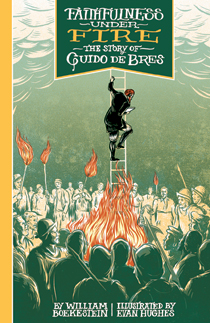
Review of Faithfulness Under Fire: The story of Guido de Bres

I received an email the other day offering me the opportunity to review the book Faithfulness Under Fire: The story of Guido de Bres. Of course I jumped on it, and am glad I did.


Faithfulness Under Fire does a remarkable job of telling a short, but robust story, of the short, but robust story of a man named Guido de Bres. Pronounced “Gee-doe de Bray,” this remarkable man lived in Belgium in the early to middle 1500’s. Influenced by the Reformation truths of justification by faith alone, and the protestant discovery that you could read the bible for yourself, he soon became a marked man. On several occasions he fled to different countries like England and Switzerland to study and learn God’s Word under Calvin and Company. Eventually he married and returned to Belgium. He began pastoring and preaching in secret, though those longing for the spiritual milk of the Word began to number in the thousands. You can’t be too discreet with those numbers! 


Dodging the Holy Roman Emperor King Phillip II could last only so long. Eventually he was imprisoned and hung for his faith.  Yet during his short life time of 44 years, he penned what became known as the Belgic Confession of Faith, still used by many Reformed churches today.  


The illustrations in this short children’s book really make Guido’s story come alive today. My spirit truly stirred within me. I personally hadn’t ever heard of this man before, but upon reading this story, I now have a greater appreciation for the story behind the Belgic Confession. I’m quite guilty of looking at such confessions as though they appeared out of nowhere. Familiar with the story and creation of the Westminster Confession (part of our denomination’s constitution), I know little of the blood, sweat, tears, and martyrdom which often accompany many such articulations of faith. Such documents are more than documents: they are doctrine not just penned by authors but sealed and spread by the very blood of those who believed in such doctrine.  Nowadays such formulations and articulations of doctrine cost us very little. But that was not always the case. Faithfulness Under Fire moves us to a simple, but greater appreciation of such confessions.


As a children’s story, I think the book also succeeds in telling the story of someone very much in love with the person of Jesus. He loved Jesus so much he was willing to die for him. I didn’t find the details overly graphic or morbid, but instead felt they helped illustrate the true battle for the gospel. A battle which sometimes, and in may places today, gets more heated than it does here in the States. Boekstein does a good job of capturing the past Protestant struggle against an oppressive Catholic Empire without trying to re-cast the present day Roman Catholic church in the same light. 


With every biography, we must take pains to not make it a hagiography. In a short book like this, no flaws in de Bres were addressed. And that is OK, because we don’t get a picture of flaws in the book of Daniel either. Biographies, as with bible stories where the “main character” is Noah, David, or Daniel, must point us and our little ones to the true Hero behind the story. The Jesus Storybook Bible uses language like, “God sent someone to deliver His people” and then concludes the David v. Goliath story pointing to One who would later come to deliver His people for good. I don’t know if we can expect a short children’s book to explain all of this or completely contextualize this story in the larger story of redemption. Parents can do this with any book or story very easily.


So provided the parent provides this framework, this and other short biographies can be very powerful to show that Jesus’ love for us truly does compel and empower us to live boldly and not even shrink before death, much less peer pressure. He writes, “By God’s grace, Guido lived a life of total service to God.” It is clear to the reader where this power came from. But as a parent, we need to be intentional at certain points in the story. For instance we must regularly ask such questions with biographies and stories like, “How did this dude get so bold? How was she able to persevere?” These kinds of questions can transform a biography to a true Christ-centered teach devotional.


On the last page Boekstein gives some instructions for thinking through this story and how to read it to children. 


This is the value we see in teaching our children about Guido de Bres-not to glorify him, but to be drawn by his example to live to the glory of God.


I think there is much value in reading biographies ourselves, as well as teaching them to our children. The goal is not to make much of Guido but make much of Jesus for His work in Guido. Yet we also need not ignore the great examples in church history of what it actually looks like to follow Jesus in this world. I learn what forgiveness looks like not simply by studying a passage, but also by reading As We Forgive: Stories of Reconciliation from Rwanda.


We’ve been surrounded by a great cloud of witnesses, both in the present and in the past. We would do well to learn about them. Not for the simple goal of emulation, but to encourage us that Jesus testimony is true: he can save a life from not only the punishment of sin, but also from the power of sin and fear. 


This review is quite a bit longer than the actual book itself, which I commend to you. For more information, check out the you tube trailer.  

Unknown's avatar

Eternity in Steven Tyler’s heart?

For the most part, it is not too difficult to find evidence of Ecclesiastes 3:11:
“He has made everything beautiful in its time. Also, he has put eternity into man’s heart, yet so that he cannot find out what God has done from the beginning to the end.”
As far as I understand this passage, folks have some innate sense of not just their own mortality, but that there just might be something/someone greater or worse than this physical world: a sense of deity and of heaven/hell. Yet we also see from this passage, that such knowledge is somewhat limited. Assumptions about heaven or hell are often just that: assumptions based upon a self concocted view of reality rather than biblically informed world-view of Creation, Fall, Redemption, and Consummation.
In reading a Rolling Stone magazine article on current American Idol judge Steven Tyler, I came across yet another indication of “eternity” in “man’s heart.” I guess it really shouldn’t have surprised me:
  
“….I’m going to get up to heaven, and the gate’s going to open, and God’s going to go, ‘You know what, I threw Beelzebub out while were listening to one of your songs……I think I’ve been so lucky in my life that I’ll probably die in my sleep, thank you, Lord Jesus.”

Now he probably knows that Satan got tossed from heaven a long time ago, and I’m not sure what his standard is for who gets in and who doesn’t. But drugs, sex, rock-n-roll don’t seem to have suppressed the reality of a heaven. I wonder if the question of heaven or hell might be something non-Christians think about more than we think they do. We probably shouldn’t be too surprised. Even with the suppression of truth in unrighteousness in pop culture, and all sub-cultures for that matter, the “eternity” set in their “hearts” still seems to at least have a small beat.

Unknown's avatar

Paradox of parenting

Parenting is very easy until you have to actually do it. You can have all the theories down, methodology straight, say to yourself or spouse “I would never do it that way,” become angry at your own parents for their shortcomings until you actually become a parent and then realize that your kids aren’t robots or broken machines in need of fixing. Actually since I’m not good with my hands, I’m thankful that they’re not. Kevin DeYoung writes:
I remember years ago hearing a line from Alistair Begg, quoting another man, that went like this: “When I was young I had six theories and no kids. Now I have six kids and no theories.” I must be smart. It only took me four kids to run out of theories……
Kids are made in the image of God-which for some reason when you join a P.C.A. church is glaringly omitted (we just start with the Fall and ignore Creation)-and so much more complex than we probably realize as we search for the perfect formula of what to do. And of course they are sinful, just like their parents, which complicates things on both ends (if it were only THEM, parenting would be so much easier….)
Add that to the myriad parenting books out there, which always seem to disappoint because they can leave you feeling guilty, misapply the gospel, or promise to be “gospel-powered” but seem more pharisaical.
I think it is a good thing to read books on all subjects, (and read them in community) including parenting. My new favorite is a short book that is actually made for small group discussion: Gospel Centered Family. It is funny though how publishers put “gospel-centered” anything and we immediately are drawn to it.
While I don’t think that we should necessarily abandon trying to mine gems from pages of rocks, there is somewhat of a danger of either paralysis by analysis, despair, guilt which can come from too much theory.  
Kevin DeYoung provides a surprisingly refreshing perspective on the difficulty of parenting. It’s actually easier, at least in principle and methodology, than we think.
 I worry that many young parents are a) too adamant about the particulars of their parenting or b) too sure that every decision will set their kids on an unalterable trajectory to heaven or hell. It’s like my secretary at the church once told me: “Most moms and dads think they are either the best or the worst parents in the world, and both are wrong.” Could it be we’ve made parenting too complicated? Isn’t the most important thing not what we do but who we are as parents? They will see our character before they remember our exact rules regarding television and twinkies.
 
Some parents may under-think and ignore good material out there. Continuing education for work is standard, but for parenting is ignored. Just for the record, the best “continuing education” probably comes more from your small group than it does from publishers.
But many parents probably over-think, and become too “spiritually” cerebral. The parenting paradox is that it is both harder than we think it is (we need Jesus more than we think), and yet not nearly as complicated as we’ve made it (Jesus is more faithful than we think). I love paradoxes, and am thankful for this paradoxical encouragement from DeYoung. Check out the rest of his post here. You’ll be glad you did.
Unknown's avatar

Journalist turned pastor: Part II

This is a continuation of my last post, regarding the sports reporter turned pastor. Excited about his new transition, he describes it as such:
I will no longer be spreading the bad news on Sundays (the Raiders and 49ers went 21-59 under my beat-writing watch at The Chronicle. You find a nice way to put it).

Instead, I’ll be spreading the good news of the Gospels on my Sunday mornings. I get to tell how Jesus loves you more than Al Davis loves low 40-yard dash times, how God gives more second chances than the Giants give Aaron Rowand and Barry Zito, and how the Lord answers prayer even from faulty headsets in Seattle. 
Seventeen years in sports journalism has given me plenty of sermon material to work with. Jesus used parables about the partying son who went astray, and the obedient son who never left. I present to you former No. 1 draft picks JaMarcus Russell and Alex Smith.
If this guy puts up his sermons on-line, I think it would be worth a listen to see how he integrates sports illustrations into his preaching the Word. Provided he has a congregation filled with folks who “speak that language,” such illustrations can serve as what I like to call “coat-hangers” upon which to hang  truth and applications. 
I can imagine reporting on the 49ers and Al Davis’ Oakland Raiders would become quite cumbersome with all of their recent losing seasons. I can imagine it would be nice to tell people the good news of the gospel instead of reporting about the crazy coaching carousel in California. Still, since I like to write, and I love sports, it does seem like quite a good gig to leave behind. Yet, if that is the direction God is leading him, then I obviously understand. I even applaud him for entering into a rewarding but very challenging, potentially blood-pressure-raising vocation.
But I also applaud the many people who don’t leave their “jobs” to pursue vocational ministry. Such jobs are equally as important as mine as a pastor. I believe that and I think you must too.  This is actually not a point of disagreement with the journalist turned pastor, but just an error I think many folks embrace.
Has this lad not been doing the “Lord’s work” for 17 years, and only now has just begun to do the “Lord’s work?” Would it have necessarily been a bad, or a less God honoring thing for him to stay? Or in other words, are there vocations which honor Jesus less or more than others?
Neither the bible, nor my Reformed tradition has ever made a distinction between “spiritual” work and “secular” work. The world has, perhaps going back as far as Descartes, or even Greek Platonic philosophy, and unfortunately the church has often followed suit. But the Reformers emphasized the biblical truth that there is no distinction. In fact, Colossians 3:23-24 gives instruction to even slaves by explaining: “Whatever you do, work heartily, as for the Lord and not for men, knowing that from the Lord you will receive the inheritance as your reward. You are serving the Lord Christ.”
So whether you are serving in slave labor (or what feels like slave labor), or as a sports writer, businessman, in the assembly line, or manager, your works is still the Lord’s work. There are not levels of “holiness” in work. Provided your job isn’t distinctly sinful, let us all realize we are doing the “Lord’s work.” If you feel led to full time ministry, and have been affirmed in this area, then go. But if not, remember who the real Undercover Boss is: Jesus.
Unknown's avatar

Journalist turned pastor’s take on Christianity and Sports today

I came across this article a little while ago about sports journalist David White leaving his profession of 17 years to serve as pastor of Porterville Church of God. He blasts Mike Singletary, former San Francisco coach who regularly, and publicly berated his quarterbacks. On this, he writes:


Thou shalt not wear a cross around your neck if you’re going to verbally wring the neck of third-string quarterbacks and local sports anchors in full public view. The Scripture says to take up your cross, not nail everyone else to one. Represent or tuck it in.


I’ve never been a coach before (last night’s softball game probably doesn’t count), nor a quarterback, so I don’t know exactly how my Christian faith would move me to motivate my QB’s. But a professing Christian, Singletary, known for being “old-school,” perhaps crossed the line from time to time, departing from the grey area entering into the sinful black-and-white? Certainly White believes so. That’s a hard call, but I think I do side with White.


He continues to attack the theology behind some of the things Christian athletes say in sports, issuing some new commandments. Check these out:


When thou tear an ACL, don’t say it’s because God lets everything happen for a reason. There is a reason. A 320-pound defensive tackle landed on the back of your knee.

Thou shalt not thank God when only you win, and never when you lose. What, is it his fault that 4th-and-inches call was a few yards off? Did he fumble away the game-winning interception? The Lord giveth, and the Lord taketh away.


Thou shalt absolutely not say your team won because it was God’s plan. What does the Lord have against the other team?
And why should God even care in a world of suffering how our games play out?


Since Mr. White, presumably now Pastor White, comes from a different theological camp, I feel more comfortable agreeing with him if I can nuance some of these.


1.) ACL tears? Nothing happens outside God’s Sovereign plan, and he does use, even our sufferings for His glory and our good. We may never know the reason, and it may not be a reason we like. But Reformed Christians do believe that God ordains much of life to fall out according to cause and effect. So its not to wrong to say, “I got hurt because a big dude landed on my knee,” provided that you realize even the hairs on your head are numbered and God loves you.


2.) Winning and losing. I totally agree on this. Your team lost in large part because your team made fewer mistakes than the other team. Now most losers don’t get interviewed, so they rarely have a chance to praise God before a camera even during their loss. However, the prayer huddle after games, seems an indication that folks are trying to honor Jesus despite the outcome of the game.


3.) God’s plan. Was it God’s plan that you won or lost? Sure in that is He all Sovereign in everything. Proverbs 16:9 reminds us, “In his heart a man plans his course, but the LORD determines his steps.” So everything is ultimately dependent upon God’s Sovereign plan. Yet even those who truly believe this, don’t talk like this when it comes to more mundane things in life; so why do it for football?


For instance, if you get a totally bad grade on a test (provided there’s no learning disabilities), you don’t come home and tell Mom and Dad, “It was God’s plan that I got an F” or “Well everything happens for a reason” or “God wanted me to get an F, but Johnny to get an A.” All have some merit, but the most obvious and undeniable explanation is that you probably didn’t study all that much, and Johnny studied more. But when it comes to sports for some reason, some well meaning Christian athletes throw out this kind of thinking feel it honors God more to chalk everything up to “God’s plan.”

God uses “means” like cause and effects to bring about His will on Earth, but is free to intervene any time He wants. And He does. But I don’t think He necessarily does anything special like that Buffalo Wild Wings commercial, where mysterious things happen on the field (like sprinklers to trip the ball carrier) while the winning score is about to happen. God doesn’t like one team over the next. I just don’t think He cares as much as we think He does. I think that widows and fatherless are closer to His heart (Psalm 68:5) than those who win or lose football games.


Sometimes it can actually make folks get mad at God when they forget this truth. Sometimes it can make unbelieving folks think that God cares as much about sports as He does His plan of redemption, much less human suffering. Neither scenarios seem good.


Anyhow, I’m thankful to trust in God’s Sovereignty in everything, even human decisions: yes, even human decisions to follow Jesus. Yet Calvinism does not negate human responsibility, so we need not be ashamed or feel it dishonors God when we speak in terms expressing that truth.

Unknown's avatar

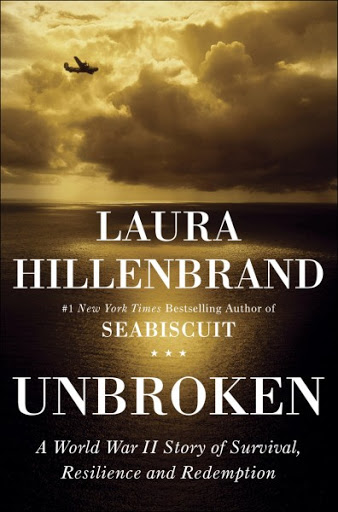
Unbroken thoughts

For a while I felt almost addicted to “Office” re-runs. I personally love the show, and have found it helpful in connecting me to both those a bit older and younger than myself. But I knew the only way to get out of the TV rut was a good book. Reading stuff for ministry isn’t too hard since I dedicate some of my schedule to read and study. Reading stuff at night time becomes harder because its not necessarily part of my job. The only prescription is not more cow-bell-though who couldn’t use more cow-bell, but simply a good book. Some of my previous books which have helped me out of the night time rut include Bonhoeffer: Pastor, Prophet, Martyr, Spy, No Bag for the Journey (a fellow Jesuit High alum turned Episcopal Priest chronicles his journey riding a bike across the country), and The Glass Castle
This time, Unbroken came to my rescue. The most exciting book I’ve read in a long time. 
Laura Hillenbrand can certainly spin a yarn with the best of them. Her biographical writing rivaled Metaxas’ Bonhoeffer, but she did a great job of simply getting out of the way to let the story of Louie Zamperini almost tell itself. Sometimes I feel guilty recommending something already on the best seller’s list, because its obviously not a gem that I’ve discovered. But this book kept me up late into the night for a week or so, as I clamored to get to the next page and chapter of Louie’s life.
After crashing at sea, floating without food, surrounded by sharks, Louie and the pilot were intercepted by the Japanese. It only got worse, as they POW camp-hopped all over Japan. The brutal treatment they received at the hands of the Japanese really tied me into an emotional knot with anger and sadness wrapped around each other. 
I can’t imagine what I would have done after being liberated from such an evil (37 % of Pacific POW’s died as compared to 1% in Europe). When men in one camp became free, some no doubt thought about repaying their captors’ evil with evil. But after a Thanksgiving service, “They were told that they must not seek revenge; they were officers and gentlemen, and they were to behave that way.”
This was one of the most memorable lines in the book. I wonder what I would have done if someone tried to stop me from retaliation and only gave me the “you’re a gentlemen, so act like one” command.  Not sure that would have worked for me. I might have said, “Etiquette class and cotillion does not a gentlemen make,” and would have at the very least given each guard an atomic (though I would have probably used a different word) wedgie.
But it did “work” for these guys, at least on the surface, and for a time. Most didn’t retaliate in the slightest. I guess that says a lot about the “greatest generation.” Unfortunately though, the scars of the P.O.W. experience were decidedly deeper than the skin, and many like Louie remained haunted by their tormentors back in the States.
In fact, it was only through a one-time enemy’s act of atoning sacrifice that would free Louie from the nightmares and anger. After he had seen (through the eyes of faith) an enemy die FOR him, he put aside his quest for revenge and returned to Japan to share the gospel instead of mete out judgment (which he actually had plans to do!).
That sacrifice of Jesus is sufficient today to curb our retaliatory dispositions to those who truly deserve retaliation. Showing “class,” or trying to play the “bigger man” might stop the action, but it will not stop bitterness, anger, or nightmares.

Unbroken describes itself as a story of redemption, and it delivers. Ultimately it is only through Jesus, that any of us can experience such holistic redemption.