Unknown's avatar

Baptism thoughts

This past Sunday, my 8 month old Cade, now free of chicken pox, received the covenant sign of baptism. We took my three year old boy Connar out of the nursery so that he could be a part of it. During the prayer he asked if he could put water on Cade’s head too. Nice.
He expressed a desire to be a part of Cade’s baptism from the get-go, even telling random people Cade would be getting baptized. His desire to play an active role in Cade’s baptism is admirable. And playing in active role after baptism is quite attainable, yet often over-looked.
One of my favorite parts of the baptism is the question asked of the covenant community. Do you promise to assist the parents in the raising of this child? Sometimes I wonder if people really believe what they say.
I have no reason to believe my current church Redeemer’s members are anything but sincere. Each month we have to use nearly 50-60 adults for the two nurseries, Sunday School, children’s church, and youth groups. That’s probably even a conservative estimate. When people promise to help the parents, that doesn’t mean ONLY serving an existing children’s ministry, but I think it would be disingenuous to quickly rule out serving in an existing children’s ministry. Such are opportunities designed not to replace parents, but to assist them. And we all need assistance.
But formal existing ministries like programs are only part of the picture. In their book Essential Church, Thom and Sam Rainer claim one of the few consistent factors present in the youth who continued their faith in college was adult relationships. Most had a number of them. The more the merrier. A youth pastor and parents are not enough. Our youth need more than that, and that’s why I try to include a team of adults and parents as often as possible in youth ministry.
I wonder how seriously I, and other parents take their children’s baptism. It’s not just a “precious” time (though it was quite moving to watch the video). You are vowing before God and others to raise the child in a Christian home, dedicating him to the Lord. That’s pretty serious stuff.  I play baseball with Connar in the front yard on my lunch break and before/after dinner about every day. But I think baptism reminds me of something more important: that God will be faithful in my “informal” ministry times (which definitely outweigh the number of “formal” times like Jesus Story Book Bible reading), so I should take advantage of every available “teaching” moment.
Finally, I also wonder why Presbyterian parents sometimes don’t take advantage of, or want any covenant community involvement in raising their children. Over the years I’ve seen folks who just don’t want any help, and I can’t figure that out. I’ve seen folks agonize about whether or not their children will attend their own church’s VBS. Still, other folks just don’t care about discipleship of their children and so don’t make the necessary lifestyle adjustments. Both seem to goes against the flow of the covenant community structure called the church with which we’ve been so blessed. 
I’m thankful to have (and have had at my previous church) a covenant community who has shown love to my two baptized boys and assisted Amy and I in training and raising them. I hope the same is true for you, both in serving or being served by your local covenant community: the church.

Anyhow, these are my baptism thoughts for the day.

Unknown's avatar

Should sports be a platform for Jesus?

With the Jim Tressel debacle behind us for a few moments, a CNN beliefnet blogger had a take on Evangelism and Sports. He questions whether or not sports and Christianity really do go together as “peanut butter and jelly” as Deon Sanders once put it. He quotes another athlete, former Houston Astros 3rd Basemen Morgan Ensberg: “The entire reason I play baseball is so that I get a chance to speak about Christ.” The question he raises is fairly simple and straightforward: is big time spectator sports really the best venue for the promotion of Christianity.
I can’t say that I totally agree with his take, but I think he does bring up some valid concerns. 
1.) The number of Christian athletes who profess Christ, but fall into some serious public sins. Eugene Robinson soliciting a prostitute the night before the Super Bowl is sadly only one example of many. Some folks, for some time, might do better at just (said tongue in cheek of course as all work can still glorify God) being a Christian ball player: not speaker, not writer. Their teammates will know, even if the media doesn’t. And that’s OK. It might not be a bad idea for some players to turn down speaking engagements. Perhaps for a season, perhaps longer. I don’t think its a bad idea to wait some time (and mature) before you publicly promote your faith and join the “circuit.” We’ve seen how easy it is for folks to fall. 
2.) Perhaps Christian athletic promoters have borrowed a bit too much for the marketing of this world. If someone is promotable, go and promote them. Make money off them. Or get them in front to tell people about Jesus. Sounds good on the front end, but what about the back side? Perhaps those promoting athletes like publishers need to offer or require more discipleship, accountability, fellowship? Or perhaps those promoting Christian athletes need to be choosier? It’s tough to argue against his penultimate paragraph: 
The ability to draw a huge audience does not make a given cultural venue an appropriate platform for promoting Christian faith — not if that venue promotes win-at-all-costs behavior and values that are in such deep tension with the central message of the religious “product” being sold.
3.) Skeptics will be present regardless, and “fallen” Christian athletes probably don’t necessarily hurt the spread of the gospel. While one hostile to Christianity may point to Tressel as an example for why he or she doesn’t believe, or why he or she doesn’t think Christianity belongs in sports,  the same person will overlook the Dungy’s and Tebow’s. There will always be “haters,” and people will always blame their lack of belief on something other than their own hardness of heart.
4.) This lad seems optimistic about the future of sports and Christianity, citing Athletes in Action as a positive example that winds of change are blowing.
The new currents are tugging sports ministry toward a model where it’s not about exploiting sports as part of a marketing strategy, but about serving them as a prophetic force for their moral betterment.
I just don’t know what this looks like, but I would definitely be interested in hearing it explained. Maybe I’ll email this lad. 

Just how to practice and express one’s Christian faith in sports may not be as simple as I once thought. I appreciate this lad’s thoughts even though I’m still chewing on some of them, and may spit one or two out.

Unknown's avatar

Tim Tebow, Jon Stewart, and Extreme

Last week Tim Tebow continued to promote his new book Through My Eyes on “The Daily Show” with Jon Stewart. While Stewart takes shots at the left and the right, his atheism clearly comes out from time to time. So Tebow seemed to take a big risk even going on the show.
I think most folks would be afraid to do so. But in basketball, sometimes the best thing you can do to a shot blocker is to take it right to him. Challenge him. But for the Christian, this challenging looks quite a bit different. 
Here’s an excerpt from Tebow’s dialog with Stewart, borrowed from this article
For example, Stewart asked Tebow how old he is.

“Twenty-three,” Tebow said.

“A lot of people might say you want to wait until you’re 24 to write an autobiography,” Stewart said.

Tebow then talked about his parents’ background as missionaries, and his support of an orphanage in the Phillipines.

“Wow.  You seem like a real a#@hole,” Stewart said.

Replied Tebow without hesitation, “I mean, but that’s how I try to come across.”

When Stewart raised the topic of the struggles of “Ohio State University,” Tebow was quick to correct him.  “The Ohio State University,” Tebow said.
Mike Florio of profootballtalk.com was quite impressed. In addition, one of the comments on the article included this response: “No matter how hard I try to not like this guy, I can’t.” 
That’s kind of the picture we get of evangelism in I Peter. Our C.D. (community/discipleship) group has been working our way through this very challenging book and has seen that the importance of our actions, particularly suffering, and how such actions can display the gospel. While I Peter 3:15 has often, and I think rightly, been quoted as a reason why apologetics (defending the faith) is important, evangelism in the book of I Peter is primarily done through actions and attitudes, not words. In fact, it is through a submissive life that wives may “save” their husbands (I Peter 3:1). And our conduct-particularly as we suffer and not retaliate-before non-believing officials and bosses may cause them to “glorify God on the day of visitation (I Peter 2:12).”

Sometimes folks will hate Christians when they try to honor God and not submit to the cultural idols. But often, if Christians are truly following Christ, they can gain respect from the same folks.

Your life before others matters. Your words before others matter. Both are evangelistic in some sense. Athletes don’t have to mention the name of Jesus every time they get in front of a camera to honor Him. Neither do you. Your words, even when the gospel isn’t mentioned or brought up, can be pre-evangelistic. When your words and your life garner respect, you may gain some eager listeners. 

This doesn’t negate the need for a verbal proclamation of the gospel. Our sharing the gospel cannot be less than words. There is a message of reconciliation which has to be communicated. But while sharing the gospel cannot be less than words, it cannot only be words. Like the band Extreme’s once famous power ballad reminds us, it has to be “more than words.”

Unknown's avatar

The Bad Samaritan

One regularly sees on the news a story of a “Good Samaritan,” a innocent bystander who risks harm to himself/herself to rescue a person in need. The parable of the Good Samaritan comprises more theology and application than this, but certainly not less than less. 
Here is a story of some “Bad Samaritans.” A man decides to kill himself by jumping into San Francisco Bay. His mother, who for some reason was near, calls 911 and fire fighters show up immediately. But the problem is that they don’t do anything. For an hour. And then the lad drowns. 
If you watch the video you’ll see that policy and funding purportedly prevented firefighters and policemen from jumping in to help him. 
This is truly a bizarre and sad story where God’s image bearers display scars as well as small cracks where God’s image the light of his image breaks through.
1.) Policy and rules trumped life. Regardless of whether or not such men were allowed to jump in the water to save this drowning man, life always trumps policy. When two commands bump up against each other, the weightier one prevails. Saving life is more important than policy. The Pharisees blasted Jesus for breaking the Sabbath when he healed folks, but Jesus emphasized that life was more important. Even the life of an animal took precedent (Lk 14:5).
2.) The outrage. The anchor man asks the reporter, “Isn’t this a human being?” He has a right to life. You don’t have to be a Christian to believe this. In fact, most non-Christian Atheists believe this as well. They just have no real reason to believe it. In fact they have a reason not to believe it, as it goes against everything Darwinian. Regardless, the image of God shines through the cracks even when people suppress the truth. 
3.) Do we get to choose who has the right to be saved and who doesn’t? If you watch the video, one of the excuses is, “This man was trying to kill himself.” That issue is irrelevant. He is still worth saving. In addition, people sing different songs when they are gargling water and vying for their last breaths. He could have had a different outlook on life as he witnessed people risking their lives to save someone who actually tried to end his. All people are worth saving not because of what they contribute but because of their bearing God’s image.
4.) Excuses. Supposedly this won’t happen again because there will be new funding and new policy. In the end though, it might have been more self-preservation than policy. Statements like “he could have been armed” and “he was so big, that we could have drowned as well” started bobbing to the surface.
 
5.) Judgment. People are rightly angered by this incident, since you can argue that public servants like fire fighters and police officers have a higher civic responsibility. With such authority (guns, sirens, freedom to speed and go through lights), comes a responsibility to sacrifice. But on the other end, none of us know exactly what we would have done put in their shoes. We can certainly pronounce an action (or in-action in this case) to be wrong without pridefully saying “that could never happen to me.” Many times we are spared falling into sin simply because we’ve not had the opportunity.
In the end, this tragic incident serves as a good reminder that this kind of thing happens spiritually in the church all the time. It is always safer and easier to let someone drown in their own sin, even when they are clearly content in doing so. To go in after them can cost pain and time. I personally hate doing it. But perhaps if we considered the mess Jesus took on for us, we’d more regularly enter into the mess of others. Ultimately neither their mess nor ours can hold us under water for long.
Unknown's avatar

Oprah, Clout, and Us

Oprah will finally vacate the daily afternoon TV landscape but her presence will certainly not be lost. Her goal of success was never JUST about  money; it was about much more than that. It was  about clout. Clout, clout, let it all out in a Tears for Fears sort of way. That’s what she did. 
Clout can be used for good. And in a common grace (she’s made in the image of God and will do some culturally good things because of that) sort of way, she did. She had wells dug in Africa, she gave away cars to people in her audience. She did some nice things.
Clout can be used to make others’ famous. Oprah brought us Dr. Phil, and I can’t imagine where our world would be without Dr. Phil. Or Rachel Ray. Or Dr. Oz. Although I think we would be just fine without their celebrity.
Clout can also be used for personal gain (the aforementioned probably had some of this mixed in as well) in promoting propaganda. Oprah could arguably-and I don’t even know it is arguable-be the most influential person in America, and perhaps that may be one of her goals. She describes herself as “messenger” with a “message.” And that she is indeed. Below is an article snippet where she discusses her spiritual quest.
What I believe is that Jesus came to show us Christ consciousness. That Jesus came to show us the way of the heart and that what Jesus was saying that to show us the higher consciousness that we’re all talking about here…”
The content of her spirituality remains largely gnostic (though she has obviously spruced it up with other bits and pieces of existential philosophy, religions, opinions), a heresy which popped in the church not too long after Jesus folded his own crucifixion clothing. If general history doesn’t repeat itself, church history sure does.
Some folks want to rule the world with nuclear power. Some folks want to rule the world with their false spirituality. Regardless, the motive is still the same. Oprah and Kim Jong Il aren’t all that different. And honestly, sometimes Christians need to recognize that the same tendencies “freely” dwelling in these folks also dwell in us. They are not our masters, but they often do become counselors.
When we have been given clout or any kind of social influence, we need to take pains that in the end, our goal is that Christ rule in our hearts (Col 3:15) and rule in the world. It would be foolish to think that just because you are a Christian and want to teach, or have any sort of influence in the church, that your motives are pure. Mine definitely aren’t. Here are some questions which might prove helpful in your areas of influence, particularly within the local church setting.
Is your desire to rule or control (Col 3:15)? Is your goal that everyone would have the same convictions you do (Rom 14)? Is your ultimate goal that folks would follow you or follow Jesus (I Cor 1). How angry do you get when someone doesn’t believe something you teach or take the advice you’ve given them? The amount of anger can sometimes indicate you’re mad because you “lost” more so than righteously frustrated over someone else seeking a beverage from a broken well.
Like all idols, power is fleeting and is ultimately an allusion. Looking to Jesus and pointing them to Jesus and His gospel is not only freeing, but it is effectual. If you look to Him, you’ll change. If you point people to Him, and they look, they will change. They may look different than you expected, but ultimately Jesus is molding them in HIS image, not ours. And that’s good thing.

Never forget that you’re more like Oprah than you think, but Jesus loves us more than Oprah thinks. And that too is a comforting thought.

Unknown's avatar

A "vested" ignorance?

Like most college football fans-and that may be the only football we’ll be able to follow on TV this year-I received the shocking news that Ohio State Head Coach Jim Tressel resigned. You can read some more of why he “resigned” here if interested.
Tressel was/is believed by many to epitomize class, ethics, and faith. In fact he has written such books called The Winner’s Manual: For the game of life, and Life Promises for Success: promises from God on achieving your best.
I can’t comment about such books, whether or not they are rooted in the gospel, heath-and-wealth, or Oprah theology. They might be great reads. No clue or no care.
But for the man known affectionately, or not so affectionately by others, as “the Vest” (he always donned the sweater vest), being forced to resign amidst players selling memorabilia for tatoo’s and other things is not the way he would have drawn it up.
Here are a few of my takes. 
1.) Many of these violations seem minor in comparison to players or player’s families receiving hundreds of thousands of dollars like the Reggie Bush scandal at USC. And the NCAA rules about players getting jobs sounds archaic and unfair. But regardless, such rules are very clear and if you’re a college coach, you’ve got to play by the rules.
2.) The article seemed to highlight Tressel’s ignorance. Sometimes I like being ignorant. Ignorance is always easier at the beginning, but almost always more costly in the end. The more we know about ourselves and others is often more than we want to know about ourselves and others. Ignorance can keep us from entering into the mess of people’s lives (and our own issues/motivations as well). While we won’t need to often report it to the NCAA or even the church, we might be forced to call others to repentance and assist them in carrying their burdens. Neither are fun.
Exploring your own and others lives seems costly on the front end, but its far less costly to do it now than to do it later. How many relationships, marriages, friendships would have benefited from knowing more of the person (even their sins) and then repenting alongside of them, allowing both parties to experience and show grace to one another as a pattern of life from the beginning? In the end, it is far more costly to be ignorant. Tressel is but one of a plethora (that’s the 2nd Three Amigos reference by the way) of examples.
Love, both for God and others, includes both knowing and moving more toward Him and others, because He has first known and moved toward us in Christ.

3.) Tressel is not the first faith professing coach to have violations and won’t be the last. I don’t assume any coach in college, regardless of their “class,” ethics, or faith profession, knowingly runs a completely clean program. Where are the Tony Dungy type coaches in college today?

Unknown's avatar

Lockout, probation, and ministry opportunities

I’m ready for the NFL lockout to end. Some players are also ready and yet other players will happily sit out the whole year. How long they can go beyond that is anyone’s guess.


Here’s an example of a player taking advantage of the time off, since there really isn’t much of an offseason anymore. Miami Dolphin wide receiver Devon Bess has redeemed his time by heading down to dig ditches in Costa Rica. Not that it would have been terrible for him to go to Los Suenos in search of Pacific Sailfish as I had the opportunity to do so in 2004, but this is certainly a commendable way to spend the lockout. Not motivated by guilt, but instead desire and opportunity, he says:


“I had an epiphany one night. With all I’ve been through on and off the field God has put me in a position to be a difference maker and to change lives,” Bess told Omar Kelly of the Sun-Sentinel


I don’t think I’ll be “drafting” Bess in the early rounds for my fantasy football team this year, but this is one more guy to pull for when/if the 2011 season starts. While not every football player and his mother (literally) are off shooting people (allegedly, though now indicted), some players are doing more than staying out of trouble; they are glorifying God by their good works and others are noticing.


Matt Barkeley, starting QB at USC, was able to go again with his family on a mission trip to Africa last year because his team was ineligible to play in bowl games. He might get to go on another one this year as well.


I think this is a good reminder to us all that “closed doors” like lockouts and probation can lead to great ministry opportunities. Instead of expecting the “closed door” to lead to something easy or more comfortable, perhaps we should consider how the “closed door” might just open the door for us to serve others we’ve previously overlooked.


Unknown's avatar

Washed and Waiting thoughts

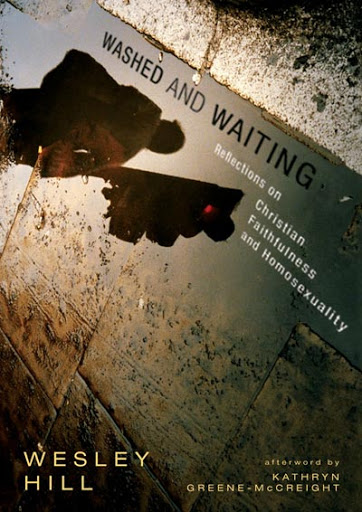
I’ve almost completed Wesley Hills new book entitled Washed and Waiting: Reflections on Christian faithfulness and Homosexuality. I first saw this book reviewed on Darryl Dash’s blog, and found the review, as well as the content, not only fascinating, but highly pertinent. And ever so pertinent with things like “It gets better project.”


Instead of writing a “official” review on it, I’ll just share some fresh (at least fresh to me) insights I received from this book.


1.) While the book doesn’t give any kind of numbers, Wesley Hill does give an indication of a group of folks within the church who struggle with same sex attraction. In other words, they are only attracted to certain members of the same sex, yet recognize that following their desires to the bedroom truly dishonors God. I realized that such folks existed, but hadn’t thought much about it. Hill’s real life battle with unfulfilled desires really puts flesh on something many of us may not deal with or even care about. But we do need to care about and care for such folks in our church. I’m thankful for the courage of such folks to a.) remain in the church b.) not run to the gay community or simply go to a gay church to support their lifestyle.


2.) It’s not that easy to know why some folks have same-sex attraction. One of my electives in seminary at RTS-Orlando was on human sexuality. We studied some of the factors which lead to homosexuality, such as the distant father, overbearing mother, lack of same sex-friends growing up. Some homosexuals have this kind of background, but not all of them. In fact, Hill actually describes his loving Christian parents, as well as his leadership in the church youth group. Why does he struggle with same-sex attraction? He and we just don’t know.


3.) You can change? Some folks struggling with same sex attraction, can over time, slowly see their desires begin to change with the intake of the Word, good counseling, and good community. However, sometimes such desires never change. Some folks marry but don’t have sex. We cannot hold out a false hope, or expect a false hope, that same-sex attraction will necessarily change by becoming a Christian, growing as a Christian, or getting good counseling. Some times those desires will never change, as he gives the example of well known priest Henry Nouwen who remained celibate despite these intense struggles. That was sobering and saddening to hear. 


4.) The struggle for Christians with same-sex attraction is similar to that of the bachelor-to-the rapture (I’m assuming Jesus will not return in 5 months) Christian. Both sets of folks will live with unfulfilled sexual desires. Both folks will emotionally ache for that companionship of a special “help-mate” but not have one. In a way, I felt Hill expressing this to his readers: “We’re both on similar, very different, counter-cultural paths so I’m not asking for your pity. We both have crosses to carry.”


I’ve nearly completed this book and commend it to you. It will help you learn how to best minister to, and pray for such Christians struggling side-by-side with you throughout the week. In addition, you’ll be challenged by the similarity and difficulty of our struggles, as well as the need for intimate community in our ultimate journey to the promised land: The New Heavens and New Earth. 

Unknown's avatar

No one "noodles" alone

Some folks down in Texas got some good news this week. They could possibly join 17 other States, including neighboring Oklahoma, and be allowed to “noodle.” Noodling is the art-if you want to call wiggling your fingers into a rock pile or submerged structure and waiting for a catfish to bite them art-of catching catfish with your hands. Once the fish bites down on your fingers (again, if I didn’t lose you at catfish, I’m assuming I lost you “bite down on your fingers”), you use your other hand to help wrestle the fish to the surface. And in the end, you have, a catfish.

Some states have “noodling” tournaments and even “noodling” guides and businesses with “resorts” (RV type campers) to house first time catfish angler-wranglers. I’ve seen TV specials where stereotypical working moms from D.C. have actually left family and work for “noodling” vacations.

Of course the reason noodling is illegal in most states is because people die from noodling. Forget the fact that it might not be a good idea go into snake infested waters and stick your hand in a fish’s mouth. Remember the fact that catfish can get big and they don’t like getting wrestled to the surface. People drown. Not the way I would want to go: “I fought the fish and the fish won.”

What possesses a man or woman to noodle? Demons? Probably not, though I don’t rule it out completely. Is it the thrill of catching something with your bare hands? It’s probably more than that-though not necessarily less than that-because serious noodlers describe it as a way of life.

I’m not a noodle insider, historian, groupie, or buff, but have seen a number of noodling specials on TV. One thing I’ve noticed is that people don’t noodle alone. You need someone to come in and pull you to the surface if Mr. Catfish becomes unusually reluctant to give up his spot. I guess you could say noodling begets a community centered around helping and being helped. Or perhaps the need for such a community begets noodling? 

With normal fishing, you don’t need anyone. And some people like that. But latent within the “art” of noodling comes a recognition that you need the help of others. You need them and they need you. While I’ll not wiggle my fingers underwater for a catfish to bite them, I can at least see and appreciate that the need for noodling goes beyond primordial hunting. It might be just as much about community than catfish. Maybe. 


More video on noodling here.
Unknown's avatar

Review of Faithfulness Under Fire: The story of Guido de Bres

I received an email the other day offering me the opportunity to review the book Faithfulness Under Fire: The story of Guido de Bres. Of course I jumped on it, and am glad I did.


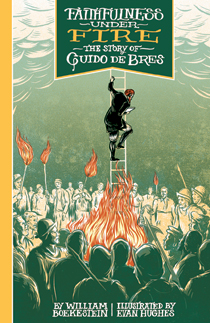
Faithfulness Under Fire does a remarkable job of telling a short, but robust story, of the short, but robust story of a man named Guido de Bres. Pronounced “Gee-doe de Bray,” this remarkable man lived in Belgium in the early to middle 1500’s. Influenced by the Reformation truths of justification by faith alone, and the protestant discovery that you could read the bible for yourself, he soon became a marked man. On several occasions he fled to different countries like England and Switzerland to study and learn God’s Word under Calvin and Company. Eventually he married and returned to Belgium. He began pastoring and preaching in secret, though those longing for the spiritual milk of the Word began to number in the thousands. You can’t be too discreet with those numbers! 


Dodging the Holy Roman Emperor King Phillip II could last only so long. Eventually he was imprisoned and hung for his faith.  Yet during his short life time of 44 years, he penned what became known as the Belgic Confession of Faith, still used by many Reformed churches today.  


The illustrations in this short children’s book really make Guido’s story come alive today. My spirit truly stirred within me. I personally hadn’t ever heard of this man before, but upon reading this story, I now have a greater appreciation for the story behind the Belgic Confession. I’m quite guilty of looking at such confessions as though they appeared out of nowhere. Familiar with the story and creation of the Westminster Confession (part of our denomination’s constitution), I know little of the blood, sweat, tears, and martyrdom which often accompany many such articulations of faith. Such documents are more than documents: they are doctrine not just penned by authors but sealed and spread by the very blood of those who believed in such doctrine.  Nowadays such formulations and articulations of doctrine cost us very little. But that was not always the case. Faithfulness Under Fire moves us to a simple, but greater appreciation of such confessions.


As a children’s story, I think the book also succeeds in telling the story of someone very much in love with the person of Jesus. He loved Jesus so much he was willing to die for him. I didn’t find the details overly graphic or morbid, but instead felt they helped illustrate the true battle for the gospel. A battle which sometimes, and in may places today, gets more heated than it does here in the States. Boekstein does a good job of capturing the past Protestant struggle against an oppressive Catholic Empire without trying to re-cast the present day Roman Catholic church in the same light. 


With every biography, we must take pains to not make it a hagiography. In a short book like this, no flaws in de Bres were addressed. And that is OK, because we don’t get a picture of flaws in the book of Daniel either. Biographies, as with bible stories where the “main character” is Noah, David, or Daniel, must point us and our little ones to the true Hero behind the story. The Jesus Storybook Bible uses language like, “God sent someone to deliver His people” and then concludes the David v. Goliath story pointing to One who would later come to deliver His people for good. I don’t know if we can expect a short children’s book to explain all of this or completely contextualize this story in the larger story of redemption. Parents can do this with any book or story very easily.


So provided the parent provides this framework, this and other short biographies can be very powerful to show that Jesus’ love for us truly does compel and empower us to live boldly and not even shrink before death, much less peer pressure. He writes, “By God’s grace, Guido lived a life of total service to God.” It is clear to the reader where this power came from. But as a parent, we need to be intentional at certain points in the story. For instance we must regularly ask such questions with biographies and stories like, “How did this dude get so bold? How was she able to persevere?” These kinds of questions can transform a biography to a true Christ-centered teach devotional.


On the last page Boekstein gives some instructions for thinking through this story and how to read it to children. 


This is the value we see in teaching our children about Guido de Bres-not to glorify him, but to be drawn by his example to live to the glory of God.


I think there is much value in reading biographies ourselves, as well as teaching them to our children. The goal is not to make much of Guido but make much of Jesus for His work in Guido. Yet we also need not ignore the great examples in church history of what it actually looks like to follow Jesus in this world. I learn what forgiveness looks like not simply by studying a passage, but also by reading As We Forgive: Stories of Reconciliation from Rwanda.


We’ve been surrounded by a great cloud of witnesses, both in the present and in the past. We would do well to learn about them. Not for the simple goal of emulation, but to encourage us that Jesus testimony is true: he can save a life from not only the punishment of sin, but also from the power of sin and fear. 


This review is quite a bit longer than the actual book itself, which I commend to you. For more information, check out the you tube trailer.