Unknown's avatar

Corinth: The Tampa Bay Bucs of ancient churches

Image

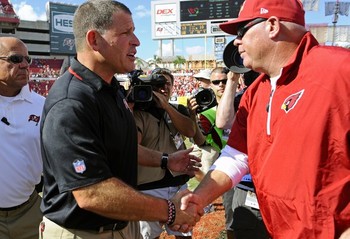
If you haven’t followed the Bucs this year as a fan, consider yourselves, “lucky,” or perhaps a more Calvinistic expression is apropos: “Providentially blessed.” It’s an absolute circus. A tough and reasonably (people have good reasons) disliked coach named Greg Schiano, who actually was featured in the Sports Spectrum magazine volume which I wrote devotionals for a number of years back. So yes, as much as I want the guy fired, and really don’t see the same Christian character we saw in Dungy, we will be forever linked together in the minds of the vast Sports Spectrum readership across the globe. A quarterback, once considered good for a season, has recently found himself out of the picture. Literally, he overslept and missed the team picture and has now been relegated to watching the game in the “inactive” suite. As we speak he is in stage 1 of some substance abuse program, because in his words, he tested positive for riddalin when he only had a prescription for Aderall. Maybe someone confuses Tylenol for Advil, but that sounds to me a bit silly and missing a bit of info if not truth.

The team has lost 3 games by 3 points or less, one on a penalty, another on missed field goal, and the third because of Napoleon Quarterback’s bonehead interception at the end of the game. I guess things could get worse, and probably will. The Lions 0-16 team will be watching anxiously for this team to descend to such a level.

As much as I want to rid myself of all Buccaneers’ association, I just can’t. They are a mess, but I’m still connected to them because they are my team. They are in some sense my mess, because I live in the area.

The church in Corinth was a mess. It was the Tampa Bay Bucs of churches. Bad, probably Schiano style micro-managing leadership. Locker room factions saying, “I follow Paul, I follow Apollos.” Then the super spiritual, overly proud non-denominational guy, said, “I follow Jesus.” People sleeping with in-laws. “Super-apostles” comparing themselves with Paul and finding themselves better, and then getting people to follow? Folks thinking that their gifts were better than the giftings of others. Dudes getting drunk at communion and then eventually “falling asleep,” and I’m not talking about passing out.

Yet, in all of the mess and dysfunction caused by sin, Paul has the chutzpah-I guess you could call it that-to address these jokers as “saints.”

To the church of God that is in Corinth, to those sanctified in Christ Jesus, called to be saints together with all those who in every place call upon the name of our Lord Jesus Christ, both their Lord and ours (I Cor 1:2)

Jesus must have done something to make the Tampa Bay Bucs of ancient churches “saints.” They were saints not based upon what they did (duh!!!) but what Jesus did for them. He purchased and washed the church with His blood, and He is the one who declares her righteous. Of course the church washed and purchased, has also been redeemed from slavery. But just like a bunch of convicts set free, we’ll soon make a mess of the good He’s made for us. Unaddressed sinful patterns don’t change overnight, despite the fact we’re no longer enslaved to them. Yet he will take the mess and make something good. Jesus takes greedy people and makes them generous. He moves sexually immoral people toward repentance and restoration. He takes skeptical folks and increases their faith. He did this in middle of this mess. There were bright spots too: evidence of Jesus work in the mess.

You can give up on the Bucs. But don’t give up on Jesus’ church, more specifically its manifestation in a local body of believers. Jesus didn’t, and he still doesn’t. It has always been a mess, but in Jesus eyes, it is a “hot mess” and we’ll eventually see what we’ll become. Until then, keep taking a sneak peak at Revelation 21 where the church comes down from heaven as a bride adorned for her husband. Hot, but no longer a mess.

Unknown's avatar

Shortcomings of cliches

I’ve been slowly working my way through Matthew Lee Anderson’s  The End of Our Exploration. I must admit that this is a thoughtful book, though at times, I find myself appreciating but not fully understanding his rhetoric. He’s quite the wordsmith. Yet just this morning I came across some some very helpful sentences on cliches.

Legalism is still in our midst, but the greater the intellectual danger is from a rampant reduction of the faith to banal cliches. “Let go and let God.” “God will work it out.” “It’s a God thing.” “Everything happens for a reason.” “It is what it is….” Cliches stop thought prematurely. They are a retreat from the hazards of thinking; we run from the unknown to the comfortability of platitudes.

I’m sure I use cliches, but that doesn’t mean I can’t stand them. I am especially averse to the “It is what it is,” which my realtor in WV used over and over when each deal would fall through.

I think Anderson really nails it here:

One of my “favorite” cliches is that we “shouldn’t put God in a box.” That may be true on one level. But what if God has put Himself in a Scripture-shaped box? What then? Is the problem the box or the shape?….If we say “God doesn’t judge,” does that put God in a box? If God isn’t in a box, even a Jesus shaped box, can we know Him? Does God know He lacks a box? Is He able to communicate to His creatures the shape of a box he could fit in….?….. I don’t know the answers, but I do know the cliche short-circuits the process of finding them. 

Some cliches, like “it is what it is” are distinctly non-Christian and stem from Stoic philosophers. Others are have a bit of Christian truth (remember, often heresies are in essence “half-truths”) and become that much more dangerous because they sound pretty good.

I would love to be able to spit out Anderson’s paragraph any time I hear that cliche, but would be fortunate enough to remember a single sentence. Still, the question I think is worth a thousand words is, “What if God has put Himself in a scripture sized box?” If I say I am a Bucs fan, and you truly believe that, I have just intentionally placed myself inside of a box so that you can know something about me. I haven’t told you  that I’m not pleased with there 0-4 start, but if you listen to what I’ve already told you, you know something about how I feel when they lose. But you also would need to know that other things are more important to me than the Bucs. I’ve just put another corner on the “box” so that you know can know more about how I actually feel. You can’t know anyone without some sort of a box.

Cliches don’t just short-circuit learning but they short-circuit counseling and comfort. That’s another reason why we use them. Some expressions can become cliches, but some just never will, because they possess a latent question within them.

Such is “I’m sorry.” Saying “I’m sorry,” has a question embedded within it. It says, “I don’t know exactly why this had to happen, and I don’t know what God will do with this, and with you.” But it escapes the “it is what it is” cliche which tells us to not to question, learn, seek, react, respond, become angry.  “I’m sorry,” leaves room for questioning, both from the recipient and the one offering a brief two word counsel. Yet the Christian has a home base from which to question. Such words as “I’m sorry” go beyond the cliche to open the door to a healthy scripture framed questioning. God has given us “sides to the box,” so we can know something. We can and should question, but we don’t question without hope.

Unknown's avatar

Church planting could be the best thing for your kids

kids

Planting a church is a privilege as well as a huge challenge. As I’m in the gathering stage right now, from time to time, I come across “the children barrier” in folks who might be otherwise interested in coming alongside such a risky venture. Even though some people may be excited about the vision, the problem may lie within the realm of this question: “what about the children?”  Christian parents, and probably even those with a merely moral framework, are concerned about their children being taught, or at the very least entertained, well. And the latter is a good concern.

I guess you could say, I believe the late Whitney Houston. Children in some ways are the future (the present too), so “teach them well and let them lead the way.” But how and where we teach them is also quite important. So is the “what! I really do think these are good questions to ask but I don’t think answering them the way they have been answered in the past 50 years is necessarily the best way to go forward.

I don’t think leaving to form a core group is detrimental for the child’s growth. In fact, I think, it could be much the opposite with some intentionality. Of course this isn’t only an issue with church planters, but for established churches where folks sometimes bolt for a “better” children/youth ministry.

Here are some things I’ve been mulling over in my head. Hopefully they make a little sense.

1.) Many people don’t recognize that the primary place for children’s Christian Education is in the home. Now of course, vital children’s ministries can and should assist parents. And I realize some parents just don’t take responsibility, so a vital children’s ministry is all that some kids get. God is faithful. Nevertheless, if a parent takes the time to disciple his/her children, the child will more often than not grow in his/her faith. Parents + Children’s Ministry + Adult Interaction/Service is not a secret formula but it seems to me more of God’s design for producing young disciples.

2.) If vital children’s/youth ministries were all that were needed, then we would see large percentages of kids connecting to a church when they leave for college. We don’t. The formula of solely running the kids through the grid of activities just doesn’t work. We Christians are a bit slow to recognize thing sometimes. So the lack of a vital children’s/youth ministry at the start-up of a new church will not stunt the growth of our children.

3.) Eventually, as the church gets “up and running,” children’s and youth ministries may take off. And parents then have the opportunity to play a part in their formation. This is one of the “fun” parts of starting new churches. It might just be a short matter of time before such ministries can supplement what you are already doing at home.

4.) Not everyone, and you could argue, not most people are called to form a core group to start a new church. But for those that do, here’s something to think about. Is it possible that leaving behind an existing church to form a new one could actually be a catalyst for growth in your children’s faith? One church planter’s daughter actually asked her Dad, “What’s that building?” It was a church. She just knew the church was God’s people gathered together. It was God’s people, not a building. Can’t put a price tag on that! For us, who left behind a great children’s ministry, we’ve seen our five year old’s faith grow.  We’ve walked around the block before and prayed with the kids that we would meet some new neighbors. When a church plant doesn’t have people or property, you simply have to ask God for just about everything. Things we never asked God for, we now have the opportunity to ask God for with our children. Don’t think that asking God for such things alongside of your children won’t have a big impact in their lives. Not only that, but we regularly teach our five year old that we are starting this church because many folks don’t know Jesus or have a church in this area. Teaching in the context of dreaming and doing.

5.) Before church plants can have fully developed ministries, existing churches can and do play a big role. Other churches may have children’s ministries that are fairly affective because they have the volunteers, the practice, and the facilities. I know of one which assists many parents in the area, yet many of those parents go to different churches. In the same way, such a church can partner and make the church planting process a bit smoother when folks desire such ministries. This may work for a season until something is up and running, or it may just continue to be a valuable asset for years.

In the end, starting a new church, because (not in spite of) it is such a faith stretching endeavor, is full of opportunities for your children to grow in their faith. Being a part of a core group is not for everyone. Please hear me say that. But for those whom God has called to join Him in a specific new work, it could end up actually being the best thing for your children. I’ve seen this time and time again with folks who’ve planted before me.

Unknown's avatar

Taking the wind out of sales?

I’m sitting in my 2nd office (Atlanta Bread Company) and overhearing bits and pieces of a medical sales meeting. Numbers are being scrutinized and folks are being told that they are doing well or that they are below the national or state average. A computer screen is pointed to and a man says,”You are here, but should be more over….here.” Fortunately neither of the two subordinates have numbers that are going to get themselves fired today. That’s a good thing. But there’s no real assurance that such meetings will continue in the future.

I’m reminded of a few things.

1.) I’m thankful that I’m not in sales. I’m not sure that I would be good at it. Maybe I would, but I never did well selling chocolates door-to-door in high school, even when I embellished where the money actually went. Not condoning this by the way, just showing how poorly I performed.

2.) I’m thankful that God doesn’t do this with me. I’m thankful that I’m not evaluated each week and compared with other people. With other pastors. Other church planters. How freeing is that? Don’t ever get tired of hearing this.

3.) In some ways, regardless of whether or not we are in sales, I think the “sales review” mentality is still part of us. There are plenty of ways in which we are evaluated by others. How do your house, spouse, kids look? What is in the bank account or in your back yard? How many friends or “friends” do you have? You may be evaluated by many people, but that’s okay (for us, not for those evaluating). It really shouldn’t bother Christians all that much. What if there were only One with a computer whose evaluation really counted?  After all, in the end, there really is only One with a computer. So probably a good idea for us to start thinking like that now.But that’s only part of the story.

What if the One with a computer said, “You are HERE, and you need to be THERE, but relax, I’m going to count Jesus’ performance for you. He’s over THERE, and His are the only numbers you need to be concerned with. 

If that’s the case, let the haters hate, judges judge, and performers perform. If Jesus’ performance counts as ours, then we will judge less and be less concerned when others judge us. Far from taking the wind out of my “sales,” it moves me to want to be a better parent, pastor, friend, neighbor, without fear or over-frustration when I fail. Now I’m off to pound this into my head…

Unknown's avatar

Privileges

This is a follow up from my last post on reflections on I Peter from our church plant bible study. Someone posed a few good questions to me in response to the post: are there any times where Christians demand their rights, and shouldn’t we stand up for our rights?

It is hard to qualify what exactly counts as a right (as opposed to a privilege) today since most people-and it is usually divided politically-rarely agree on what comprises a list of rights. Owning a machine gun, welfare check, government provided health care, gay marriage, etc….But in general, most people are probably in agreement that there are some rights that you should never touch.  However, finding agreement on which rights those are might prove more difficult since the same person who may hold to freedom of religion could at the same time, be limiting his neighbors’ freedom if his neighbor is forced to accept certain government mandates.

So the lines are probably more blurry than fine. 

Are there times when the bible advocates not standing up for your rights? Yes. Paul actually tells Christians not to take other Christians to court. He tells them not to defend themselves in a court setting because doing so would present a bad witness to the community. But that’s not fair is it? Well, sometimes it’s better to take one for the team (that’s what Jesus did, right?). Yet, for the sake of the gospel, Paul reminds them, “Why not rather be wronged? Why not rather be cheated?” (I Cor 6:5-7). This is a hard one for believers to follow. I’ve even seen pastors bring law suits and that has always astounded me. So yes, some Christians have demanded their rights, when in fact, they should just rather have been wronged. 

I am thankful for people who feel called to stand up for the rights of Christians. Some use political clout to hold sway. Some are called to lobby. Some are called to study, and others to be aware of infringements on free expression of religion. And I’m thankful for such people, because my calling puts me in different places. 

I’m called to plant a church that makes disciples who will then be salt and light to its community. Each Christian has different gifts and callings, and the freedom, power, and hopefully training to pursue justice and mercy in their jobs, and neighborhoods throughout the county. Ideally their hearts are on the rights, or privileges, or simply welfare of others before their own interests (Phil 2:4, James 1:27).

If I had to re-word my original post I would probably have used the words “preferences” or “privileges.” The church which I hope to plant will be one in which its members are willing to sacrifice personal preferences and privileges, without sacrificing the distinctiveness of the gospel, so that more lives would be reached.

And simply leaving an established church, to head out into the “glorious unknown” (cue Stephen Curtis Chapmans’ “Great Adventure”) is a step in the direction of sacrificing the privilege and preferences. You exchange a building for rented facility, familiarity for a vision, known identity for uncertain status, security for insecurity. But for those whom God calls to leave, a blessing of His promised presence awaits and is worth every penny. At least it has been for me so far.


Unknown's avatar

Rethinking U.N.I.T.Y. at Atlanta Bread Company

After a morning men’s bible study led by one of our core group folks, I headed over to Atlanta Bread Company. While trying to have a morning devotion, I overheard some encouraging conversation a few tables over. I don’t want to unthinkingly baptize nosiness in Christian terms, but I think there is a place of “holy eavesdropping.” Paul walked through the towns and looked, and was distressed. I’m pretty sure he also overheard conversations where he wasn’t immediately involved. Since I don’t have “spidey-sense” and can’t look into people’s hearts like Jesus, this is all I have. I guess it probably depends upon the intent of the eavesdropping. Is it for selfish gain or to discern how best to minister?

Regardless, I overheard some encouraging conversations today. Now I was across the room, but I clearly heard the words “pastor” and “message” and “discipleship.” Some good words to hear. From all appearances, it seemed as though an older dude was mentoring a younger lad.

That’s a good thing.

Whether it be a discipling/mentoring relationship or an informal bible study from whence I came just 15 minutes prior, we were experiencing unity. Even before Queen Latifah sang, “U.N.I.T.Y.” Jesus prayed for unity. Since I started writing this post I took a break and introduced myself.  The younger lad happened to be the local mega-church campus pastor. Even if we hadn’t connected personally, we were in some ways truly expressing the unity Christ prayed for in John 17. Now perhaps not to the extent that Christ prayed, but this is a big deal. I would much rather be unified in that we are both using local breakfast establishments to move people toward maturity in Christ than I would come together for a big rah-rah meeting. I’m not arguing against these meetings, but I think folks reduce unity to different denominations getting together.

But is that necessarily the unity Jesus wants? Wouldn’t he rather His people be unified across denominations in making disciples than a bunch of denominations getting together for the purpose of unity? Now I think we need to get together cross denominationally in order to learn how to better make disciples. I have much to learn from different denominations. I really enjoyed learning from different folks at the G.C.A. church planting conference and will probably take advantage of more such conferences next year.  

Yet I don’t feel unified with those same 30 or so denominations represented because we met together and sang some great songs and heard some moving messages. That’s good. But personally I feel more unified with them because we are going out to a hostile world and starting new gospel centered churches. I feel more unified when we are across the street-or even better, at the same restraunt-making disciples than getting together for “unity meetings.”

I’m not arguing there is no place for such, nor am I arguing that unity in mission is the only unity we should ever seek. But I do think we need to recognize unity in mission as substantial, legitimate, encouraging, and part of what it means to really have fellowship as we participate in the Great Commission with folks who look way different than each other. If we are encouraged to see discipleship happening in our area, then Christ’s prayer “that they may be one” is being answered. If we are jealous of someone else “on our turf,” then we know unity is lacking, regardless how many “unity” meetings we attend. 

Unknown's avatar

They are who we thought they were? Reflections on Bart

The other day “Black Bart” Ehrman penned (I think that word seems a bit outdated in a digital media) an article for the Huffington Post entitled “Who wrote the bible and why it matters.”
Michael Patton at Parchment and Pen blog formulated a thoughtful response here.

Black Bart is a smart guy with an agenda to do all he can to get folks to discredit the scriptures based upon their supposed fallacies. According to Bart:

“Many of the books of the New Testament were written by people who lied about their identity, claiming to be a famous apostle — Peter, Paul or James — knowing full well they were someone else. In modern parlance, that is a lie, and a book written by someone who lies about his identity is a forgery.”

And Ehrman reasons that because books like 2 Peter, Ephesians, and other Pauline epistles were not written by authors who claimed to write them, we should disregard the bible as lies concocted by liars. As I earlier alluded to, Patton does a fantastic job responding to Ehrman’s writing.  

Even if one were to grant that 2 Peter were a pseudepigraph (and while I disagree, I admit it is the best candidate), what does this do? According to Ehrman, it means that the Bible contains lies. But this is not true. It would simply prove that 2 Peter was a lie. It is not scholarly in the least, in this type of argument, to treat the entire canon of Scripture (or just the New Testament) as one book written by one author (as the title of Ehrman’s article, “Who Wrote the Bible and Why It Matters,” does). Ironically, in such cases, skeptics like to attribute a unity to the Bible which they would never grant in any other situation! The truth is that even if 2 Peter and certain Pauline epistles were written by someone else, they alone would be deceptive. The rest of the books would be untouched.

So in other words, if you threw those books out, and regarded them as lies, you still have Christianity. And Bart would certainly agree that Paul wrote Philippians, Corinthians, and Galatians.

The only argument I would add to Patton’s case is that viewing scripture in a “modern parlance” (which I’m not totally sure what that means) is a bad idea. We can’t simply read it like it was written yesterday. Now this is to say nothing of scripture’s accuracy. In fact I sat through Religion classes at Furman which examined the very wording of Pauline letters and themes, and argued that they couldn’t be written by the same person. I wasn’t convinced then nor am I now. I’m sure you could probably do the same kind of analysis with my blog posts and come to the conclusion that some posts were authentic and some were not. Yet you’d be quite wrong. I write everything. 

The gospel writers felt free to not have to record everything in sequential order, but at times, structured their narratives more thematically. In the beginning of Mark, he combined two Old Testament quotes and attribute them to one prophet. Was he a liar? Is this a mistake and false allusion? No absolutely not; at the time they were okay with that. Today we would probably call that a mistake and that he didn’t have his facts straight. He must have been in error….We wouldn’t be okay with that today, but the scriptures weren’t written today. And I’m glad. They are applicable today just as the day they were written, but we can’t read them with our rules for what is apropos to write. If so we end up calling mistakes what were in fact both intentional and accepted at the time. Even if the authors of 2 Peter, 2 Thessalonians weren’t who they said they were, to me that doesn’t change anything. Again this is simply for the sake of argument. 

If authors of the scriptures penned letters in order to deceive and manipulate people, and lead them away from the gospel, that is one thing. But if authors writing in the names/theology/approval of their mentors, being led by the Holy Spirit, wrote letters inspired by the Spirit, would such letters really be concocted by liars?  Was it all lies? Maybe we would say so if they were turning a profit and getting royalties, but what if this was a common practice? What if the recipients knew it was a Pauline disciple?

Again, just for the sake of argument, to prove these letters pseudipigraphyl does not make me throw out Christianity nor should it even make us throw out II Peter, Colossians, and the other “disputed letters.”

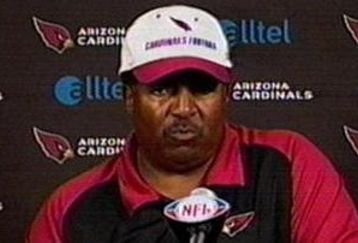
Former Arizona Cardinal coach Denny Green once said, “The Bears are who we thought they were, and we let them off the hook.” Even if a few writers aren’t who we thought they were-again solely for the sake of argument-I don’t think that it changes anything for me as a Christian, or as a pastor preaching through those books. In other words, I would do as that Cardinals team did, and “let them off the hook.”

Just my take. 

Unknown's avatar

Boston Strong: A more accurate kind of "strong"

While listening to NPR this morning I heard a sobering piece about Boston, just one month after the bombing malfeasance. Three people died-which is obviously three too many-but I had forgotten about the many survivors who had hadn’t lost life, but had lost limbs. For them, the physical wounds only represent the surface of their struggles to get life back to “normal.” From learning how to walk again to coping with a life that will never be the same, their work has only just begun. 

Boston Strong T-shirts are selling at a decent clip up there as this mantra has gripped the area, an area known for its resiliency. According to this T-shirt, Texas isn’t the only place that says, “Don’t mess with us.” I can see why they are selling well. I might even buy one if I were a Bostonian. And I get the attitude for the many folks who were indirectly impacted. And I don’t dismiss it totally.  

But could this attitude be thoughtfully critiqued, particularly in regards to how it might affect those directly impacted. It is different to know someone injured than to actually be the one who was injured. Or to be the family, friend, doctor, rehabilitation worker who has to walk with them through the process. Not everyone thinks Boston Strong, with its connotations, is necessarily the right road to take.

According to this NPR piece, count professional trauma counselors in this group. One commented to the effect that “It all depends upon what you mean by ‘strong.'” For many doing battle with a new lifestyle, is not something you can say after a month, “Come one, now get up, get moving, let’s get this thing going! After all, we are Boston and we are strong!” Many folks emotionally are simply not ready for this. Whether it be grieving, forgiveness, bitterness, or a range of many other emotions, processing this tragedy will take time for those who have been directly impacted by it. 

Strong? Well, not how we usually use the word strong. But common grace wisdom affirms what the bible has already spoken about humanity in times of grief and desperation. We have a book in the bible that is called Lamentations, which is written in response to God exiling His people, bringing upon them a great calamity (destruction of Temple, death, and deportation). Those are bad “d” words. Sorrow may last through the night, but joy comes in the morning, as the Psalmist encourages us (Psalm 30:5). But lets remember, this is poetry, not prose. It is not science. Joy doesn’t return right away; it doesn’t literally return overnight.

This trauma counselor was really on to something. Strong can’t be “I’m ready to fight and take on the world right now, because no one can take that from me.”

What does “strong” look like? For Paul, “strong” looked like admitting that he was weak and even boasting in his weakness, insults, and persecutions (II Cor 12:8-10). In fact, when he was weak, at that point in time, he declared he was at is his “strongest.” It also looked like admitting his need for people to minister to him (Phil 2) and that he really needed people to pray for his boldness (Eph 6:19-20).  In the Sermon on the Mount, “strong” looks like “poor in Spirit” which means spiritually broken and needy before God. Meekness means letting others defend you. All of the above require much more power than bucking up or pridefully sucking it up, so doesn’t that imply this is the “stronger” route? Couldn’t we ascribe strength to these such attitudes and postures, because plainly speaking, they actually take more “strength?”

I’m all for Boston Strong if it is this kind of strong. Even secular grief counselors would agree with me. At least in part.

Unknown's avatar

Reflections on my West Virginia years, ammended

As my time in West Virginia is coming to a close, I wanted to share some reflections on this state. A state which boasts many fun-facts but has also been mired in misconceptions. I want to share some of those fun-facts, clear up, confirm, or dispute misconceptions and views “Gentiles” (non-West Virginians) still hold.

1. Country roads will take you home, and make sure that you will stay awake while driving on them. Because West Virginia is so mountainous, the shortest distance between two points (a straight line) is rarely an option. Someone described the cities to me as “islands separated not by water but by mountains.” You will probably not fall asleep driving on the interstate because you will never drive in a straight line for more than a mile. But what about in-town neighborhood driving? Yep, you’ll be awake for that as well, because you’ll be avoiding potholes. Many neighborhood roads are not paved by the city, but instead left to Homeowners associations. My $100-a-year-fee for snow removal leaves little hope that our neighborhood road will not forever be plagued with potholes.

2. Pretty people? I didn’t hold this myth to be self-evident but I know someone who did. He didn’t believe there were pretty people in West Virginia. In fact, he didn’t believe me when I first told him that so and so was from here. His reasoning: the gal was a very attractive. Of course he was from Virginia, and this neighboring state seems to hold a number of inaccurate prejudices. Finally, he agreed with me that his misconception was wrong. If you still don’t believe me, Jennifer Garner is from West Virginia. There are plenty of pretty people here, just like there are in every state.

3. Family Values. I had heard that the family unit was strong here. Very strong. I wasn’t disappointed, as this is true throughout all socio-economic levels. Birthdays are bigger here than anywhere else I’ve lived. Parties are only the start of it, as festivities also include, at the very least, separate dinners out with both sides of family. But because of this strong family unit, as an outsider, it can be hard to break in. Many give up and I’ve had conversations with folks who just end up leaving. I’ve found this to be a shared experience of both Christians and non-Christians. Fortunately I have had a wonderful church family that received me and my family as their own, so my experience as a pastor of an established church is a bit more unique. But for many who move here, it takes a long time to break through. Family units are so tight that brothers, sisters, cousins, are their friends. This is why a church has to think outward, as the opportunities to invite people into their family celebrations are not only endless, but necessary if the local church is to have an impact on its community. Of course it also has to think inwardly as well and consider the “orphaned” within the church.

4. Not “Buck Wild.” Many West Virginians were angered at the show “Buck Wild.” And they should have been. The world outside West Virginia has one view of what West Virginia is, and this is it. Now I’m not belittling any way of life; I’m simply saying that there are plenty of places in West Virginia which couldn’t be described by “Buck Wild.” Where I live, it is simply a small, fairly Southern, suburban bedroom community in between the two “big” cities of Charleston and Huntington. It is known as “The Valley” and is not Buck Wild. Many places are not Buck Wild, but there are already too many “Desperate Housewives of Teays Valley,” so I doubt that type of show could get good ratings.

5. Sports Passion. I’ve enjoyed the sports community up here. They enjoy their sports. Now of course, West Va fans got pegged as the third worst fans by a GQ poll some years back, just behind Philly fans. But I’ve never seen couch burning in Hurricane. Florida is so divided with FSU, Miami, UF, USF, UCF, and after the NCAA tourney, who knows where Florida Gulf Coast will go? In West Virginia, it is pretty much W.V.U., with Marshall making up the large minority. For the most part the two opposing parties co-exist, much better than fans within the Florida college sports sub-culture. When it comes to sports for kids, there is the same passion you’d find anywhere else. Unfortunately that passion gets misplaced, just like the rest of America, and many people choose travel sports over church.

6. Fix-it culture. Dudes can fix things up here. Period. I can’t, so I’ve enjoyed being around people who can. Not only that, but people really do want to teach others to fix. They get “fix-it discipleship.” I’ve really appreciated all I’ve learned in that regard.

7. Not a bastion of Reformed Theology, but ripe for picking. For a number of reasons, of which many are unbeknownst to me, Reformed Theology has not taken much root here the way it has in Virginia. Now there are some bright spots, and some Presbyterian and Reformed Baptist churches are doing some fantastic work in mercy, gospel proclamation, and theological training. Also there are conferences, and bloggers springing up that are beginning to have influence. Yet there are many churches who not only are hostile to the idea that God could actually be Sovereign over everything, but believe the only inspired bible is the King James version. I never came across that in Florida. Still, I’ve never seen such people who really want to learn more deeply the gospel and the doctrines of grace. Many folks at Redeemer feel cheated that they didn’t get to really hear about grace all of their lives. And so now they are trying to play “catch-up” and can’t get enough. They want to meet. They want to read. They want to learn. They listen on-line. And they are incredibly thankful. I will miss that hunger and teachable spirit greatly.

8. Fewer Mom and Pop restraunts than expected. We have a plethora of Bob Evans, Tudors Biscuit World’s, and Applebees, but fewer Hillbilly Hotdog type restraunts than I had hoped. And expected. But again, that may be more in “The Valley” where I live. I can’t speak for all of WV.

9. Outdoors. Many people here take advantage of the beauty of this state. Most camp, and many fish. In fact, a much greater percentage at Redeemer fish than in my church in Bradenton, FL. That has resulted in “official” yearly men’s fishing/camping trips that I started and are now continuing without my involvement, planning, or participation.

10. Property Value. Many folks told me, “You’ll be able to get tons of land and a big house for very cheap up there.” That’s actually not true. At all. Where I live it is not cheap, and for the same house size, it’s not much if any cheaper, than Bradenton. It was actually a decent bit more expensive up here just a few years back. Now if I were to live in one of the smaller cities outside this Huntington-Charleston area, there would obviously be a price break. But if you want a neighborhood, and some quality schools nearby, it is not usually all that cheap.

11. Counties over cities. Because there are few “big” cities here, most people refer to where they are from with the county name, not city name. I have never come across that before and can’t imagine explaining to someone I’m from Hillsborough county. But it makes sense why they do it up here.

12. Higher Car standards. My Mazda Protege did not pass the car inspection up here. I had to get two new side view mirrors in order to get my 12 dollar sticker. Will not miss that yearly inspection.

13. South Carolina? There are probably more South Carolina car stickers per car in West Virginia than in South Carolina. It is a bit odd, but this is where WV folks vacation each year, so that’s the reason. Still I have found it intriguing that with a state with such state pride would don the South Carolina palm tree sticker so often.

These are simply some of my reflections (as somewhat of an outsider) on West Virginia the last 3 and half years. I hope that if you’re from here, you’ll find that that I represented you well and if you’re not from here that you at least learned something.