Unknown's avatar

Mission Shift Essay #3 and Geoff Henderson Response

This is my final post in the MissionShift series: “takes” on the book of the same name, which comprises 3 main essays, and a plethora of responses.
Ralph Winter, a dear brother in Christ (not to me, but I’m sure to plenty of folks), who is now with the Lord, contributed the third main essay in the book titled “The Future of Evangelical Mission.” Like the other essays, he wisely chronicled the history of missions in the last several centuries in order to offer a critique of how to move forward in the 21st century.
While I did find the terms First Inheritance Evangelicalism and Second Evangelicalism a bit confusing, Winter at the least, reminds us that many folks after 1700 were committed to the proclamation of the gospel as well as numerous social reforms, eradication of diseases, and concern for higher education. Some critique his break-up into such terms as overly simplistic. But because this was ultimately a didactic tool to remind us that evangelicals once truly concerned themselves which such “kingdom issues, I had no problem with this reductionism.
Ultimately, I find Winter wise to aim evangelicals today to concern themselves with what he calls “defeating the works of the devil.” And in the responses from the rest of the responders, what I’m picking up from them is a disagreement on primacy. So is there a primacy to defeating the works of the devil or a primacy to proclamation of the gospel?
Here are a few thoughts:
1.) Location, Location, Location: Most of us write about these issues from nice cushy lifestyles without experiencing the reality of Malaria, AIDS, or other prominent socially debilitating diseases or oppressive structures. As a result, we tend to think, proclamation AND then be concerned about the other stuff, which isn’t as eternally “important.” But were we placed in such living conditions, and had literal concerns for clean water, would we not see both proclamation and social activity as being necessarily concurrent? I think so. Our location tends to affect more than our reading of Revelation (Americans read it mostly in a future sense b/c we don’t see the battle as heated on Earth now as many of our brothers/sisters in other countries), but our missiology as well.
2) Winter’s states his desire that missionaries one day will not have to hide their “real purpose,” but that their “Real purpose will be to identify and destroy all forms of evil, both human and microbiological, and will thus be explainable without religious jargon.” I like this goal, as it includes both proclamation and social transformation taking place at the same time. The extent to which such “works of the devil” will be eradicated before Jesus returns is as debatable as politics, but I think this lofty goal comes from Jesus’ own life. Yet the real and more relevant question regards primacy. Few folks question this goal. But shouldn’t we convert folks, start churches, and then let those churches decide what to do? Or shouldn’t individuals who feel convicted, not simply the church as church (a question that D.A. Carson raises in Christ and Culture: Revisited), decide how they want to attack such issues?
3.) Same time. Again, from the life of Jesus, and the Spirit of Jesus in James 1:27: “looking after widows and orphans in distress” we have plenty of good examples of how to relate to the world in word and deed. James doesn’t want us to simply preach the gospel to those in distress but to take care of those in distress. If that means working toward the eradication of disease, doing relief or development, then we shouldn’t necessarily do one before the other, but the same time.
4.) I don’t totally agree with Winter’s necessary result, or even completely, his purpose of “defeating the works of Satan.” The gospel will be given greater credibility for sure if we can through the works of missionaries, teamed with scientists, end Malaria. But we need to be careful about the assumption of such ends. Jesus says folks will see our “good works” and glorify God. And Jesus fed the 5000 because he wanted to show love. And his miracles, as did those of the apostles done in his name, validated the message. But they did not prove his message and immediately cause conversion.
When Lazarus was raised from the grave, some Jews believed in Him, but others didn’t and instead told the Pharisees, who in turn wanted to kill Jesus. (John 11). It validated the message and messenger; some believed Him while others sought there was enough substance to him and his message that they needed to eliminate him. Again, when Paul told the crippled man to walk, while he “continued to preach the gospel”-I might add-in Lystra, people thought he was Hermes and Barnabas was Zeus (Acts 14). Defeating the works of Satan did not necessarily lead to conversion.
Whether it is what we call a miraculous cure or scientific cure, this Kingdom work will never by itself produce conversions. It never has and never will. But such Kingdom work does validate the messenger and message by revealing a real love for neighbor as well as presenting a God who cares about us even now, not just our eternal state. And it does open the door for conversation, particularly amidst rational, racial, socio-economic barriers (or just plain years of animosity against Christianity) which often preclude serious dialog.

In the end, I do hope that evangelical missions has an eye to concurrent proclamation and deed. Not because it will necessarily produce the most “salvations,” but because it is most biblically faithful to our Savior and Master and Commander, Jesus.
Unknown's avatar

Should Vick have talked with POprah?

Micheal Vick was scheduled to be interviewed by Oprah later this month. But this week he decided to cancel that appearance, reportedly being encouraged to do so by his team the Philadelphia Eagles.
Was this cancellation really a good idea for Vick? Perhaps the other guests, which would have been pro-dog and anti-forgiveness for sure, could have made things quite uncomfortable for Mr. Vick. But it all would depend upon which side Oprah took. If she were to say that Vick needed to continue to atone for his sins, or could never atone for his sins, then that would not be good for Michael. However, if she were to say that he served his time and people need to stop “hating on” him, and pronounce him “forgiven,” he would be in the clear.
Oprah has been called the “high priestess of American spirituality.” I would also call her a sort of pope; she has that kind of power. If she declares you absolved from your sins, you’re good to go. If that was not her decision, then Vick did the right thing and should stay away. 
Unfortunately Oprah (although sometimes she uses her power for communal good) has a sort of a functional papal power. So much so that you could even call her “POprah.” I would at least know who you were talking about.
Fortunately there is one who can declare us absolved from sin, regardless of popular or personal opinion. He has the right to do this not by an assent to power, but by his descent from power to the lowly place of the cross (Phil 2:6-8). Then God the Father raised Him up, so that at His name, everyone should bow and confess He is Lord (2:9-11). No need for any sort of pope, functional or actual. Jesus gets the final vote.
Unknown's avatar

Why did the disciples follow Jesus?

Most people have no problem with Jesus choosing His disciples. That doesn’t seem to conflict with the desire to remain somewhat autonomous, having God not trample all over their free will. After all, the disciples could have decided not to follow Him, right? 
Well the Calvinist is going to say, no because God truly “called” them (all but one) before the foundation of the world (Eph 1:4). Yet he would not deny that the disciples also chose to follow Him, as they, and we, aren’t robots. What I would argue for is the primacy and enabling of God’s choosing. God chooses first, regenerates our hearts, and then we gladly and freely choose. This is called “effectual calling” and is explained clearly with the lyrics in the hymn “Love Constraining to Obedience:” now freely chosen in the Son, I now freely choose His ways.
The Arminian is going to say, Jesus chose His disciples (that can’t be argued), but that they still had the freedom to choose; there was no necessary effectual work of the Spirit required. God won’t make anyone love or follow Him.
However, as I’m reading through Matthew, you have to wonder how in the world the disciples actually followed Jesus, especially given how much they really did know about whom they would leave their livelihoods. It is clear, even after the cross, the disciples didn’t really “get it.” That was of course the case until the Spirit had been given to dwell in them to teach them the things they didn’t understand (John 14:26).
But in reading the gospels, you see all kinds of glimpses into the hearts of the disciples which deal with this question: who in the world are we following? Check this one out, which takes place after Jesus calms the ominous storm.
And the men marveled, saying, “What sort of man is this, that even winds and sea obey him?”-Matthew 8:27

They believed Jesus was somebody, but who they believed Jesus to be at the very beginning of His ministry is anyone’s guess. Even after he performed miracles, they still didn’t really know who this guy was. They knew he was special, and Peter seems to have a decent grasp in Matthew 16 and John 6, but at this point in their spiritual journey, they obviously didn’t realize he could control even the weather.

Why in the world did they follow him, for whom they knew so little about? Because they weren’t just called in the 20’s AD, but before the foundation of the world. That’s my guess.

Unknown's avatar

Inconceivable?

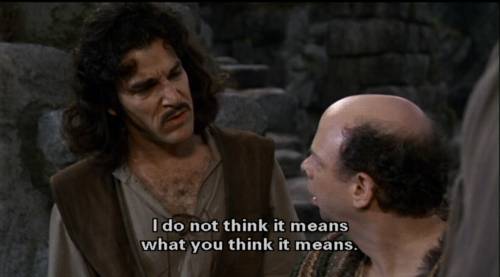
This weekend Amy and I saw a Dateline special that actually kept both of us awake for its duration called “Inconceivable.” It had no relation to the misuse of the term in The Princess Bride, however. No this was truly an amazing AND heartbreaking story.
A family decided to go the in-vitro route and stored a number of embryos. On their first try, they were blessed with a healthy baby girl. On their next try, they were “blessed” with a baby boy, only it wasn’t their baby boy. The doctor put the “wrong” embryo inside her and so they were carrying another couple’s baby. 
Here are some of my thoughts on this unique turn of events.
1.) Regardless of the ethical questions of in-vitro fertilization, I was impressed by the families automatic response: we had NO thoughts of termination. She could have simply refused hormone therapy each week, along with the weekly ultra-sounds, and the child could have easily been lost. But life was to be protected at all costs, even at the physical and emotional (the worse of the two for sure) cost.
2.) Love. What a great example of love, an application of “not looking only to your own interests, but also to the interests of others” (Phil 2). To suffer so that another person would get joy. I can’t imagine suffering through a pregnancy, particularly an uncomfortable one. But in the end, you get a baby out of it. In this end, someone else got a baby out of your suffering. That’s love.
3.) Pain. How painful must it have been to see a child, a child which the couple expressed a desire to keep and raise, and then give him away just moments after giving birth. Our heart broke as we watched this drama unfold. The pain of pregnancy and labor seemed to pale in comparison to the pain of giving away “your” child. 
4.) Adoption. It did sadden me though how adoption never seemed like an option. The couple tried several times through a surrogate to have one last child (which would have made #4), but each pregnancy failed. Why would they be so content to keep the child from her own womb (which was really someone else’s DNA) and yet not adopt? I guess its beyond the rational realm when it comes to pregnancy, delivery, and actually seeing the baby for the first time. The movie The Waitress does a good job of capturing this immediate love.
But just spending time with my brother’s son Ben Jr. this past week, Connar’s beloved cousin, just reminds me how thankful I am for the couples who have chosen this route. That is not a slight to those who have never adopted, or who now choose not to adopt (we’re still uncertain), but simply a thanksgiving for those who have adopted. When it comes to God’s adopting love for His children, I think, and this is just conjecture, adopting parents have a deeper existential knowledge of such love than biological parents.

A truly crazy story. I do hope that both the birth mother, who ironically is not the biological mother, feels God’s pleasure on her (obviously I think they were believers) and that He continues the healing process. I hope that as she sees Logan grow up, she’ll feel God smile over her and that both mothers will be blessed.

Unknown's avatar

Thoughts on recent Valentines Visitation

This Sunday our CD (Community/Discipleship) group hit up the Putnam Rehabilitation center to distribute Valentines Day cards our kids had made at our last meeting. Most of the residents were in the 80’s, and were recovering from a variety of different ailments: from broken legs to Pneumonia. 
It was a spiritually formative and great experience so I felt it helpful to put some thoughts down on “paper.” Here are some takes from that experience.
1.) Regardless what you study with your CD group, bible study, small group (or whatever you want to call it), it is a necessity that you apply the gospel when you leave. Not just personal application in your own heart and head (where most bible study groups stop), but with your hands. A bible study which simply meets, and its members do nothing but study the bible, without any application to the needy around them, truly miss the heart of God. If we seek to know a God describes Himself as a God to the fatherless and widow (Psalm 68:5), orphan, and broken, and don’t ever find ourselves around such folks, then who we are seeking and studying is not the God of bible. Religious activity like fasting (Isa 58), or in our day bible study/going to church, is not real religion if we don’t also move toward those in need around us. James actually calls such activity, not “real religion” (1:27) and Jesus, following the spirit of Isaiah-since He in essence wrote it-goes even further and says, “I never knew you….you workers of lawlessness.” So out of God’s gracious mercy toward His family, He enables, empowers, motivates, and calls us to lay down our lives for others inside and outside the Church. Not in a way that attempts to earn His favor, but simply in a way that displays His favor toward us.
2.) Most of us had a good time and were blessed taking our kids with us into the nursing home (though technically this was a rehab center). There is something so special about the opportunity to use the blessing of a family, and blessing of a small group, to bless others. Hearing your little ones say, “Happy Valentines Day” is priceless, as is the opportunity to pray and visit people who have need of visitors.
3.) Time commitment in such an environment is really quite minimal. We spent 40 minutes or less, walking from room to room, handing out cards, chatting, and praying with some. What small commitment for us was a HUGE benefit to them. 
4.) Koinonia, the word translated “fellowship” as well as “participation” in the N.T., means more than just chatting over cookies and coffee. That is part of it for sure, but not all of it. I felt a deeper sense of fellowship and connection to Christ and to His body as we served alongside of one another. We got to chat in the parking lot before and after, but we were fellowshipping the whole time.
5.) Nursing homes are not my favorite place to serve. They might not crack the top 3. At times I enjoyed it, and at times I didn’t. Amy wants to go back weekly with the boys. I’m content to make it more monthly. Some would probably rather make it yearly. Nevertheless, our theology, as well as the very gospel itself, is our true motivation to be uncomfortable so that others can find some comfort. In addition, we comfort others with the comfort which we’ve been comforted (II Cor 1:4).
6.) Those of us who served and didn’t enjoy it as much as their children, need not feel guilty. There are many ways to serve others around us. It is good to be stretched out of our comfort zones, and let Jesus become our comfort. But it is also fair to realize that different people have different gifts, and different folks will enjoy different opportunities on varying levels. If you can find an opportunity where you can serve AND enjoy, that’s a confirmation you’re in the right place. If you can’t find one that matches up, then serve alongside others, your family (my joy increased with Connar’s joy), or small group and you’ll find a deeper fellowship than you’ve known before. It will be worth it.
Unknown's avatar

Saturday Night Prayers and Egyptian requests

I used to have a very structured prayer schedule time in the morning, though it’s been harder to keep as my pastoral responsibilities have changed and included more and different people for whom I pray, and for whom I need to pray. So I’m still in the process of discerning a new schedule, which at this point, seems absolutely necessary. 
“The Wifely Prayers” acronym for Amy has helped guide me in the morning, though I have to admit I’m trying to be more intentional with those now as I do forget it more than I like. But the evening time with Amy has run according to that prayer schedule for some time now. So on Saturday nights, we pray for the worship at Redeemer (for us, for members/regular attenders, and non-believers), but also the persecuted church and foreign Christians. 
This can be hard for me sometimes, because I like to have something tangible or specific to pray for. Current events on the news can be helpful, but there is no better source than Christians in these respective countries. 
So this Saturday, I’ll have some more helpful info on how to pray specifically our Egyptian brothers and sisters, and the country in general. 
Unknown's avatar

Twitter, the Media, and Third Use of the Law

A friend and former colleague/pastor of mine, Randy Greenwald of Covenant Presbyterian in Orlando sent me a fascinating article from the Orlando Sentinel about athletes and twittering. This article, which is well worth reading, came out just after Jay Cutler seriously injured, or slightly injured (depending upon whether you believe athlete or media) his knee in the NFC Championship game against the Packers. 
I never really cared for the writer Mike Bianci on sports talk because he always blasted the Bucs, who were quite easy to blast after winning the Super Bowl my first year in seminary but went down the drain my final two years. 
But his take on twittering and media is spot on. Here it is. For a number of years, athletes thought they needed protection from the media. It was the media, they figured, who would turn people against them, who would make them look evil or dumb. But in reality it was the media protecting them from themselves. Now their every typo, their every cuss word, their every stupid and immediate thought goes public. Sometimes these athletes don’t even have the facts straight about themselves.
Jones-Drew later tweeted later: “All I’m saying is that he (Cutler) can finish the game on a hurt knee … I played the whole season on one.” Talk about not getting your facts straight. Actually, Jones-Drew missed the final two games of the season — two very important games when the Jags were fighting for a playoff berth — with a knee injury.
They’ve now actually lost the protection of media who really did make them look smarter and more decent than many actually were. Bianci writes
Now athletes on iPhones are sending out tweets without the common sense to edit themselves. Fuelled by their massive egos, they have become addicted to instantaneously dispersing their every thought — no matter how inane or profane — on Twitter. The real and responsible media would never even consider snapping a cell phone picture of a naked player in the locker room and transmitting it into cyberspace.
One way of looking at God’s commands is to look at them in the way that athletes view the media: as something which suppresses, not which guides and directs and helps protect us from ourselves. We often forget that God knows us better than ourselves (even beyond just knowing facts about us like the media) and His law can do more than just reveal our sin and drive us to Christ. It is also there to protect us from ourselves, our own stupidity, rash impulsiveness, and desire to immediately self promote. Provided that God’s law has driven you to Jesus, and you rest in the gospel, God’s commands do serve as a helpful guide for moral living. Through the power of the Spirit, the law can be something which protects you from saying or doing things which you will soon regret. 
Of course you will still fail. So it’s necessary to remember that the Christian is justified not by his/her performance of the law but by Jesus’ performance of the law. So the law, provided you don’t trust in your performance, can and should be something helpful for the Christian.


Unknown's avatar

What a Meche!

One unique aspect of the NFL is that there are no guaranteed contracts as in baseball and basketball. In football, if a big name player signs for big time money and just flops or gets hurt, no problem. The team, or owners rather, simply let them go, and simply have an injury settlement (half the contract for that year) and whatever is left of the signing bonus. But in basketball and baseball, it is completely different. Contracts are guaranteed and that’s why the Tampa Bay Rays had to stick it out with Pat Burrell and the Orlando Magic had to pay Grant Hill a huge amount of money despite the fact he was hurt all the time.
That is unless the player decides to retire before “stealing’ money from the team. Check out this article about the now former Kansas City Royals “star” pitcher Gil Meche. He is claiming that he basically stole money from the team last year by not being performing well or even often, due to injury and probably injury caused ineffectiveness. Most players, and I think you could argue that they do have a right to such things (if they are hurt on the job, doesn’t seem much different than workers comp), would show up to spring training and collect a paycheck for a maligned season. 
But Meche believed that to be an unethical decision for him to make. He didn’t take advantage of his “right” as many others before him, because he was paid well to perform well. He reasoned that since he didn’t do the latter, so he shouldn’t get the former.
This is almost unheard of. So what motivated Meche? Other then a clear sense in his mind of right and wrong, and the fact he didn’t believe his shoulder could hold up, he wanted to spend time with his daughters. Sadly he’s divorced (no surprise as players are gone so much over a 162 game season), and so plans on flying to see his kids.
There’s no mention of Jesus in the article, though that doesn’t mean necessarily tell us anything (you can edit that stuff out if you want). But in this ME-centered world where true morality is as hard to locate and land on as an electron, it is refreshing to see something like this.
Calvinists believe in something called Total Depravity, where people are so hardened and enamored with sin it takes the Spirit’s work of regeneration for them to trust in and follow Jesus (John 6:32-69). But there is a difference between Total Depravity and Utter Depravity. Utter Depravity means that we are as bad as we could possibly be. Scripture explains we’re still made in the image of God (Gen 9:6), and our own experience confirms that truth when we meet unbelieving and yet unbelievably nice folks. We know that dudes can do very moral and counter-cultural things like this. But this one really blows my mind and goes against class 5 cultural rapids.

While people need a saving work of the Spirit to be able to trust and follow Jesus, we should still be reminded that unbelievers can, and should, challenge our own love for our Savior: love which daily chooses right over wrong, and discerns between good and best (Phil 1:9-11).

Unknown's avatar

Mission Shift Essay #2 and Geoff Henderson Response

For those who are wondering why this post seems so different, and much longer than other posts, it is because I committed to blog three times about three different essays in a missiological book called MissionShift edited by Ed Stetzer in exchange for the free book. So here is my response to to Paul G. Hiebert’s essay entitle “The gospel in Human Contexts: Changing perceptions of contextualization.”
In this essay, Hiebert discussed different contextualization models from: minimal contextualization to uncritical contextualization to critical contextualization to his preferred model: Divine Revelation in Human contexts. 
Hiebert does an excellent job of reminding us that all of us have a cultural orientation. None of us stands outside culture, yet very few take the time to consider “what aspects of our contexts come from sociocultural and historical situations, and what comes from scripture.” As a result, missionaries, have at times, been guilty of making this statement true: “one more Christian, one less Chinese.” Now in all honesty, it makes no sense, and is I think sinful, to blast missionaries for doing the best they could at the time given what they knew. But as we evaluate mission strategies, it is necessary to evaluate what the church has done well and not so well.
I think that many of us today, whether missionaries, pastors, or simply Christians living in a fairly multi-cultural America, can often forget that we live in a culture which needs to be evaluated, not thrown out or un-critically embraced. Hiebiert reminds us that
“Human contexts are both good and evil. Humans are created in the image of God, and are the object of His great love. But they are also fallen, and the societies and cultures they build are affected by the fall. There is personal and corporate sin and personal and corporate dimensions to God’s redemption.” -pg 99.
This is a simple working model, which captures both the depravity of man but also the fact that we are STILL made in the image of God. Let us not forget that both Romans 1-3, and Psalm 8 describe men/women AFTER the Fall. This is model is not new, but forms the “missiology” part of Hiebert’s triad. It is helpful for missions as well as how we live in America, celebrate its holidays, history, opportunities, cultural distinctions, etc…
I also commend most of Hiebert’s “phenomenology.” We have to study to study humans in their own contexts and own cultures. As a pastor I have to be a student of my part of West Virginia. Its different than other parts. Someone once commended a book to me on appalachia, but that book really dealt with people who live in other parts of W.V. For me to read the book, and then try to commend what is commendable and apply the gospel to that which is not-commendable and needs redemption, would not be very loving or appropriate to my congregation. I need to answer and address questions that my particular people are asking. We do this in children’s ministry, and youth ministry without even so much as a question.
The gospel is so rich and multi-faceted, and answers so many of the heart level questions people are really raising, as well as concerns that need addressing. It is the responsibility of the missionary, pastor, and anyone who seeks to minister in his/her context to know what questions are really being raised. The gospel challenges our love of security, which CAN be seen in saving for retirement at the neglect of tithing and giving to missions. But when I write the lessons for the Jr. High, I don’t mention this at all. In fact, I’ll often highlight the gospel’s offer of a new status, that the youth don’t need to be popular because the gospel is true. Security, usually, isn’t the heart question they are asking.
The gospel challenges and gives hope for them in a different way. I sat in on the youth group lesson last night so that I could study the youth in their context, hear their concerns, learn their way of thinking; and it is different than the way a 33 year-old father of two thinks. Therefore my gospel emphasis and applications (how they are affected by sin) will look different. We have to do the same type of homework for missions, aware of their struggles as well as questions.
I also think Hiebert is on to something as he seeks to involve input from the indigenous population in forming “local theology.” However, I’d probably not use that word, because I can tell from the responses that seems to conjure up fears of liberalism and the slippery descent there into. And in all honesty, these concerns are well founded due to theologies that are inconsistent with the gospel. Liberation theology, as well as health-and-wealth theology may be local, but definitely misses the gospel.
Yet Christian indigenous folk do need to work alongside the mission teams to lay forth a mission strategy in the proclamation and application of the gospel that best fits that context. This limits our own subjectivity and cultural superiority. 
The danger for Heibert is that he comes very close to (if not lands on) a Barthian, Neo-orthodox understanding of scripture where the bible contains the Word of God, and becomes the Word of God to us, but is not specifically God’s complete and understandable revelation to us. For Hiebert, scripture is completely necessary, and it is our starting place. Not only that, but what matters is not so much what we think about God, but “what does God think about us?” Good stuff.
Yet Norm Geisler rightly questions exactly what Heiber means when he upholds revelation, and how we can understand it. It does us no good if there is not a universal ability to understand it. And what error would you expect Geisler, who edited a book called Inerrancy, to attack! 
I definitely uphold Geilser’s concern. Heibert points out that “we dare not equate the gospel with any human theologies. Our theologies are partial human attempts to understand scripture in our particular contexts, but the gospel transcends them all.”
There clearly are cultural elements present at God’s giving of divine revelation in the Word. It’s OK for women to have short hair and men to have long hair, though some churches have actually equated the gospel and gospel sanctification to look like women trading in shorts and pants for dresses, and dudes getting rid of earrings and cutting their hair. This is the case in my area.
And there are differing theologies. Baptistic theology, Reformed Theology, Charismatic theology often interact with one another and often disagree with one another. We are all trying to be as faithfully responsible to the scriptures, even though we can’t all be correct all the time.
But the gospel story is an absolute universal story that has meaning for all people in all times. All TRUE theologies embrace the gospel and understand it, or they are not TRUE theologies. The gospel content and meaning is one which all believers can understand. It has to be or else it can’t be communicated from generation to generation. The over-arching story of Creation, Fall, Redemption, Consummation stays the same. The content of the gospel, that Jesus Christ came to deal with sin, died, rose again, forgives, reigns above, will return, are just parts of the pieces that all believers MUST believe if they are believers. What is contained in the Apostles Creed has been understood by Christians of all ages, in all cultures; THIS provides the non-negotiable content of the gospel.
You might need to emphasize the gospel’s free offer of heaven (EE in the 80’s), the personal freedom from man-made rules to justify you (like in Galatians) inclusion into a new family (communities of high numbers of broken families and singles), reconcilliation of enemies (like in Rwanda), or how it changes your behavior and sexual ethic (like Corinithians). However, the content of what we believe is clear.
In the end, I appreciated Hiebert’s direction and concern. I sincerely appreciated his freedom to recognize our own biases and the desire to limit them. I do hope he has a voice in helping us move forward in contextualization in missions, but that Geisler does as well.
Unknown's avatar

Osteen judgmental?

I just posted yesterday about judging, and one piece of the “judging” pie we should avoid as Christians (Matthew 7:1).  Last night, as I browsed the CNN website, I caught glimpse of a Joel Osteen interview  titled “Osteen thinks homosexuality is a sin.” Osteen doesn’t seem to talk too much about sin, so I obviously hopped on this interview.
Here are a few takes.
1.) Osteen clearly hates to be the bad guy, draw hard lines, and even speak about sin. Piers Morgan who interviewed him tried to get him to pull back from this, but Osteen actually went to “the scriptures” as the standard for what is right or wrong. Now whether (according to Osteen) sin is bad because it is spiritual adultery/rebellion against a pure, faithful, holy God or whether it is bad simply because it keeps you from living your best life now (it seemed more the latter than the former), at the very least, Osteen held to scripture as the standard. For that I commend him.
2.) Piers, like many Americans, holds this pre-supposition: If you morally (not politically-although everything political still has some moral component) disagree with something someone is doing, then that automatically makes you judgmental. We see that very clearly in this video. But the reality is that we pass good moral judgments all the time. For instance, pedophilia is wrong, and I’m guessing Osteen could have said that without much of a “You’re being judgmental” type comment. Why? Federal law.  So you can be a “judge”as long as you’re using that standard. 
But when you judge what is right and wrong according to the standard of the scriptures, then you automatically become “judgmental.” So if pedophilia were ever legalized, or another crime which is now illegal, then would someone speaking out against it be considered “judgmental?” 

3.) Most people have no paradigm for someone who can morally disagree with them and yet still want to be their friend. And that’s probably because they rarely see it happen. But that’s not to say that it doesn’t regularly happen when Christian sinners befriend non-Christian sinners. However the church (myself obviously included) certainly has a ways to go in this area of befriending folks with whom we morally/politically disagree so that people can taste a new kind of friendship.