Unknown's avatar

Why pray?

When people are super-practical like myself, we often wonder whether it makes a difference if we pray or don’t pray for someone. Guilt isn’t a good or biblical motivator, but I think knowing that your prayers do make a difference in the lives of others can spur us on to a more faithful prayer life. Check out what Paul says in Philippians regarding the importance of praying for him:
NIV Philippians 1:19 “….for I know that through your prayers and the help given by the Spirit of Jesus Christ, what has happened to me will turn out for my deliverance.”
Paul credits the help given him by the Spirit of Jesus, aka the Holy Spirit, and the prayers of God’s people. Just some encouragement to realize that prayers really do make a difference. I think the Spirit picks up any “slack” from God’s people, but nevertheless, it is cool to see that God’s people partner in prayer so that God’s people can persevere in trials.
Unknown's avatar

The inevitables: Death, Taxes, and Soccer

Well the world cup is here and I guess that’s kind of cool. I do enjoy a game or two, although I’m not a huge fan of an 0-0 tie. Of course one thing that even the most erudite soccer snob can’t deny is that soccer always leads to death. The questions is just how much death (now to be fair, soccer does have more fans so I guess one could argue that’s the reason). This may not be the first death associated with the World Cup, but it is definitely the most bizarre. A man is beaten to death because he wanted to watch soccer, but the rest of the family wanted to watch a “gospel” show. I don’t know what kind of “gospel” it was, but I’m venturing to say it might have been “another gospel” like Paul mentioned in Galatians 1.
Unknown's avatar

Contemporvent

Some people worship best in a contemporary music setting (although contemporary means something different to everyone), some in a traditional setting (although the same applies to that word as well), and some in a blended (same thing). While I have MY preferences, all can be viable when done in a relevant way that exalts a counter-cultural Christ. That’s what Paul did when he went to Athens and preached to them. He did things differently in different places, affirming what was culturally good and specifically calling out cultural idols.

So I have no problems with the words “contemporary” or “relevant,” provided that Christ is the one driving the service, and He is there to be exalted, not simply to entertain us. Different ministry strategies will work better in different places, and I think all ministers need to become students of their surrounding culture. I’ve been instructed to do the same, as Barret, our lead pastor, has done before me.

But sometimes methods can be so relied upon that they take the place of a truly culturally relevant (he can identify with all our situations-Heb 3:14)  and yet extremely counter-cultural Christ. Here is a video which parodies what CAN happen WHEN “contemporary” and “relevant” replace Christ. I find it quite humorous and yet sadly spot on in some cases; however, I don’t endorse everything in the video. It is just to get people thinking, and there could be parodies of ALL types of worship experiences. This specific video, which just came across my desk, considers the danger of making contemporary or relevance your main goal. Christ can then take a back seat, but he belongs in front.

A good reminder for those who land on the “contemporary” side of the spectrum.

Unknown's avatar

How to avoid idolatry and to make preaching better

When there is good preaching, just as whenever there is anything good in a church (or in life of that matter), that good thing can become the ultimate thing. When it becomes the ultimate thing, we take our eyes off Jesus and onto that thing. But when we do that, we will find ourselves becoming frustrated with the idol, in this case a preacher. Even Tim Keller, my personal favorite, has “off” days. The same is true for church in general. The minute we look at a church and feel it is the “perfect” church, we will soon be disappointed, and eventually become angry. Jesus is perfect, but preachers and the church are a work in progress. Getting those two reversed, is simply idolatry, and has caused me unnecessary frustration over the years.
So on to the solution. How do you guard against good preaching becoming an idol?
1.) Resist the urge to give the sermon a “good” or a “bad” grade all the time. This is hard, I know. But instead of simply saying “good” (which often simply means you agreed with what was said) or “bad,” consider how the preacher pointed you to Jesus, and your response to His grace to you. Whether a sermon was “good” or “bad” really comes down to whether or not it pointed you to Jesus: for you to drink from the well of living water and then live differently because of it.
2.) Instead of telling the preacher “good” or “bad,” tell him what part particularly ministered to you. Or ask him to clarify something that was confusing.
3.) Consider the worship service as a whole instead of preaching as the main event, and the singing, confession, assurance of grace as the “opening bands.” When Barret and I sit down to evaluate the service each week, we consider the whole of it. In fact, we’ll often say, “That worship service went well.”
4.) Self-Evaluation. I’ve already blogged on this here, but this is huge. Consider how YOU are worshiping or wandering. Why are you bored? How is the Spirit leading you specifically to repent and more deeply believe the gospel. You move from spectator to participator.
5.) Spiritual element. No matter how good a preacher is at explaining, communicating, illustrating, and applying counter-cultural timeless truth in a culturally relevant way, it ultimately comes down to the Spirit speaking through the preached Word. If the Spirit isn’t speaking to those in the congregation, changing hearts, illuminating the mind, convicting of sin, pointing people to the gospel, the preacher is doing nothing but babbling.
If we keep all these in mind, then we will thank God for good and faithful preaching. We’ll avoid idolatry by praising and relying upon not the messenger, but the One who gave us the message. 
Unknown's avatar

The danger of good preaching

People settle at different churches for different reasons. Sometimes, they like the people. Sometimes they like the worship and music. Sometimes they like the liturgy, and other times they go for the preaching. More often than not, churches will be strong in two of the following areas: fellowship, preaching/teaching, discipleship, mercy, worship. This is often due to the gifting and passion of the pastor, though it doesn’t necessarily have to be (a church could be strong in mercy, in spite of a non-mercy oriented pastor, provided he delegated well).
While preaching seems like the most “spiritual” reason to join a church, and it can be one of the two main strengths of the church, I think there can also be a danger to good preaching. Keep in mind, I’m a preacher-at least once a month-and already have a high view of the preached word. And I do what I can to improve as a preacher through reading, listening to myself/others, hearing lectures, etc…
Let me explain what I mean by “danger.” A good thing (preaching) can become the main thing (an idol) where all hope is placed and other responsibilities neglected. For instance, if I’m all “psyched” up to hear the gospel preached, I can easily “check out” for the entirety of worship. All of the music is supposed to get me ready for the preaching, right?
Wrong, singing is just as much worship. But when good preaching is my idol, I may not pay attention to the words sung, or the confession of sin, hearing the assurance of grace, or even to the sacrament of baptism or the Lord’s Supper. 
When the worship service is over, I may simply go on cruise control for a week till I hear the good preaching again. I may rely on the good preaching to simply bring people, and neglect the call to love my neighbor and invite him/her MYSELF. I could also neglect the pursuit of deep fellowship. If my idol is good preaching, then I may ignore discipleship throughout the week like a small group bible study or the need for counseling or mercy. Good preaching will take care of it…
I may even walk away saying, “That was a bad sermon,” without the thought of, “Did it point me to what Jesus has done/is doing/will do?”
In some cases where there is good preaching, the church can begin to mistake the preacher of the word for the Living Word Jesus. And so the pastor becomes like a 4th member of the Trinity.

So is the answer, to “throw a game” as a preacher so people don’t rely upon YOU? This post is already getting too long. I’ll deal with that tomorrow.

Unknown's avatar

Responsibility wasn’t enough for this poor lad

A spiritually healthy Calvinist embraces the truth of God’s Sovereign control of all things and yet still upholds the need for human responsibility. Different people, usually related to personality more than personal theology, will land on one side of the equation. Since I’m uber-pragmatic, I will always err on the side of being too responsible, and am constantly needing reminders of the truth that God is indeed in control. 
Last night, via SportsCenter, I witnessed not only these truths, but the healthy application of these complementary (not opposing) truths.
Armando Gallaraga of the Detroit Tigers was pitching a perfect game (all outs and no base-runners) through 8 and 2/3 innings. He only one out to go. Then the batter hit it to the first baseman, and he tossed the ball to the pitcher who came over to cover the bag. The throw beat the runner, but the umpire called him safe. But the replays clearly showed him to be out and he was out by a good bit.
Armando was reminded that no matter how responsible he and the position players were, there was still another factor at play of which they had no control over: umpires. Until baseball gets instant replay, which will be never, players will always have to be aware that God’s Sovereignty (in the form of human umpire error) will still be part of the game.
Gallaraga was amazingly gracious to the umpire, capitulating to the element of human error in baseball. After the call, the distraught pitcher didn’t display defeat or disgust, but simply disbelief. He had come so far and was clearly frustrated. But unlike the 1st baseman or the manager, he didn’t get in the umpire’s face and yell. Disappointed, but also clearly pleased that he had simply been responsible in pitching to the best of his ability.
In the end, he may even have realized that his “responsible” pitching performance was itself a gift from a Sovereign God. Check this out from espn.com:
Galarraga struck out three and walked none, and was a most unlikely star. He was recalled from Triple-A Toledo on May 16 after pitching poorly during spring training, losing out in a competition for the final spot in the rotation to Dontrelle Willis, who was traded Tuesday, and Nate Robertson, who was dealt to Florida toward before the team broke camp.

He probably won’t get a shot for a perfect game again. But in the end, I think he gives us a good example of what it means to be responsible and yet rest in God’s Sovereignty. 

Unknown's avatar

I like nothing!

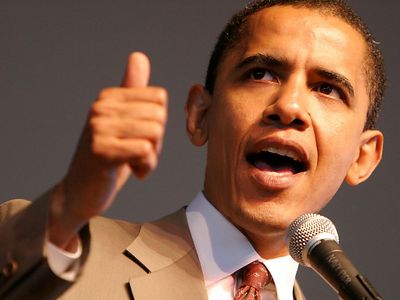
The other day a conservative political analyst said something to the effect of, “You know what I like about Obama? Nothing.”
Now I didn’t vote for our current president, but he is still our president and should receive just as much prayer and respect as a president for whom I did vote. Some people love Obama and some people hate him, but regardless of feeling, is this extremism impractical and unbiblical? I think both are true. Here’s my take.
1.) Men are created in the image of God. All men. Yes all men and women are messed up and capable of so much evil, but are also the pinnacle of creation (Psalm 8). This is called the paradox of man, and Pascal really captured it well here. Can it be that there is nothing commendable about Obama? What about his drive, confidence, boldness? Can it be that there is nothing commendable about your neighbor or co-worker? If Acts 17 depicts Paul commending the Athenians for being religious (b/c they had many idols), we can certainly find commendable traits about presidents, neighbors, co-workers. Give it a shot.
2.) Extreme statements which overlook any hint of God’s image on men/women (sometimes called Common Grace) also negate any hope of dialog. Who will listen to this man except those who already listen to him? Will he ever endear himself to others who disagree with him? Will he ever have an opportunity to be heard by someone other than his present audience? I really think that in Acts 17, Paul endears himself to his hearers, who possess a radically different worldview, and so gains a platform upon which to stand.

I can sometimes be an extremist. Not politically, but certainly in other areas, and so this became a challenge to me in how I view those who hold radically differing theological positions.

Unknown's avatar

Self-evaluation on Sundays

In worship on Sunday, our lead pastor Barret challenged us to evaluate our worship experience in a different manner than we would normally think. Instead of driving home and thinking, “Wow, that was good music or a good sermon…..,” we ought to ask the question: “how did I do in worship?” 
I’m not saying that it is not important to evaluate the sermon, music, flow of liturgy, etc…, for Barret and I do these types of things every Wednesday when we meet. However, because worship isn’t a “spectator sport,” and our true audience is the Tri-une God, it makes just as much sense, if not more, to really evaluate our own hearts. 
Questions like, “Was I engaged with the confession of sin, did my heart resonate with what I was singing, how much did I really cherish Christ when He was preached,” can make a huge difference, particularly when the pastor has an “off” day or the music didn’t sound good. 

With the power of the Holy Spirit, those types of things are much easier, and more necessary to change.

Unknown's avatar

Another reason I hate vampires

My family is enjoying some much appreciated, if not much needed rest and relaxation on vacation down in sunny Florida. But just when we thought we could relax on baby names, a stupid vampire movie had to come out and ruin everything. Last night at the dinner table my brother broke the bad news to me that “Cullen” has now become one of the most popular boy names due to it being the Vampire surname of one of the toothy protagonists.

So with that name most likely gone (I just don’t want “Cullen” to be among a zillion other “Cullen’s”), it’s back to the drawing board. This is unfamiliar territory for Amy and I, since we had Connar picked out before we were even engaged. And let’s just say there’s not been quite the consensus on names this go around.

Well I guess the age old proverb is proved true, “Once you get a great boy name picked out, you always need to first check the box office to see if it will become too popular.” I wonder why “Frodo” never took off with the Lord of the Rings trilogy?