The bible study presently known as the West Bradenton Project core group (we’ll get a better name before the summer is out), is going through the book of I Peter. I’ve really enjoyed going through the book personally in my devotional time as well as in community.
God speaks through his apostle Peter reminding us about the need to be “sober minded.” I love it. This is the same guy who chopped off a servant’s ear (the dude wasn’t even the ones with hands on Jesus) when Jesus was absconded from the garden (John 18:10). We don’t have any proof that Peter was for sure a zealot (the party of Jews that believed the Kingdom of God would come by military force), but he was probably influenced by them. Many were.
And even before this happened, he told Jesus that he was wrong (not a good idea) when Jesus said that Peter would betray him thrice.
I don’t associate those things with sober-mindedness. And Peter himself wouldn’t have as well.
But I think that’s what makes the call to sober-mindedness that much more powerful. It comes from a dude who his not naturally sober-minded. In other words, we’re not talking about someone who is naturally laid back, from California, telling people to “chill” in the face of suffering. This doesn’t come naturally to Peter. It doesn’t come naturally to me either. It only comes supernaturally.
Cue the gospel. Some of us are more laid back than others. I’m not. But in the end, none of us can’t rest in our personalities when it comes to being sober minded in all situations. We have to rest in what Jesus has done for us, instead of simply his example before us, if we want to see our lives slowly conformed to that example.
We discussed sober-mindedness in the face of suffering, and how that becomes even harder. But it becomes even more important when starting a new church. We have to be willing to suffer, and not knee-jerk react, demanding our rights, demanding our voice be the first to be heard. Later in the book of Peter, he reminds us that this kind of attitude will eventually lead to many gospel opportunities. I think if you look at the first few centuries of the church growth you’ll see he’s right.
Finally, we considered what it might look like to be sober-minded. The best example which came to my mind was Ben Zobrist, aka “Zorilla,” the Tampa Bay Rays (2nd baseman/outfielder). He was unjustly hit in the hands by a fastball, which was clearly an intentional payback from the night before when the Rays reliever brushed back the present day “Barry Bonds” of baseball Miguel Cabrera.
Ben was hit intentionally, and nothing happened. Nothing. A simple warning to both sides? Ben smiled at the pitcher, and walked to the base. He didn’t charge the mound or, say things he would regret. He told the umpire that he should do something about it and let things fall out as they would. Instead of becoming a judge himself, Zobrist “entrusted himself to him who judges justly (I Peter 2:23).”
As of yesterday afternoon-after I originally wrote this-M.L.B. has officially suspended the pitcher who thew the ball at Zobrist for 6 games. Some semblance of justice I guess…
Regardless, of what justice happens in this life, we see an example of what a sober-mind looks like.Not a knee-jerk reaction or retaliation, but a calm explanation and willingness to press on independent of fairness or lack thereof. He, and the Rays, just kept playing ball.
If a local church is going to make an impact in its community, it has to be sober-minded and willing to suffer. It has to take one “in on the hands,” get up, and walk to first base. It can’t only be concerned about what is fair (to itself).
I’m not a fan of what’s happening at a government level. But when Peter wrote this, people had far fewer rights than we do now, and the church flourished.
Take heart. I do think the church as a whole and individual Christians have some great opportunities ahead of us for evangelism if we would embrace a sober-mind in the face of suffering. Remember Peter, remember Ben, but thank Jesus who is the ultimate sober-minded one on our behalf.
Author Archives: geoffsnook77
Joe Delaney vs. Aaron Hernandez: Giving life as opposed to wasting life
One of the more intriguing summer “happenings” has been former Patriots Tight End Aaron Hernandez’s quick fall after his alleged involvement in the murder of his fiancee’s sisters’s boyfriend Odin Lloyd. It is yet another example of a complete waste of talent and opportunity from a professional athlete. One of the up and coming multi-talented stars, who had the slim possibility of playing with his former University of Florida quarterback Tim Tebow, will now watch football from a jail cell. Not sure if he’ll be able to Direct-TV or not. Who knows, if Tebow ever gets out of his mind that Tight End might present a better opportunity, Hernandez might have actually given up his position to Tebow.
Regardless, you can’t get a better example of throwing away your life, talent, and finances then Aaron Hernandez.
I don’t make this point by way of comparison of me to him, and that I could never have done what he did. Pastors do similar stuff, and throw it all away too for murder or adultery (David wasn’t beyond that). And this particular pastor is not beyond that either. We could all go the way of Hernandez, in some way or another. There but the grace of God go I. And you. But that’s not what this post is about.
Instead I want to compare throwing one’s life away versus giving one’s life away.
I came across this amazing story of Joe Delaney, a perfect illustration of the latter.
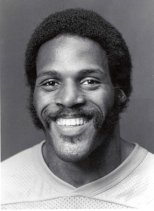
Thirty years ago today, Chiefs running back Joe Delaney noticed that a trio of young boys had waded into a man-made water hole. It contained an unknown deep end, and they quickly were in trouble.
As Frank Deford, then of Sports Illustrated, later explained it, “There were all sorts of people around, but only Joe dashed to the pond. There was a little boy there. ‘Can you swim?’ he asked Joe.
“‘I can’t swim good,’ Joe said, ‘but I’ve got to save those kids. If I don’t come up, get somebody.’ And he rushed into the water.”
Delaney saved one of the boys. Two drowned. So did Delaney.
Joe Delaney, who had played only two NFL seasons, was 24. He left behind a wife and three young girls.
As a rookie in 1981, Delaney rushed for 1,121 yards. But he willingly sacrificed a bright future to help save three young strangers.
Joe Delaney didn’t waste his life, he gave it. I don’t know what motivated him as opposed to what didn’t motivate the other standers-by, who may have been able to swim much better. Perhaps it was Jesus? I don’t know. But he certainly followed in the footsteps of Jesus’ love, who reminded his disciples that, “Greater love has no one than this: to lay down one’s life for one’s friends” (John 15:13).
Except, these weren’t friends; these were strangers. Pretty amazing, eh? How many people would do this 30 years later? This story is powerful and moving in and of itself.
But don’t stop with this story, because there is a reason why we find such a story so moving. According to Jesus this is the quintessence of love. Now think about the fact that Jesus modeled his own teaching, going above and beyond, laying down his life for enemies (Romans 5:8). Inspired by Jesus’ sacrificial love for His friends-who at the time were rather enemies-we have all the motivation in the world to give our lives instead of waste our lives.
If we’re not giving our lives away, sacrificing for others, Jesus actually makes the bold statement that we are wasting them (Luke 17:33)
Instead of trying to be like Joe or trying not to be like Hernandez, we can live as the drowning victim who was saved by Joe, at the cost of His own life. And if we regularly remember that we were ransomed not by gold but His precious blood (I Peter 1:18-19), the choice of giving instead of wasting will make sense.
Jim Eliot, martyred by Indians, thought it just made sense to give his life for others: “He is no fool who gives what he cannot keep to gain that which he cannot lose.”
Oh for grace to believe this more.
Pulling for Tebow, but not Patriots?
I have to admit I was somewhat saddened by the news that Tim Tebow had been signed by the Patriots. I have no love for the Boston sports market. I support a church planter bringing the gospel to this un-churched area, but outside that, along with my prayers, is all the love this area will get from me. Honestly, I’ve just grown a distaste for Boston’s sports teams, but its not like a Jonah-Nineveh type deal. I’ve got no beef with the people, just the sports teams.
Besides Bellicheat, we may have a new reason to dislike the Pats with the murder investigation involving one of its star tight ends Aaron Hernandez, who currently has not been ruled out as a suspect.
But I digress, as usual.
I’m happy Tim Tebow was able to find a team wiling to take a risk on his services (although he does have as many play-off wins as Falcons QB Matt Ryan). I’m not convinced he will make the 53 man roster, but I hope he does.
And therein lies my dilemma. What if he plays and plays well-unlikely as it may be? I couldn’t pull for the Patriots. Perhaps I’ll pull for Tebow to get some touchdowns and for the defense to play like the Buccaneers of 2012 (less than 30 yards away from worst pass defense ever).
I wonder if other folks do that? Pull for a player they admired in college, but pull against his particular NFL team.
Then I thought, I wonder if Tebow might be offended. Not that he reads this blog, or that I’ll run into him or whatever. But could that possibly be offensive to him? I think he might have a right to be offended. He’s a team player. It’s not about stats (his are always terrible), but about the team winning.
Would he be flattered-or rather honored-to have a fan who will pull for him to succeed yet for his team to fail? Or would Tebow say, “You can’t follow me, and hate what I care most about. You can’t like me, but hate and pull against my friends. Those people are like my brothers. You can’t follow me but hate what I came to do with and for these guys. You can’t separate me as a person from my work on this team.
If Tebow would be offended, then how much more so would Jesus be offended by those who say, “I love Jesus, but I hate the church.”
Can you love Jesus but want nothing to do with those whom he has declared to be his friends (John 15:14), his brothers (Hebrews 2:11)?
Can you love him but hate his bride (Rev 21:2)? That’s almost like saying, “I love you Geoff, and I’d love to hang out sometime, but don’t bring that dirty tramp of a wife you married. I cant stand her. No offense though.”
Hmmm…..Yep that would offend me. And I would say that you can’t love me and hate the one I love more than anyone else in the world. Well you could, but I don’t think that would constitute a very healthy relationship.
Can you love Jesus but hate the team he played for (meaning on their behalf)? Can you love Jesus but hate his wife, as though that is not offensive to Him?
I don’t think Tebow would be down with that, and I know Jesus isn’t down with it. As hard as the local church is to love (and those in local churches can be very hard; I know, I’m one of them), these are still Jesus’ little brothers, bride, servants, friends, and I guess you could say “teammates,” when they are fulfilling his mission.
Tebow v Barkeley?
A little while ago, I came across this article on profootballtalk.com regarding Philadelphia Eagles (formerly USC) quarterback Matt Barkeley. In it, Mike Florio compares him to Tim Tebow.
But Matt Barkley, a former USC quarterback, is a devout Christian. He won’t, however, be vocal or demonstrative about it. Barkley tells Methuselah (a/k/a Larry King) in a Hulu.com sit down that the former Trojan shares the religious views of Tim Tebow.
“We have similar beliefs, and I’m very passionate about my faith,” Barkley said. “Maybe not as outspoken as Tim is, he’s a passionate guy. Maybe different in how I approach that. But I’m very faithful in multiple ways, both to my team now that I’m in Philadelphia and to my God and Jesus Christ.”
This particular writer, and I gather he’s probably not in the minority actually prefers Barkeley’s more less “demonstrative” approach to football and faith.
From time to time, we (or at least I) have criticized athletes who fly their flag of faith a little too aggressively and zealously and openly. And of course I end up being accused of hating Christians, even though I am one.
The many mixed signals in the thousands-year-old book to which we look for life guidance extend to the manner in which we should outwardly project our inner beliefs. On one hand, we’re supposed to try to persuade others to believe the same things we do. On the other hand, we’re not supposed to pray or engage in charitable works for attention or credit.
It’s a fine line, and I personally prefer Barkley’s approach. Anyone who opts to make a strong and clear and public demonstration of faith needs to understand that some Christians will be skeptical and suspicious, in part because the thousands-year-old book in one specific portion advises us to be.
I appreciate Florio’s candor and exegesis of scripture in his expression, “we’re supposed to try to persuade others to believe the same things we do.” If by “the same things,” he means, “repentance and faith in Christ alone,” we’re on the same page. Obviously many Christians have many differences in minor matters of the faith-and for those I won’t waste time “persuading.” Often times those differences can be helpful since it allows us to reach different people.
Florio also refers to Jesus’ command to serve and pray in private. I’m feeling a Tebow shot here, and if so, that’s a bit unfair since I don’t think Tebow tries to draw attention to himself.
I don’t know exactly what Florio means when he says Barkeley won’t be “demonstrative” about his faith. I think we’re all demonstrating faith in something at all times. But perhaps he is referring to the Jesus soundbytes?
Regardless, just because Florio says, “I personally prefer Barkeley’s approach,” that doesn’t mean Barkely is selling out. The takeaway for me is that both Tebow and Barkeley have a common Savior. How they serve that Savior in the NFL, in some ways, is the same: do all for the glory of God and work as they are serving Jesus (I Cor 10:31; Col 3:23). But in some ways, their methods are quite different. Barkeley may not say “Jesus” every time he gets a microphone. Tebow probably will. But who knows what is going on behind the scenes in their relationships with teammates? I have no reason to think that both are being anything less than faithful in following their Savior.
Some Christians, by virtue or platform or personality, will live out their faith and it will look differently. And that’s not a bad thing. Both people may have an effective witness to their football teams, families, neighborhoods, friends, co-workers and draw widely different audiences.
Once again, as the “thousands year old book” reminds us, the heart is the heart of the matter. Does the heart seek to bring honor to Jesus and see others honor Him? How it looks to be burdened by that call is not the point, but rather that we are burdened-or rather freed-by the call is what matters. Two different approaches but the same Jesus.
Lessons from Lost Tarpon: What happens when they actually bite?
Today a good friend of mine took me fishing off the beach for tarpon. If you’re not familiar with the tarpon, it is a large fish regularly exceeding lengths of 6 feet and weights of over 100 lbs. They are quite difficult to catch and to make things even more challenging, my friend uses a fly rod and I throw a lure.
I had only fished for tarpon off the beach in kayak once, previously with my same friend last summer. But during that excursion, he provided the rod, reel, leader, and lure. He even provided the kayak!
But since I actually live in Bradenton again, there is no reason why I couldn’t bring the kayak, and the gear needed to tackle such a foe. While I had the kayaks, which had been spent the previous three and a half years in hibernation, I did not have all of the “pieces” in place. And I knew it.
I had some of the pieces. I had a rod which could possibly handle a tarpon, at least for a few minutes (25 min is minimum to bring one in). I had the same kind of lure I had caught tarpon on when growing up fishing Tampa Bay. But tarpon have very rough mouths and so one needs at least 3-4 feet of 60-80 lb test leader line tied directly to the lure.
The only thing I had in my tackle box was 30 lb line, useful for snook. So I went with several feet of that. Why not? I didn’t expect to catch anything. I expected to see my friend catch one.
After we spotted some fish, my friend said, “You cast on these fish. I don’t have as good an angle.”
So I did, guessing where they would be heading since we had seen them roll at the surface a minute prior. Then the unthinkable happened. As I was bringing in my lure, one of these fish hit and immediately broke the line. I saw the bath tub sized swirl on top of the water and that was it.
Your goal, or at least your first goal, is to see them jump. After that, everything is a plus. I didn’t even get to feel the rod bend because the line was broken before that even happened.
The culprit: 30 lb line. My buddy thinks the lure was tied on wrong. Perhaps he was right-though I don’t think so! Regardless, I wasn’t prepared for success. I honestly thought I needed live bait to get a bite (that’s a confession and first sign of repentance from a fishing lure “purist.”)
Why this fishing story? Because as soon as I lost that fish today, I immediately thought about this church plant. I had not expected to get a fish, but rather to see my friend “jump” a fish. That would have been almost as fun. But because I hadn’t expected to catch a tarpon, I didn’t go to the store and simply buy some 60-80 lb leader. Nor did I ask my friend, who actually had some with him. As I write this, I’m quite saddened I didn’t ask him for some. Who knows I may still be hooked up on the same fish?
What happens if this church plant actually “works?” I mean, what if people come to it (since that’s what we’re praying for)? I don’t want to be caught using 30 lb line when there’s a possibility of a 100 lb tarpon. If people do come, and come quickly, then it is important to have things in place.
How will we disciple people and move them toward spiritual maturity? What does a growing disciple look like? Why will we worship the way we do? How can someone get plugged in to the church? What areas can they serve in the church and in the community? Will there be enough community group bible studies in which to plug them in? What’s the next step after someone, or rather a number of someone’s come? What’s the step after that? What happens if the proverbial tarpon actually hits?
People sometimes ask, “When will you start your church?” I tell them we don’t even have a building yet to meet (though I have had an offer and a good idea where we’ll meet). And that’s a fine question. An established church meets weekly to worship. But there is much preparation that takes place in order to make sure the church is “ready to launch.” We will start it, but like tarpon fishing in a kayak, we need to be prepared for the event that we actually “catch” one.
So in the mean time, we’ll gather people this summer who have any interest in this church, get to know each other, study God’s word, lay down some principles, specifics, and a vision of a gospel driven, maturing, missional, multiplying, worshiping community that blesses the West Bradenton area. I can’t wait. But just as there is joy the night before rigging rods, checking knots, lures (at least for me), there is joy in the preparation and in the dreaming stages too (perhaps why I never sleep well before a 6am fishing trip).
I don’t know that you can ever be completely ready for a church to start more than you can truly be ready for a 100 lb fish to strike your lure and just about rip the rod out of your hands. But you can be prepared. And I’ll/we’ll do our best to be prepared for both.
Arizona Diamondbacks and a gospel-centered draft pick
All drafts, whether military or athletic, are about “what you bring to the team.” Now a military draft, as far as I understand, is somewhat arbitrary-but you are still expecting to find quality soldiers to help your cause. Of course the same thing occurs with the NFL, NBA, NHL, and MLB drafts. You pick a player not because of what you can do for them but because of what they can do for you. That’s fairly obvious.
Of course the other day, the Arizona Diamondbacks decided to draft someone would you never bring the tangibles of good hitting, pitching, or fielding to their ball club. He’s paralyzed. Check out the story here.
Now this was the 34th round. This was not a high pick. How many 34th rounders really make a huge impact in the majors? I’m sure some do, but I’m not about to research it. Yet still, to see a team pick someone not because of what the player could do for them, but because of what they could do for the player is pretty unique.
There was a cost, albeit arguably a marginal price. You may remember the Bucs signed free agent Eric Legrand, a paralyzed player out of Rutgers, but they didn’t have to spend a coveted draft pick on him.
While this was a unique display of love from the Arizona Diamondbacks, it is not one completely without precedent. All good stories, or at least ones which really connect with people, have some sort of connection to the overall story of the gospel. You might be able to say the same applies to such memorable draft picks.
God “drafts” not according to ability but because of our disability. The reason this story is so touching is because it simply borrows from the story of the gospel: God saving people not because they have something to offer Him but giving Himself to those who have nothing offer. What is love, you, or Haddaway might ask? That is.
One could make the case that Arizona went in a “gospel-centered direction with their 34th round pick.”
Rethinking U.N.I.T.Y. at Atlanta Bread Company
After a morning men’s bible study led by one of our core group folks, I headed over to Atlanta Bread Company. While trying to have a morning devotion, I overheard some encouraging conversation a few tables over. I don’t want to unthinkingly baptize nosiness in Christian terms, but I think there is a place of “holy eavesdropping.” Paul walked through the towns and looked, and was distressed. I’m pretty sure he also overheard conversations where he wasn’t immediately involved. Since I don’t have “spidey-sense” and can’t look into people’s hearts like Jesus, this is all I have. I guess it probably depends upon the intent of the eavesdropping. Is it for selfish gain or to discern how best to minister?
Regardless, I overheard some encouraging conversations today. Now I was across the room, but I clearly heard the words “pastor” and “message” and “discipleship.” Some good words to hear. From all appearances, it seemed as though an older dude was mentoring a younger lad.
That’s a good thing.
Whether it be a discipling/mentoring relationship or an informal bible study from whence I came just 15 minutes prior, we were experiencing unity. Even before Queen Latifah sang, “U.N.I.T.Y.” Jesus prayed for unity. Since I started writing this post I took a break and introduced myself. The younger lad happened to be the local mega-church campus pastor. Even if we hadn’t connected personally, we were in some ways truly expressing the unity Christ prayed for in John 17. Now perhaps not to the extent that Christ prayed, but this is a big deal. I would much rather be unified in that we are both using local breakfast establishments to move people toward maturity in Christ than I would come together for a big rah-rah meeting. I’m not arguing against these meetings, but I think folks reduce unity to different denominations getting together.
But is that necessarily the unity Jesus wants? Wouldn’t he rather His people be unified across denominations in making disciples than a bunch of denominations getting together for the purpose of unity? Now I think we need to get together cross denominationally in order to learn how to better make disciples. I have much to learn from different denominations. I really enjoyed learning from different folks at the G.C.A. church planting conference and will probably take advantage of more such conferences next year.
Yet I don’t feel unified with those same 30 or so denominations represented because we met together and sang some great songs and heard some moving messages. That’s good. But personally I feel more unified with them because we are going out to a hostile world and starting new gospel centered churches. I feel more unified when we are across the street-or even better, at the same restraunt-making disciples than getting together for “unity meetings.”
I’m not arguing there is no place for such, nor am I arguing that unity in mission is the only unity we should ever seek. But I do think we need to recognize unity in mission as substantial, legitimate, encouraging, and part of what it means to really have fellowship as we participate in the Great Commission with folks who look way different than each other. If we are encouraged to see discipleship happening in our area, then Christ’s prayer “that they may be one” is being answered. If we are jealous of someone else “on our turf,” then we know unity is lacking, regardless how many “unity” meetings we attend.
Savage Garden, Middle School Romance, and Foreknowledge
We’re having our first get-together for those interested in our new church plant this Sunday and we’ll be making our way through I Peter. In the very beginning of the book, Peter encourages his recipients with the fact that they have indeed been chosen.
Peter, an apostle of Jesus Christ,
In reality the scriptures depict God not pursuing us like a middle schooler but as a husband chasing a resistant and adulterous prostitute (Hosea). That’s love.
They are who we thought they were? Reflections on Bart
The other day “Black Bart” Ehrman penned (I think that word seems a bit outdated in a digital media) an article for the Huffington Post entitled “Who wrote the bible and why it matters.”
Michael Patton at Parchment and Pen blog formulated a thoughtful response here.
Black Bart is a smart guy with an agenda to do all he can to get folks to discredit the scriptures based upon their supposed fallacies. According to Bart:
And Ehrman reasons that because books like 2 Peter, Ephesians, and other Pauline epistles were not written by authors who claimed to write them, we should disregard the bible as lies concocted by liars. As I earlier alluded to, Patton does a fantastic job responding to Ehrman’s writing.
Even if one were to grant that 2 Peter were a pseudepigraph (and while I disagree, I admit it is the best candidate), what does this do? According to Ehrman, it means that the Bible contains lies. But this is not true. It would simply prove that 2 Peter was a lie. It is not scholarly in the least, in this type of argument, to treat the entire canon of Scripture (or just the New Testament) as one book written by one author (as the title of Ehrman’s article, “Who Wrote the Bible and Why It Matters,” does). Ironically, in such cases, skeptics like to attribute a unity to the Bible which they would never grant in any other situation! The truth is that even if 2 Peter and certain Pauline epistles were written by someone else, they alone would be deceptive. The rest of the books would be untouched.
So in other words, if you threw those books out, and regarded them as lies, you still have Christianity. And Bart would certainly agree that Paul wrote Philippians, Corinthians, and Galatians.
The only argument I would add to Patton’s case is that viewing scripture in a “modern parlance” (which I’m not totally sure what that means) is a bad idea. We can’t simply read it like it was written yesterday. Now this is to say nothing of scripture’s accuracy. In fact I sat through Religion classes at Furman which examined the very wording of Pauline letters and themes, and argued that they couldn’t be written by the same person. I wasn’t convinced then nor am I now. I’m sure you could probably do the same kind of analysis with my blog posts and come to the conclusion that some posts were authentic and some were not. Yet you’d be quite wrong. I write everything.
The gospel writers felt free to not have to record everything in sequential order, but at times, structured their narratives more thematically. In the beginning of Mark, he combined two Old Testament quotes and attribute them to one prophet. Was he a liar? Is this a mistake and false allusion? No absolutely not; at the time they were okay with that. Today we would probably call that a mistake and that he didn’t have his facts straight. He must have been in error….We wouldn’t be okay with that today, but the scriptures weren’t written today. And I’m glad. They are applicable today just as the day they were written, but we can’t read them with our rules for what is apropos to write. If so we end up calling mistakes what were in fact both intentional and accepted at the time. Even if the authors of 2 Peter, 2 Thessalonians weren’t who they said they were, to me that doesn’t change anything. Again this is simply for the sake of argument.
If authors of the scriptures penned letters in order to deceive and manipulate people, and lead them away from the gospel, that is one thing. But if authors writing in the names/theology/approval of their mentors, being led by the Holy Spirit, wrote letters inspired by the Spirit, would such letters really be concocted by liars? Was it all lies? Maybe we would say so if they were turning a profit and getting royalties, but what if this was a common practice? What if the recipients knew it was a Pauline disciple?
Again, just for the sake of argument, to prove these letters pseudipigraphyl does not make me throw out Christianity nor should it even make us throw out II Peter, Colossians, and the other “disputed letters.”
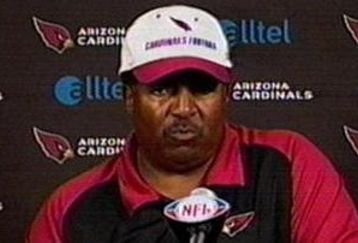
Former Arizona Cardinal coach Denny Green once said, “The Bears are who we thought they were, and we let them off the hook.” Even if a few writers aren’t who we thought they were-again solely for the sake of argument-I don’t think that it changes anything for me as a Christian, or as a pastor preaching through those books. In other words, I would do as that Cardinals team did, and “let them off the hook.”
Just my take.
Spritual flopping
The N.B.A. technically stands for National Basketball Association. Of course over the years it has also stood for other things like “Nothing But Actors.” But this year, particularly during the playoffs it will not stand for acting any longer. Even bigger named (and even bigger whining) players like Lebron James have been fined $5,000 for “flopping.” Soccer players have done this for years and it drives me nuts, but the NBA, is attempting to do something about it. Now I know taking $5,000 from Lebron is like taking away a napkin from the “rest of us,” but it’s a start. I think.
Flopping can give one player quite an advantage over his opponent. By faking or exaggerating the result of contact, he can get the ball back and cause his opponent to be called for a foul at the same time. It’s better than a simple turnover. And it often times works, until now, supposedly.
But it is completely disingenuous and harms the integrity of the game (though I rarely watch NBA so this is more of a hypothetical for me).
Sometimes I think Christians are guilty of spiritual flopping, over-reacting and even acting at times. There is always going to be contact in basketball. That’s part of the game. There is always going to be contact in a church (at least in a healthy church where people spend time with one another!). And just like in a basketball we will bump into each other; often times that contact is simply like two guys going for a rebound, or “boxing out” or “posting up.” It is just part of the game. Feelings will eventually get hurt-how could they not when you put a bunch of broken idiots together in a room? I’m not excusing sin or insensitivity, just reminding us not to be surprised when it happens.
Of course there are “fouls” and even “flagrant fouls” which need to be addressed. But I wonder how many Christians simply “flop,” and act as if they’ve been hit with a vicious elbow to the head when in reality they ran into a pick? Particularly when it comes down to players who have a “history.”
In Ken Sande’s Peacemaking steps, the first step is to overlook an offense. In order to overlook an offense, we probably would do wise to consider the actual contact we received. Was it really a vicious intentional elbow (as it really felt at the time), or simply the normal contact that goes on in a game?
Some have been “flagrantly fouled” a time or too and so it is legitimately hard to trust again. But for others, flopping might be more commonplace and have developed into a life long habit. I know I’ve flopped a time or too along the way, reacting as though someone had thrown a cheap shot my way. In reality, that wasn’t the intent at all. We’ve all flopped, and then moped-though some of us do so more privately or in the privacy of house and home. If there’s one thing we can learn from the NBA it is that flopping, which is ultimately disingenuous over-reacting and at times acting to gain an advantage over another, distracts us away from the real work going on inside and outside the four walls of a church.