Unknown's avatar

Don’t expect them to come to you

An elderly gentlemen the other day (and when I say “the other day,” I can mean up to a year so don’t try to figure out what church I’m referring to) mentioned to me nostalgically, “We used to have two night services and two or more morning services.” This was juxtaposed against the backdrop of empty pews at the service. The gentlemen was saddened, and probably rightly, at the lack of attendance.

But it revealed a mentality that must change should this and many other churches see more folks involved in public worship. The hope was that maybe one day the pews would again be filled and services abound. And so the fundamental question asked is: “What can we do so that people will come?” Usually the answer is to tweak the service, getting more traditional or contemporary, or hire more staff, or develop more attractional programs.

But I think there is a problem with this philosophy. Here’s why. More and more people are growing up without any church background and so folks are not actively seeking out churches. With only 20% of Manatee County connected to worship, it’s hard to argue against that.

So many established churches cannot afford to continue to embrace this “We’re expecting them to come to us,” mentality. That worked at one time when the percentages were much higher and there was a more common understanding of spirituality and the role of a church. While I’ve detect a higher than average spirituality in Bradenton, the church appears unnecessary or less important to many.

The attractional model has worked for both traditional and contemporary churches over the years. In fact many traditional churches operate according to the same philosophy; they hope to attract people by preaching or traditional worship. Other churches expect people to come to them because of contemporary worship, children’s, youth, or young adult programs or bible studies.

It can work for some churches. But its hard to argue that it works for most. Many churches need to stop thinking, “Why aren’t they coming to us,” and adopt a, “We’ll go to them, love and live among them, and eventually bring them.”

Our church is beginning to see members inviting visitors, as well as visitors inviting visitors. From children to young adults to elderly folks, we’ve seen some fruit across the demographic board from people abandoning the attractional mindset and living missionally.

And that’s quite encouraging because that’s really the only way most churches are going to grow. The attractional model can still work for certain settings, but many folks need to realize that those days when people would simply come like animals to a dinner bell are over and not coming back. So I think it’s time to go to them, instead of angrily, frustratedly, or despairingly expecting them to come to us.
Unknown's avatar

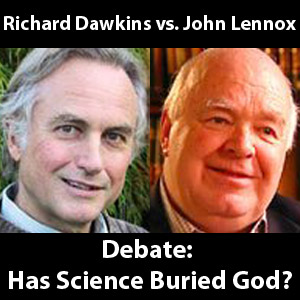
Dawkins v. Lennox and assumptions

Last week I watched a DVD debate between Richard Dawkins and John Lennox called “Has Science Buried God?” Both men came well prepared and did a decent job of keeping their cool. I couldn’t do one of those debates, not simply because I don’t know enough and don’t think as quickly on my feet, but because of the emotional component.

Dawkins at times came off as a tad bit belittling, but for a man without the Holy Spirit, he did quite well and didn’t go too much beyond calling his opponent “petty” for believing in the resurrection.

The DVD is well worth the watch and I hope to show it sometime in our community group. You can click here for the free audio of this debate and two previous debates between these two lads.

During the course of the debate something did come out which I found a bit enlightening and it had nothing really to do with the material-though it was great.

Lennox claimed people were made in the image of God, assuming Dawkins would know what that meant. Even though Lennox had done his homework on Dawkins, Dawkins didn’t do all his homework on Lennux. He responded, “What do you mean, ‘We’re made in the image of God? Does He look like us?'”

Lennox took for granted knowledge of this distinct Christian (or Judeo-Christian) belief. While Dawkins probably should have known this, he obviously didn’t. Fortunately he asked the question during the debate.

I think this serves as a good lesson for all of us not to assume everyone is familiar with basic Christian beliefs, even the well read and learned who write books attempting to debunk Christianity! Such terms like “image of God” may have once been understood (not necessarily believed) some years ago, but more and more folks have no clue what they mean. And if one is not in a debate, but instead preaching, sharing the gospel, or conversing, he must not take for granted the many who are not “in the know” and may not ask or have the chance for clarification.

Unknown's avatar

A Teddy With Warts Is Worth More Than One Without

Some other PCA pastors and I have been meeting monthly for fellowship, prayer, and to discuss a book. This habit of reading a book helps keep me accountable to read books I normally wouldn’t choose myself (though I have recommended 2 out of 3 so far!). Our last book was George Grant’s biography The Courage and Character of Theodore Roosevelt.

I really didn’t know too much about Teddy so I was grateful for the information. A fascinating man that somehow had more hours in his day than any of us. In fact I flew through the strictly biographical part and moved on to the “Courage” and “Character” parts quite quickly. The book is really divided up into Life, Character, and Legacy and doesn’t read like normal biographies from beginning of his life to the end.

While the information was fascinating, and this was a unique way of presenting and providing commentary on his life, I found it a bit too choppy. And though I really did enjoy the information and writing style, my main complaint had less to do with structure and more to do with the ethos of the writer.

George Grant presents Roosevelt as a man without warts. And we all have warts. We all have issues, sins, and struggles. And this was a biography of a wartless man; it fell into the category of a hagiography or in laymen’s terms, a “holi-ography.”

Roosevelt appeared by all accounts to be a wonderful husband, father, scholar, leader, statesman, churchman, scientist, biographer, and writer worthy of emulation. And I believe he was. Yet Grant presents him so highly that if there were ever a vacancy in the Trinity, he might get the nod.

By the end of the book, one is left wondering if the lad ever did anything wrong. If he ever believed anything wrong. Roosevelt taught Sunday School, but I wonder what he actually taught. I mean Presbyterianism in Northeast in the early 20th Century was about as liberal as Sports Authority’s return policy, denying denying miracles and the virgin birth.

I don’t know what Teddy really believed and that’s just it. I don’t know how Teddy failed or that he even did fail.

And in order for most of us to follow a leader, we need to be aware of their weaknesses. We have to see them repent and admit failure before us. Otherwise we’re really not following a real person, but simply a “presentation” of a person. And that’s what I feel like I was left with: a presentation and not a real person.

I did enjoy the book because I knew so little about this fascinating man. But I feel Grant in the end, ought to have revealed a few warts if he truly desired to inspire the reader to emulate the “courage” and “character” of Teddy Roosevelt.

Unknown's avatar

Ben Zobrist, Nebuccadnezzar, and the All-Star influence

Last night I got back from a drive down South about 11 pm, just in time to catch the last 2 innings of the 287th All-Star game. Just in time to see Tampa Bay Rays first time All-Star Ben Zobrist foul off a number of pitches, and then, well……strikeout. That’s OK. He was an All-Star.

Ben Zobrist has played most of the positions in the field but has settled in at 2nd base since that’s where the team needed him the most. His goal for this year was simply to crack the starting line-up. Now he is an All-Star. Peter Gammons has even considered him a possible first half MVP of the American League.

He is also a committed Christian who walks up to the plate with the background music from his wife Juliana Zobrist, who is a Christian singer.

How long will this crazy ride last for young Ben? You never can tell. He could repeat as an All-Star or stink it up next year. Sometimes God lifts people up for certain seasons of their lives. Sometimes that season seems short like a beautiful spring, and sometimes long as a cold, wet winter.

Another Christian baseball player Josh Hamilton said something to the effect of, “As long as Jesus keeps letting me play well and get recognized, I’ll use it as a platform to tell others about Him.” Hamilton recently played in last night’s All-Star game despite very weak numbers.

God lifts up people, churches, and kingdoms for set periods of time and for specific purposes. Yet all can disappear when pride enters in (Daniel 4:30) or should God simply have different plans. For some like former Babylonian King Nebucadnezzar and Arizona Cardinal’s QB Kurt Warner, he may exalt, humble, and then lift up once again by restoring a literal kingdom or allowing one to lead the league in passing and go to the Super Bowl.

Positions of influence such as literal kingdoms and All-Star games happen to few of us, but relationships of influence happen fairly regularly if we seek them out or are open to them. Sometimes they may be literally or metaphorically “snowbirds,” in our lives one season and gone the next; sometimes they last much longer.

Regardless of how long your “all-star” status lasts, it is wise to seek the Lord and ask, “What would you have me do with this relationship while I’ve gained his or her respect?” That way, like Josh Hamilton, we can make the most of our time “on top,” pointing them to the King and Kingdom without end.

Unknown's avatar

Reality TV shows

The problem with Reality TV is that there is no limit to what can pass as a TV show. As long as its real, or marketed as real, it can be a show. The other day I was flipping past T.L.C. and found a show called “Obese and Pregnant.” Really?

Well I thought that would exhaust the abnormal pregnancy TV niche until I saw another one on T.L.C. called “I Didn’t Know I Was Pregnant.” Yep, a show about people who show up to the hospital because they feel sick and end up leaving with a kid. Their kid. That’s a show with staying power.

I wonder what the founding fathers would have to say about our reality T.V. show options today. And which reality show would Thomas Jefferson or Ben Franklin likely watch? I can’t speak for Jefferson, but I’m certain Franklin would be all about “The Bachelor.”

Unknown's avatar

Legacy and repentance

One of the most memorable lines, perhaps even the most accurate lines of any Shakespearean play comes from Marc Antony’s soliloquy (which I had to memorize in high school, so perhaps that’s why it’s so memorable to me) in Julius Caesar: “The evil that men do lives after them, the good is oft interred with their bones. So let it be with Caesar.”

Obviously Mr. Antony (not the Latino pop start married to Jennifer Lopez) referred to the fact that Caesar would be remembered for his ambition and the negative stuff like turning the Republic into more of an Empire. I guess that sentiment and foul memory is probably to be expected when one is assassinated by friends.

But I wonder what the legacies will be of some of our recently departed celebrities, athletes, and pitchmen. Will McNair be remembered for giving to his community and humbly sweeping the floor of his own restaurant or for having an affair with a woman 16 years his junior who was as stable as plutonium? Will Michael Jackson be remembered for his music first or for the alleged molestation charges or literally having a new face every few years?

I think it would be quite exhausting to worry about your legacy by scrutinizing every decision you will make or have made. I think a legacy I would rather have made is not one of impeccability, but rather a legacy of repentance. That I screwed up a lot, but repented, ran to, and rested in Jesus a lot.

Maybe, just maybe, that’s why we remember Luther more for his 95 Theses (the first of which stated “all of life is repentance”) and less for his anti-semitism or other dirt he left behind.

Unknown's avatar

McNair, skeletons, and us

It’s definitely a bad time to be a celebrity, athlete, pitchman. The most recent one to bow the knee to Jesus (albeit possibly too late to count) is former Titans QB Steve McNair. Reactions have been mixed. Some, like the Tennessee Titans, are celebrating what a great life he had on and off the field

Others, have blamed him for putting himself in the situation of dating another woman while being married w/four children. Former player and analyst Jamie Dukes had this to say about the situation of marriage and commitment in connection with the alleged murder-suicide. Radio personality Dan Sileo bashed McNair’s inability to commit to his wife and family.

Regardless of how great a community man Steve McNair was, he did have skeletons in his closet. They eventually came out. They always do. McNair shouldn’t have been put on a pedestal, but in his defense, none of us deserve to be there.

We all have skeletons in our closet. And we are all capable of infidelity (McNair) and prescription drug use (allegedly for Michael Jackson). The quickest way for these capabilities to become public realities is to believe that you’re incapable of such mistakes.

I just heard a pastor of a PCA Mega-church (yep, we have a few) talk about his prescription drug abuse at our General Assembly. These things can happen to all of us. So if we can learn anything, run to and rest in Jesus early and often.

Unknown's avatar

Back from the Keys


Well I’ve been out of town on vacation but am glad to be back in the saddle. So I hope to be posting more regularly. Here’s a picture of our finest catch in the Keys last week: a 26 ” 9 lb. Black grouper. And a picture of Connar with his “Magnum P.I.” look as well. I’m hoping to me more regular this upcoming week as you could say, much has happened in the world the past week or so.

Unknown's avatar

No one laughs at God when….

In an effort to broaden my horizons musically, I’ve begun podcasting All Songs Considered, an NPR broacasted radio show. Some dude who really likes music (probably too much) introduces about 5 or 6 new tunes, usually by obscure bands I would not find by cruising the radio dial.

One of my goals is simply to find some new music. The other goal is to listen to these bands in order to be able to relate to the people who listen exclusively to obscure music. It’s always a good idea to give yourself more connecting points with the world around you. The more connecting points the merrier; you never know when they will come in handy.

Anyway, while suffering on the elliptical machine at Lifestyles I heard a fascinating song by a lass named Regina Spektor. I think they are thoughtful as well as poetic. Some are quite biblical like her critique of treating God “like a jeanie, who does magic like Houdini….” I love that line.

I’m not sure what the song is about. Check the music out here (the song is called “Laughing With”), and feel free to let me know what you think. The lyrics are below.

No one laughs at God in a hospital No one laughs at God in a war
No one’s laughing at God when they’re starving or freezing or so very poor

No one laughs at God when the doctor calls after some routine tests

No one’s laughing at God when it’s gotten real late and their kid’s not back from that party yet
No one laughs at God when their airplane starts to uncontrollably shake
No one’s laughing at God when they see the one they love hand in hand with someone else and they hope that they’re mistaken

No one laughs at God when the cops knock on their door and they say “We’ve got some bad new, sir,”
No one’s laughing at God when there’s a famine, fire or flood

But God can be funny At a cocktail party while listening to a good God-themed joke or
Or when the crazies say he hates us and they get so red in the head you think that they’re about to choke
God can be funny When told he’ll give you money if you just pray the right way
And when presented like a genie
Who does magic like Houdini
Or grants wishes like Jiminy Cricket and Santa Claus

God can be so hilarious Ha ha Ha ha

No one laughs at God in a hospital No one laughs at God in a war
No one’s laughing at God when they’ve lost all they got and they don’t know what for

No one laughs at God on the day they realize that the last sight they’ll ever see is a pair of hateful eyes

No one’s laughing at God when they’re saying their goodbyes

But God can be funny At a cocktail party while listening to a good God-themed joke or
Or when the crazies say he hates us and they get so red in the head you think that they’re about to choke

God can be funny When told he’ll give you money if you just pray the right way
And when presented like a genie
Who does magic like Houdini Or grants wishes like Jiminy Cricket and Santa Claus

God can be so hilarious No one laughs at God in a hospital
No one laughs at God in a war No one laughs at God in a hospital
No one laughs at God in a war No one’s laughing at God in a hospital
No one’s laughing at God in a war
No one’s laughing at God when they’re starving or freezing or so very poor

No one’s laughing at God No one’s laughing at God No one’s laughing at God

We’re all laughing with God

Unknown's avatar

The Bucket List and my tears

The other day I cried. It had been a while since I cried, I think. But The Bucket List did me in. Now obviously with a name like the The Bucket List just as in The Titanic, you know somebody is going to die (ashamedly I cried in the latter as well).

But The Bucket List was really not what I expected. It has Morgan Freedman and Jack Nicholson, so I ought to have expected something good. I mean those two, at least apart, have put out some good flicks together (we’ll forgive Freedman for Hard Rain). The Bucket List really raises some great questions as the two even have a dialog where Freedman defends the existence of God through creation. It also exposes the allure of possessing everything while really having nothing.

What got me was that Freedman was a professing Christian, said grace at dinner, defended God, was faithful to his wife, stood up for the truth, but only pointed Nicholson to be a better person. Now I’m not expecting Fireproof; I’m not expecting a gospel presentation. But it just gets me so sad when people come so close to the point where they recognize their need for Jesus, and yet miss him. And those who could share something, don’t.

That’s what sent me crying for a 1/2 hour with the The Christmas Shoes movie. Not just that someone died, but that Jesus was totally absent in the movie (but present in the song which inspired the movie).

I just really need to cry more for those around me who don’t know Christ instead of using my tears on a movie. I definitely don’t want to repeat the same tragedy that makes me cry on the screen.