Unknown's avatar

Discipleship Model III

This is my last post on the discipleship model and why it makes a difference not simply in discipling others, but on our own discipleship.

All of us, for the most part, inevitably fall into one of the three categories: “Head,” “Heart,” or “Hands.” Nothing is intrinsically wrong with any of these categories. In fact, the church needs all three types of folks. Nevertheless, unless you want to walk around with a huge head (getting neck-aches), a huge heart (I’m really not sure of the medical complications associated with a heart too large-feel free to let me know), or huge hands (ruining a potentially lucrative hand model career), you need to examine which category you land. I’m being facetious of course; God calls us to grow in all these areas.

While fishing the other day, my friend and I discussed and confessed where we landed. Both confirmed the other’s brief (between casts) self-evaluation. He was more of a heart guy (emotions, emphasis on the heart belief), and I’m more of a hands guy (being very practical, wanting to see how the belief makes a difference). Now that doesn’t sum me up completely; I do like studying theology and philosophy, and I do like discussing motivations and heart idols. And all of us have elements of all three; that’s how God made us. But clearly, we all do have emphases.

One way to figure out where you tend to land is to look at the books you’ve read over the past year. What kind do you ‘by default’ pick up? What kind of books do people need to recommend to you for you to read them? Mercy, outreach, commentaries, cultural engagement? Do you feel you need to grow the most in knowledge, personal devotion, or applying what you know to the world around you? In bible content/theology (head), in your application of the gospel to your heart and life (heart) or in serving others, relationships, mercy, outreach (hands)?

Finally, the best way, is to ask simply to ask someone close to you. Once you figure out where you land, it’s good to surround yourselves with resources like articles, blogs, books, and people who can challenge you to grow in areas you may more naturally neglect.

My reading/study has been more balanced than I initially thought (a Piper/Meheny sprinkling-how ironic I chose that word, since both are baptistic!), though it has been tilted in the department of the Hands lately (church models, sociological perspective of young adults and religion, community groups). My next purchase/reading pursuit will probably be Jack Miller’s Repentance and the 21st Century man. I haven’t picked out my next “Head” reading. First things first though.

Unknown's avatar

Discipleship Model II

I’ll continue some thoughts on my (though it’s not technically “my”-I didn’t come up with it) discipleship model now and show you how I’ve implemented it. I started a group for deeper discipleship with a few guys in the fall. As it would turn out, several have since moved on so the make-up of the group has changed. Nevertheless, the format of the group is to spend time fellowshipping, in accountability/prayer, and discussing the study.

Our first book was the Living the Cross Centered Life by C.J. Meheney. It beautifully expounds the gospel and the fact that we never outgrow our need to continually come back to the Cross. The book is great for young and mature Christians. I would put the book in the category of “Heart,” since it deals so much with sanctification (growing in Christ). Now there are a plethora of good applications (Hands) and some reformed theology (Head) in the book, but the thrust of it is to challenge people to continually rely on the gospel (Heart).

The next, and current study, is one written by a seminary professor of mine named Richard Pratt. The Business of the Kingdom explores the implications of living out the prayer, “Thy Kingdom come, Thy will be done, on Earth as it is in Heaven.” Again, there is some theology behind the study, but most of that is addressed outside the study in his sermon on the Lord’s prayer (which we listened to before starting the study; it’s worth your 45 minutes, I promise). The rest of the teaching comes at the beginning of each section, and then requires the participant to practically and specifically answering questions tailored to one’s own work setting (“Hands”). We’ve not finished this study yet, but I still highly recommend it for all employees, students, and those who own their own businesses.

Our next book will probably tackle something in the “Head” department and then repeat the cycle. Of course different people tend to be stronger in different areas, so that may cause us to spend more time in one of the three categories and not simply mechanically move from one to the next. Later, I’ll discuss more about how this discipleship model applies to our own personal discipleship: our following after Christ, as opposed to their following.

Unknown's avatar

Discipleship Model

I think a good model of discipleship is one which emphasizes all aspects of our person. The best model I’ve found is “Head, Heart, Hands.” Now there is cross over from one area to the next, but each primarily represents a different focus. “Head” refers to the gathering of a normative, standard base of knowledge. If I were focusing on training someone in this area, I might emphasize reading books on theology, worldview, scripture interpretation (called hermeneutics), reading large chunks of the bible to understand the grand narrative, or looking up specific commentaries.

If I were focusing on the “Heart,” I would spend time developing their understanding and application of the gospel, discussing the idols of their heart. I might recommend reading books (you can tell what tradition I’m from-a “head” focused one!) on sanctification, counseling, challenge them to pray with a Kingdom emphasis, discuss healthy emotive components arising from a relationship with Christ. And obviously I would address personal time alone with God studying and reflecting on His word in smaller chunks. Some call this a “Quiet Time,” (and this is fine) though those words are also used for what parents make their children do when they’re too old for naps, so I just call it “personal study,” “meditation,” or “devotions.” Just my goofy opinion.

If I were focusing on developing the “Hands,” I would challenge folks to display what they know and what they believe/feel by living out their faith through their actions. The book of James emphasizes this component of the faith. In addition, this area would include serving inside the church and outside in the arenas of mercy and outreach. We can’t simply know more of Christ, simply delight more in Christ personally, but also need to serve Christ and build His Kingdom. Resources in this area would be “practical” articles/books/blogs assisting you to be a better parent, a more effective cultural influence, a better neighbor, a preacher, Kingdom centered employee or boss, etc…

Again there is cross-over and some studies/books/resources may hit on all three emphases but will generally fall into one category more than another. I’ll explain more later on why I think its important to think in these terms. I’ve probably written too much already.

Unknown's avatar

Your way right away is not a good way to write a story

I’ve had a chance to further reflect upon my Habakkuk 1 sermon, as I “re-preached” it-with some changes relevant for my audience of course-for RUF at USF last week. In addition, I also reflected upon Ruth 1, and came up with something new for my 2nd RUF talk. I began to see something very similar in both of these stories.

First of all both, Ruth and Habakkuk felt neglected, and perhaps “shafted” by the Lord. God wasn’t writing the story the way they felt He should write it (but Hab was still right in crying out to God). Now approaching the passages from a historical distance, we can see how the Babylonian invasion was intended to produce repentance, which would usher in the Kingdom of God through Jesus. And Ruth was eventually-though Naomi couldn’t see it at the time (and that’s the point)-to bear her a son, who would become King David’s great grandfather.

Naomi’s problem and Habakuk’s problem would have been “solved” differently if they were writing the script. And in the gospels, Peter’s problems would have been “solved” if Jesus did not go to the cross but instead immediately became a militaristic king. Yet it was only by Jesus going to the cross that any problem (sin’s punishment/power/presence) could be solved and His Kingdom come to the Earth. And that is clearly what Habakkuk was crying for.

None of us would have drawn it up that way. None. And that is the ONLY way God’s Kingdom would come to Earth. You and I would have been right there with Peter saying, “Jesus, you’re crazy, it’s not necessary for you to die that way.” Admit it. And if we were wrong about the cross, we might very well be wrong about a number of things when it comes to how God writes His story into the world today. He does things differently than we would do them. And while that makes me frustrated at times, knowing we would not have included the cross, should we really want it written any other way?

Unknown's avatar

Jury Duty

I had “jury duty” yesterday from 8am-6:15 pm. I say “jury duty” because all I did was sit in a holding room for about 9 hours (they did give us a lunch break). My two possible trials were canceled and they didn’t need me for a back-up, so I gladly went home. At 6:15 pm. I did have the opportunity to discuss some of the gospel with a garrulous woman I met, agree to pray for her mother, and invite her to Hope, so it wasn’t a TOTAL waste of a day. But it was really close to that. Can’t think of a better way to spend a day off, eh?

Unknown's avatar

RUF speaking tour now over


I completed my RUF speaking tour this Friday evening at Ft. Desoto park. On Tuesday night, I drove down to U.S.F. in Tampa to speak for their regularly scheduled “large group” meeting. I put “large” in parenthesis because that’s what RUF calls such meetings-yet only 15 students showed up.

On Friday, my best bud Ande Johnson, UCF’s RUF Campus pastor asked me (well he asked me at least a month ago; I just spoke on Friday!) to speak at his retreat. There were probably over 30 students in attendance as I began speaking at 10 pm that evening. It was fun having to use a flash light to read my notes and deliver my message to students circled around the campsite. A slightly different venue than when I preach, lead Christian Ed, Community group, youth group, etc…

When I think of people who’ve had the greatest spiritual impact in my lives, I think of several people very close to me, such as my Mom, and those who’ve discipled me over the years. But I would be remiss to ignore the various speakers at numerous retreats and conferences.

I’m thankful for all those who’ve discipled me and those who’ve sharpened me through their friendships. But I’m also thankful for all the “little people” those who’ve been a part of my life for only a small window-such as weekend. Even such folks as these have had a huge impact. I can only hope I was “little person” this week, serving alongside people who’ve put their blood, sweat, and tears into their ministries.

Unknown's avatar

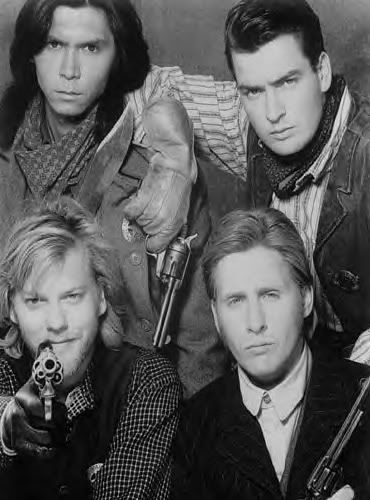
Young Guns

It seems like we grow up slower these days. Now of course some folks do not, due to tragedies (parents die and the oldest sibling takes care of the younger ones). But by and large, we seem to grow up slower. Young adults are marrying later, having kids later (and there is nothing inherently wrong with this I don’t think-I’m in this category). Yet sometimes this attitude carries over to the expectations young folks have for themselves, and of course the expectations leadership has for them.

That’s why I think it is so imperative that we do all that we can to fight against an attitude that says, “When I get older, I’ll do this or that.” Why not do something great for Jesus’ Kingdom at a young age?

Mark Driscoll, reflecting on Paul’s admonition to Timothy “don’t let anyone look down upon you because you are young.,” lists some great examples of younger folks used greatly by Jesus to further His Kingdom. The point is not simply to challenge young folks, but to challenge all folks to start thinking about how they can be used by God now, and not later.

Unknown's avatar

I’m down on Brazil


About every other Herald article I write, someone contacts me via my blog, email, or church phone number. I always enjoy hearing from folks who’ve identified with, been touched by, or simply thought some more about what I’ve written.

Immediately after the article came out, a woman called and left a Voice Mail at the church. Apparently her grandson, who lives in Bradenton is going through just what David Goldman is going through. His Brazilian wife took their daughter to Brazil and said, “I’m never coming back.”

I talked to this woman for about 15 minutes and found out some details that saddened me even more. A minister in Brazil told another family member that this form of “kidnapping” actually happens a lot in Brazil. American babies are “in” over there.

Anyhow, she told me her grandson is a Christian. So he does know Someone who suffered the loss of His own child. It would be great though, if these two men (he and Goldman) could meet. How deep the fellowship these two could potentially have!

Unknown's avatar

Sharks feeling the pinch too

In today’s economy, everyone is feeling the pinch. Man and beast alike, and I’m not talking about pets. Even sharks have fallen “prey” to the economic downturn. Yep, shark attacks were down this past year, and it looks as if the economy is to blame. Check out this study put out by a University of Florida researcher. The only question is, how will they respond to the economic stimulus package?

Unknown's avatar

Exchange Scenes

We had another discussion on The Reason For God this past Sunday in our Christian Ed. In chapter 12, Keller goes into some detail (although he does admit there is much more he doesn’t elaborate on) on the need for the cross.

Many in his circles, which may or may not be those in your circles, have a problem with a loving God requiring a bloody sacrifice. And the sacrifice of His Son on top of that? Why couldn’t he just forgive us if we’re sorry?

Instead of simply stating immediately that God is also fully Holy, which He is, Keller begins with the common ground of love. In other words, “Since you already believe that God is a loving God, let me show you how the only way to really be loving (forgive sins/reconcile people) is the cross.

The chapter beautifully fleshes out how forgiveness always requires suffering for the one offering forgiveness, and that real love involves a costly exchange.

The loving costly exchange has been depicted in movies and literature throughout the years. One example Keller mentions is the exchange scene in Tale of Two Cities. We spent a few moments thinking of some examples as in Gone Baby Gone, Man on Fire. But one thing we noticed was that most of these exchange scenes involved a “bad” or normal person giving themselves for someone who was innocent.

It wasn’t until after our discussion that we came up with a few examples of a “good” person giving him/herself for an unworthy guilty person. Gone in 60 Seconds depicts a semi-reformed car thief willing to give his life for an undeserving and ungrateful brother. That’s getting closer.

My personal favorite exchange scene-though it is hard to take-is To End All Wars, where an innocent man gives himself up to die in the place of a murderer. These kind of exchanges more closely parallel the exchange of the cross, where Christ died for people who were at the time his enemies (Romans 5:8).

Can you think of any more exchange scenes that depict a “good” guy giving himself for a “bad” /guilty guy or gal? These are fewer in number for obvious reasons, but I’d love to know more out there. Please comment if you have any which come to mind.